The Mediterranean is a recognized climate hotspot, warming 20% faster than the global average and facing rising sea levels, extreme heat, biodiversity loss and water scarcity. These pressures are intensified by fragile peace, social tensions and displacement risks. In this context, universities have a fundamental role to play: they shape mindsets, train the professionals and decision-makers of tomorrow, and generate the knowledge on which climate policies depend. Yet Mediterranean universities still lack systematic data, institutional coordination and capacity to deliver effective climate education. Existing courses often reach few students, climate education remains largely confined to scientific fields, and efforts remain fragmented, relying on isolated initiatives rather than systemic change.
The Euromed University Initiative for Climate Action (Euromed UICA) was conceived to address this gap. It originated at the UfM Higher Education Stakeholders’ Meeting “Greening Education in the Mediterranean: A Cross-Cutting Challenge for Universities” (Girona, June 2025), co-organized by the UfM, UNIMED and the University of Girona, and its foundational declaration, the Girona Manifesto, was opened for endorsement in July 2025. The Manifesto sets out four areas of commitment: advancing regional cooperation in climate education; making climate education a curricular baseline; including students in climate governance and action; and supporting innovation smart hubs. It was officially launched at COP30 in Belém on 12 November 2025, and has gathered so far around 120 higher education and research institutions across the region.
This session also builds on a path that UNIMED and the UfM have followed together at successive COPs. At COP27 (Sharm El-Sheikh, 2022), the UNIMED SubNetwork on Climate and Environmental Change organized a hybrid panel at the Mediterranean Pavilion on “How to close the climate knowledge gaps in the Mediterranean region”, highlighting universities as a science-policy interface. At COP29 (Baku, 2024), a hybrid peer-to-peer session organized by the UfM with UNIMED, “Towards climate-smart university curricula in the Mediterranean”, brought universities together to share practices on adapting curricula to climate change, including the funding of curriculum reform, and presented the preliminary results of a survey on the existing curricula offered by the region’s universities. At COP30 (Belém, 2025), the Euromed University Initiative for Climate Action was launched through an online event followed by an in-person roundtable at the Pavilion with university initiatives from other regions. From diagnosing the gap, to testing curricula, to launching a regional initiative, COP31 is the moment to present results.
Those results come from the technical assistance UNIMED is carrying out to implement the first two priorities of the Girona Manifesto: a mapping exercise and gap analysis of climate-related academic offerings across the Euro-Mediterranean region, highlighting flagship initiatives and accompanied by a digital publication and platform, and regional curriculum guidelines that promote coherence, comparability and quality in tertiary climate education, facilitate joint degrees and the mutual recognition of credits, and remain aligned with global frameworks such as UNESCO’s Greening Curriculum Guidance and the UNFCCC’s UN Climate Change Universities Partnership Programme. A Master Class for academic leaders and faculty, planned for December, will translate both outputs into practice.
Agenda
10:00 – 10:05 | Opening and introduction
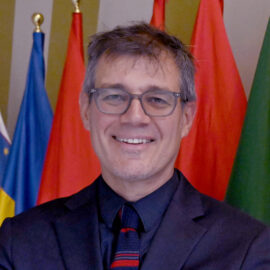
Joan Borrell, Deputy Secretary General for Stability and Resilience, Union for the Mediterranean
10:05 – 10:20 | Presentation of the results of the mapping exercise, gap analysis, and curriculum guidelines
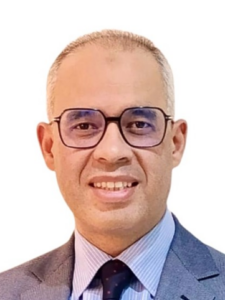
Adil Salhi, Coordinator of UNIMED’s Subnetwork Climate and Environmental Change and the Euromed University Initiative for Climate Action, Abdelmalek Essadi University, Morocco
10:20 – 10:50 | Panel discussion
Moderator: João Lobo, Project Analyst, Union for the Mediterranean
Speakers:
- Ayşe Şenai Koç, Professor, Cağ University, Türkiye
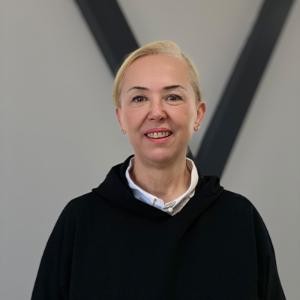
- Laila Ayman, Head of Research and Innovation Support Unit, Heliopolis University for Sustainable Development, Egypt
- Patrizia Lombardi, Vice-Rector for Sustainable Campus and Living Lab, Politecnico di Torino, Italy
- Petra Minnerop, Associate Pro-Vice-Chancellor for Sustainability, Durham University, UK
- Stephen Davison, Director of Strategy, Cambridge Zero, University of Cambridge, UK
10:55 – 11:00 | Closing messages and next steps