The Mediterranean is warming 20% faster than the global average, putting pressure on a building stock that ranges from homes, schools and campuses to some of the world’s oldest historic centres and heritage. Most of the buildings that must deliver the COP31 target of a 25% cut in energy consumption intensity by 2035 already exist: in the EU alone, 85% were built before 2000, three quarters of them with poor energy performance. In historic centres, heritage protection limits renewable deployment and retrofitting interventions.
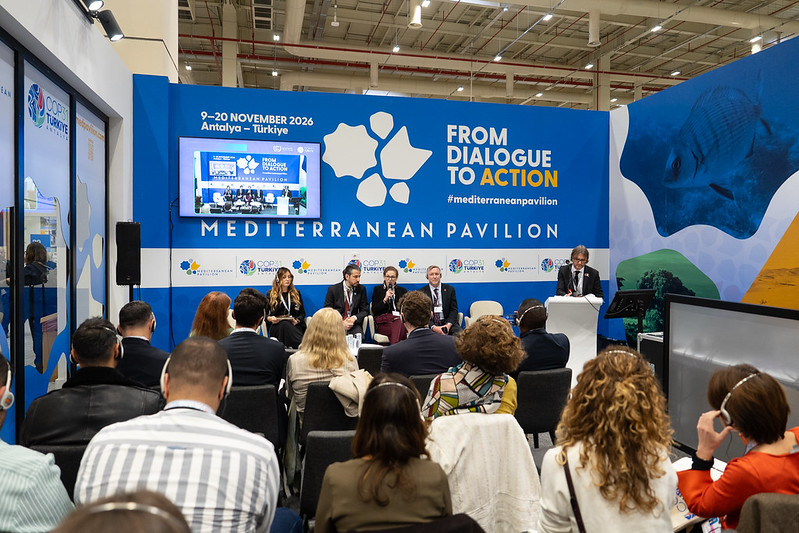
Interreg NEXT MED projects are testing solutions across this diversity of buildings and contexts in the Mediterranean region. RESt4GREEN (7 countries) combines the energy renovation of public buildings with solar-powered outdoor spaces that also provide shade and cooling. SHAREN (5 countries) is developing energy-sharing solutions and energy communities adapted to historic centres, with pilots in Spain, Lebanon and Jordan and action plans in Italy and Türkiye.
These Mediterranean solutions will be placed in a global context, where the building stock and historic/heritage buildings have gained momentum in climate adaptation efforts, backed by UNFCCC-supported ‘Plans to Accelerate Solutions’ (Plan to Accelerate Net Zero, Efficient, Resilient Buildings / Plan to Accelerate Heritage-Informed Decarbonization in Built Environment Policy).