
Blog
 Programme pour les PME d’Agadir : Favoriser la compétitivité et les échanges
14 octobre 2016
Programme pour les PME d’Agadir : Favoriser la compétitivité et les échanges
14 octobre 2016

Développement économique et emploi
Complété
Contexte
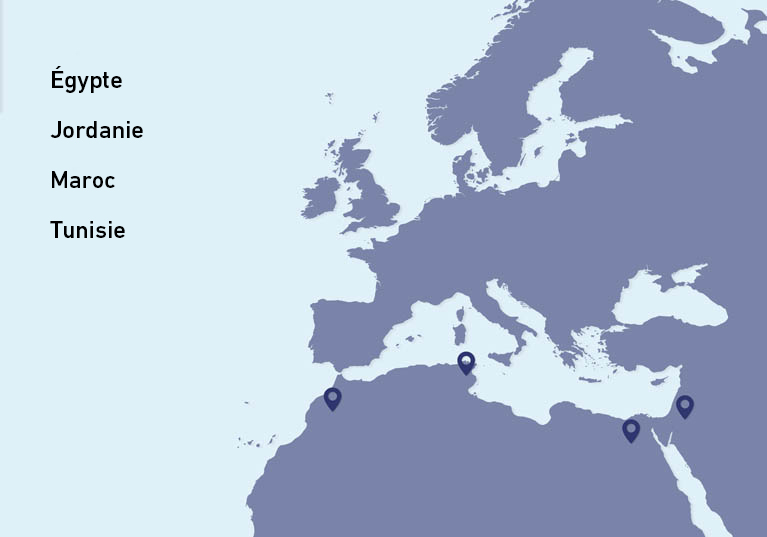
La déclaration d’Agadir, signée le 25 février 2004, a établi une zone de libre-échange (ZLE) entre la Jordanie, l’Égypte, la Tunisie et le Maroc. Cette zone a été créée afin de développer les activités économiques entre les États membres, de soutenir l’emploi, d’augmenter la production et d’améliorer le niveau de vie. Elle est entrée en vigueur le 27 mars 2007.
Le programme pour les PME gadiris a été élaboré pour améliorer l’intégration économique entre les pays membres de l’accord d’Agadir. Grâce à une croissance portée par les PME, le programme a contribué au développement économique et à la création de revenus dans la zone. Plus précisément, le projet visait à renforcer leur compétitivité, mais également à accroître la capacité des PME à fournir des produits et à utiliser le label « cumul d’origine ». Ce label permet aux produits issus de l’un des pays de la zone d’échange d’être transformés dans un autre pays de la zone comme s’ils provenaient de ce pays. Cela a stimulé le commerce entre les quatre pays de l’Accord d’Agadir, ainsi que leurs exportations vers l’UE créant un nouveau dynamisme économique.
Le projet comprenait le développement des compétences, la transformation des politiques et des améliorations systémiques. L’objectif était de renforcer la capacité des PME de la zone à travailler ensemble et améliorer leur compétitivité sur les marchés internationaux. Les actions du projet visaient à développer l’écosystème des entreprises, à renforcer la capacité des PME à fournir des produits de haute qualité et à améliorer la capacité des institutions à fournir des services de support commerciaux efficaces.
Localisation
Chiffres clés
Durée :
2017-19
Pays :
4
Coût total :
4,35M €
Contribution financière
400 000 € – Centre du commerce international
400 000 € – Pays bénéficiaires
Promoteurs
Le premier promoteur du projet est l’Unité technique d’Agadir (UTA), créée en 2007 par les quatre pays membres de l’Accord d’Agadir. L’UTA mène des travaux sur les aspects pratiques de la création d’une zone de libre-échange : règles d’origine, rapprochement des législations, réglementations douanières, exigences techniques, etc.
Le deuxième promoteur est le Centre du commerce international (CCI), une agence commune de l’Organisation mondiale du commerce et des Nations unies. L’objectif du CCI est de permettre aux entreprises des pays en développement de devenir plus compétitives sur les marchés internationaux, de renforcer le développement économique et de contribuer à la réalisation des Objectifs de développement durable.
Partenaire clé

Bénéficiaires
Bénéficiaires directs : PME exportatrices ou prêtes à exporter situées dans les pays de l’Accord d’Agadir. Une priorité est accordée aux entreprises dirigées par des femmes, afin de soutenir l’autonomisation économique des femmes dans ces pays.
Bénéficiaires indirects :
- Gouvernements et institutions publiques, tels que les ministères du commerce, les administrations douanières et les organismes de normalisation.
- Les institutions de soutien au commerce et à l’investissement ainsi que les institutions financières.
- Les organisations sectorielles et professionnelles, comme les chambres de commerce et les agences de promotion et de développement du commerce.
- La société civile et le monde universitaire.
- L’industrie de la logistique.
Actions clés
- Développement des compétences, transformation des politiques et améliorations systémiques destinés à stimuler les capacités des PME dans les pays membres de l’Accord d’Agadir.
- Mise à disposition de services de support commerciaux efficaces sur les règles de cumul d’origine afin d’améliorer la compétitivité des PME sur les marchés internationaux.
- Collaboration entre les pays pour développer l’écosystème des entreprises en renforçant la capacité des PME à fournir des produits de haute qualité.
Résultats
Réduction des obstacles liés au commerce et amélioration des procédures transfrontalières dans les pays membres de l’Accord d’Agadir, afin de renforcer la compétitivité des PME.
Amélioration de l’accès aux renseignements commerciaux et aux informations sur les marchés dans les pays membres afin de stimuler le cumul d’origine.
Renforcement de la capacité des PME à utiliser le label de cumul d’origine pour une commercialisation plus efficace de leurs produits dans les pays de la zone de libre échange et sur les marchés de l’UE.
Établissement de partenariats et de liens en matière de commerce et d’investissement.
Amélioration de l’innovation et de la qualité des produits exportables par les PME membres de l’Accord.
Achèvement de l’étude de faisabilité sur la garantie de prêt et le soutien financier.

