
• English
  • Français
  • العربية
Suivez-nous
Union pour la Méditerranée – UpMUnion pour la Méditerranée – UpMUnion pour la Méditerranée – UpMUnion pour la Méditerranée – UpM
  • Qui sommes-nous
    • L’Union pour la Méditerranée est une institution intergouvernementale réunissant les États membres de l’Union européenne et 16 pays du Sud et de l’Est de la Méditerranée dont le but est de promouvoir le dialogue et la coopération.

      PRÉSENTATION   

    • Qui sommes-nous

      • États membres
      • Structure
      • Partenaires
      • Histoire

      Transparence et responsabilité

      • Transparence et accès aux informations
      • Enquêter sur la fraude, la corruption et les manquements
    • Documents clés

      UfM Institutional Brochure UfM How we work

      VOIR PLUS   

  • Travailler avec nous
    • L’Union pour la Méditerranée agit par le biais de son Secrétariat général, établi à Barcelone en mars 2010. L’équipe du Secrétariat général compte des personnes de plus de 17 nationalités travaillant dans un environnement multiculturel promouvant la coopération, ainsi que la communication et les échanges interculturels.

    • Travailler avec nous

      • Postes vacants
      • Personnel détaché
      • Internships
      • Marchés publics
    • Notre méthodologie

      • Cadre politique
      • Plateformes régionales
      • Projets et initiatives
  • Notre action
    • La mission de l’UpM est de renforcer la coopération et le dialogue régional et favoriser la mise en œuvre d’initiatives et de projets concrets ayant un impact réel sur nos citoyens autour des trois priorités stratégiques de la région: le développement humain, la stabilité et l’intégration.

      PRÉSENTATION   

    • Développement inclusif

      • Développement économique et emploi
      • Enseignement supérieur et recherche
      • Affaires civiles et sociales

      Développement durable

      • Eau, Environnement et Économie Bleue
      • Transport et développement urbain
      • Énergie et action pour le climat

      Des initiatives qui créent des ponts

      • Journée de la Méditerranée
      • Capitales méditerranéennes de la culture et du dialogue
  • Contact
  • Centre d’information
    • Découvrez nos derniers communiqués de presse, notre identité visuelle, nos principales publications et documents institutionnels, nos photos, nos vidéos, etc.


      Télécharger la charte graphique et le logo de l’UpM (fichier Zip)    

    • Centre d’information

      • Coin média
      • Actualités
      • Agenda
      • Publications et documents clés
      • Histoires de coopération euro-Méd
    • L'UpM dans les médias

      9 May 2026 – Agence Europe (EN) – The fire season that never ends – by Joan Borrell Mayeur
      Voir l'article
      9 May 2026 – Agence Europe (FR) – Une saison des feux qui n’en finit pas – par Joan Borrell Mayeur
      Voir l'article
      7 May 2026 – Al-Dustour – حرائق غابات المتوسط على وشك أن تبدأ مجدداً… بلا حدود
      Voir l'article

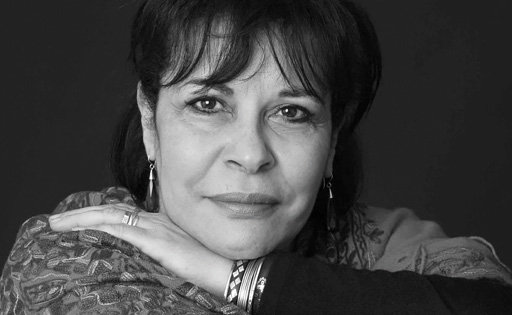
Maïssa Bey

A melting pot of the world’s civilisations

In response to the violence that rocked her country during Algeria’s so-called Black Decade (1992 to 2002), Samia Benameur decided to put pen to paper, speaking out against forms of oppression in her country. Given the dangers facing writers at the time, she did so under the cover of an alias. And so Maïssa Bey was born. A novelist first and foremost, and a playwright second, Bey’s work has helped pave the way for the many other women writers of all generations springing up across Algeria today.

“One day in 1993, I sat down at my desk with a blank sheet of paper and started writing a story, not intending to write a book, let alone publish one. All I was looking to do was to push back against all this oppression that was weighing down on us at that time.” Maïssa Bey speaks authoritatively, candidly, and with a gravitas appropriate to the seriousness of the issues she addresses in her work. She locates the origins of her work in the everyday lives and words of real Algerians. “When I began writing, what I wanted to do above all was to tell stories about real people, past and present”. She focuses in particular on Algerian women, putting disenfranchised and voiceless women at the centre of her work, and shining a spotlight on the hypocrisies of a male-dominated society.

Bey came to writing late in her life, she says, in her mid-forties, during a civil war that left 200,000 Algerians dead and approximately 15,000 forcibly disappeared. “At that time getting published was out of the question”, she explains. Anyone seen to be a part of the French-speaking establishment at the time was vulnerable to attack. “When the question of publishing the book came up, I had to ensure mine and my family’s safety. Journalists and writers had been threatened. Some of them had to flee and leave their lives behind, and in my family it was out of the question that I expose us to any such danger. So we decided that I would write under an alias. The alias was chosen by my mother, and I like to say that mother gave birth to me a second time”, she says, smiling.

Bey is now seen as a pioneer of women’s literature in Algeria. She says that she owes the freedom of expression she and many other Algerian women writers now enjoy to the work of those women writers who preceded them. “There are a lot of them in Algeria. Some who are well known, others less so. They are women who established themselves through their style and their talent. I see myself as a member of a kind of family. And that family has seen to it that we now have the right to speak.”

Bey feels profoundly Mediterranean and sees the region as a nexus connecting the world’s civilisations. “The Mediterranean for me is at once a place and a bond. It is something that we all have in common. It is the melting pot of all civilisations, all religions. You cannot view the Mediterranean like any other sea. It plays a central role in the history of humanity. The most beautiful ruins in the world are in the Mediterranean. It tells us the centuries and centuries of history of our ancestors”. Bey believes that Mediterranean society nowadays, to her dismay, has lost sight of this shared history. “Nowadays the world is engaged in a sort of mad scramble towards commercial interests, and the sea for me and for thousands of other people is something which has come to separate people more than it brings people together. There is also this feeling of rejection that you experience when you are born on the southern side of the Mediterranean. That is something which hurts me deeply every sea should be a connection, a link, a bridge and a passage. If we could rediscover this bond that is the Mediterranean, we artists from the North and the South, to make our common history live again, that would be extraordinary”.

What lies ahead for Maïssa Bey, like for many of us during this pandemic, is uncertain. Anxiety over her and her family’s health and grief for family members lost to Covid-19 has lead her to a writer’s block. “We don’t know what the future is going to be made of, everything is going so fast. We have lost a lot of people in our family. overnight everything stopped, and this proximity to death means that we are asking ourselves a lot of existential questions. At the beginning of this pandemic I promised myself that I would use it to write a novel, but my ideas have dried up, so I have a book which is practically written but only in my head, not on the page.”

Qui sommes-nous

  • États membres
  • Gouvernance
  • Partenaires
  • Histoire
  • Transparence et responsabilité
  • Transparence et accès aux informations
  • Enquêter sur la fraude, la corruption et les manquements

Notre action

  • Développement économique et emploi
  • Enseignement supérieur et recherche
  • Affaires civiles et sociales
  • Eau, Environnement et Économie Bleue
  • Transport et développement urbain durable
  • Énergie et action pour le climat
  • Journée de la Méditerranée
  • Capitales méditerranéennes de la culture et du dialogue

Notre méthodologie

  • Cadre politique
  • Plateformes régionales
  • Projets et initiatives

Travailler avec nous

  • Postes vacants
  • Personnel détaché
  • Internships
  • Marchés publics

Centre d’information

  • Coin média
  • Actualités
  • Agenda
  • Publications et documents clés
  • Histoires de Coopération Euro-Méd
  • Galerie photo
  • Galerie video
Co-financé par l'Union européenne
  • Qui sommes-nous
    • États membres
    • Gouvernance
    • Partenaires
    • Histoire
    • Transparence et responsabilité
      • Enquêter sur la fraude, la corruption et les manquements
    • Enquêter sur la fraude, la corruption et les manquements
  • Transparence et accès aux informations
  • Notre action
    • Développement économique et emploi
    • Enseignement supérieur et recherche
    • Affaires civiles et sociales
    • Eau, environnement et économie bleue
    • Transport et développement urbain durable
    • Énergie et action pour le climat
  • Des initiatives qui créent des ponts
    • Journée de la Méditerranée
    • Capitales méditerranéennes de la culture et du dialogue
  • Notre méthodologie
    • Cadre politique
    • Plateformes de dialogue regional
    • Les projets et initiatives de l’UpM
  • Travailler avec nous
    • Postes vacants
    • Personnel détaché
    • Internships
    • Marchés publics
    • Réseau d’experts
  • Centre d’information
    • Coin média
    • Actualités
    • Agenda
    • Publications et documents clés
    • Histoires de coopération euro-Méd
  • Contact
  • Réseaux sociaux
    • Facebook
    • Twitter
    • Youtube
    • Linkedin
    • Flickr
  • English
  • Français
  • العربية
  • English
  • Français
  • العربية
Union pour la Méditerranée – UpM

Nous utilisons des cookies pour vous offrir la meilleure expérience sur notre site.

You can find out more about which cookies we are using or switch them off in .

Powered by  GDPR Cookie Compliance
Résumé de la politique de confidentialité

Ce site utilise des cookies afin que nous puissions vous fournir la meilleure expérience utilisateur possible. Les informations sur les cookies sont stockées dans votre navigateur et remplissent des fonctions telles que vous reconnaître lorsque vous revenez sur notre site Web et aider notre équipe à comprendre les sections du site que vous trouvez les plus intéressantes et utiles.

Cookies strictement nécessaires

Cette option doit être activée à tout moment afin que nous puissions enregistrer vos préférences pour les réglages de cookie.

Statistiques

Ce site utilise Google Analytics pour collecter des informations anonymes telles que le nombre de visiteurs du site et les pages les plus populaires.

Garder ce cookie activé nous aide à améliorer notre site Web.