• English
  • Français
  • العربية
Suivez-nous
Union pour la Méditerranée – UpMUnion pour la Méditerranée – UpMUnion pour la Méditerranée – UpMUnion pour la Méditerranée – UpM
  • Qui sommes-nous
    • L’Union pour la Méditerranée est une institution intergouvernementale réunissant les États membres de l’Union européenne et 16 pays du Sud et de l’Est de la Méditerranée dont le but est de promouvoir le dialogue et la coopération.

      PRÉSENTATION   

    • Qui sommes-nous

      • États membres
      • Structure
      • Partenaires
      • Histoire

      Transparence et responsabilité

      • Transparence et accès aux informations
      • Enquêter sur la fraude, la corruption et les manquements
    • Documents clés

      UfM Institutional Brochure UfM How we work

      VOIR PLUS   

  • Travailler avec nous
    • L’Union pour la Méditerranée agit par le biais de son Secrétariat général, établi à Barcelone en mars 2010. L’équipe du Secrétariat général compte des personnes de plus de 17 nationalités travaillant dans un environnement multiculturel promouvant la coopération, ainsi que la communication et les échanges interculturels.

    • Travailler avec nous

      • Postes vacants
      • Personnel détaché
      • Internships
      • Marchés publics
    • Notre méthodologie

      • Cadre politique
      • Plateformes régionales
      • Projets et initiatives
  • Notre action
    • La mission de l’UpM est de renforcer la coopération et le dialogue régional et favoriser la mise en œuvre d’initiatives et de projets concrets ayant un impact réel sur nos citoyens autour des trois priorités stratégiques de la région: le développement humain, la stabilité et l’intégration.

      PRÉSENTATION   

    • Développement inclusif

      • Développement économique et emploi
      • Enseignement supérieur et recherche
      • Affaires civiles et sociales

      Développement durable

      • Eau, Environnement et Économie Bleue
      • Transport et développement urbain
      • Énergie et action pour le climat

      Des initiatives qui créent des ponts

      • Journée de la Méditerranée
      • Capitales méditerranéennes de la culture et du dialogue
  • Contact
  • Centre d’information
    • Découvrez nos derniers communiqués de presse, notre identité visuelle, nos principales publications et documents institutionnels, nos photos, nos vidéos, etc.


      Télécharger la charte graphique et le logo de l’UpM (fichier Zip)    

    • Centre d’information

      • Coin média
      • Actualités
      • Agenda
      • Publications et documents clés
      • Histoires de coopération euro-Méd
    • L'UpM dans les médias

      9 May 2026 – Agence Europe (EN) – The fire season that never ends – by Joan Borrell Mayeur
      Voir l'article
      9 May 2026 – Agence Europe (FR) – Une saison des feux qui n’en finit pas – par Joan Borrell Mayeur
      Voir l'article
      7 May 2026 – Al-Dustour – حرائق غابات المتوسط على وشك أن تبدأ مجدداً… بلا حدود
      Voir l'article

David Sassoli

Europe and the challenges of the Mediterranean region

In these times of adversity, the European Union needs to reinforce its dialogue and cooperation with its partners from the eastern and southern shores of the Mediterranean.

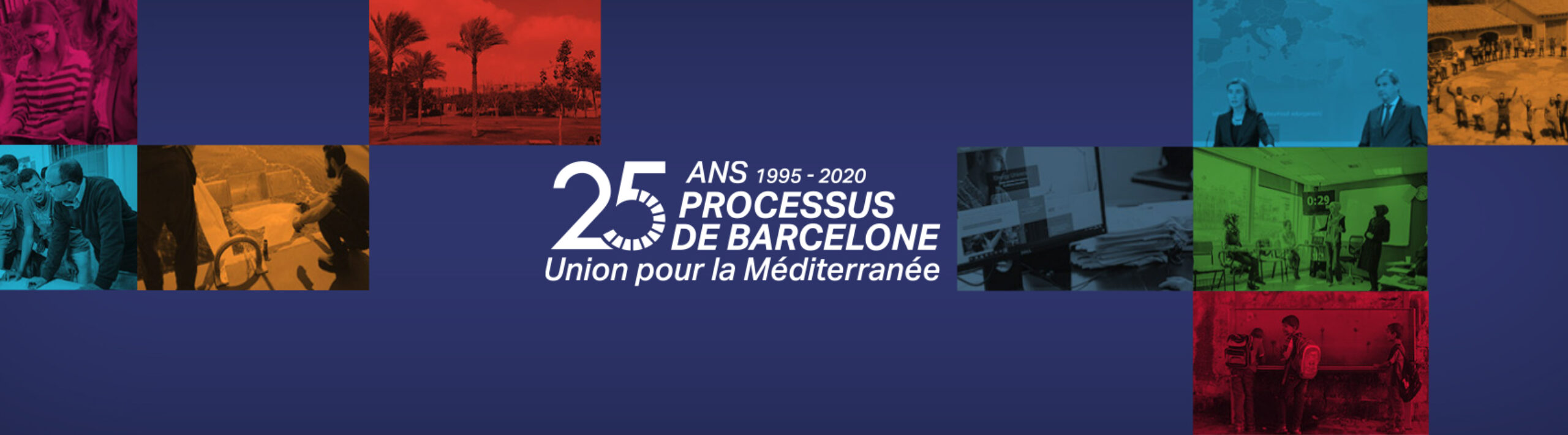
As we approach the 25th anniversary of the Barcelona Process, I strongly believe that the best way to celebrate this milestone is to continue working together to achieve the objectives set out in 1995: to build an area of peace and stability, of shared economic progress, dialogue and understanding between the peoples and cultures around the Mediterranean Sea.

This is a daunting task. To begin with, the geopolitical borders of our common region are increasingly fluid due to the complex dynamics of a region at the intersection of three continents – Europe, Africa and Asia.

Over the past 25 years, the Mediterranean region has faced growing challenges in terms of stability. These are due to the persistence of old unresolved conflicts and the emergence of new ones, compounded by increasing imbalances and inequalities. Conflicts have arisen not only between neighbour countries, but also within each of our own societies.

The current COVID-19 pandemic emergency is worsening the fragile social and economic situation in many countries. Hundreds of people continue to drown in the Mediterranean as they desperately try to reach European shores. Victims hope only to escape war, oppression and poverty.

The 2011 Arab Spring and the introduction of some democratic reforms created hope and expectation amongst citizens for a better and more inclusive future. However, the countries have followed different paths and the hopes have largely not been realised and the conditions that led to social protest are more present than ever – and not only in the Arab world, but to varying degrees and in different ways, in each of our countries.

In these times of adversity, the European Union needs to reinforce its dialogue and cooperation with its partners from the eastern and southern shores of the Mediterranean. Our citizens know that the world is facing global challenges, which can only be met through effective international cooperation.

While fully respecting fundamental rights, we need to find concrete and common responses to the epochal challenge of refugees and migration. Preventing regional conflicts and fighting intolerance, racism, extremism and terrorism must remain top priorities.

We must mobilise all our common resources to face the enormous challenge of climate change, which is already seriously affecting all Mediterranean countries. Countries in the Mediterranean basin have seen a shift in the environmental balance, greater pollution, growing water shortages and uncontrolled urban growth and property speculation, especially along the coastline.

Last but not least, we must focus our collective attention on youth and on education: demographic trends in countries with young populations represent real opportunities for our region – but only if we are able to create new and sustainable jobs, which offer a sense of dignity and belonging to each of our young people.

The European Parliament will assume the rotating presidency of the Parliamentary Assembly of the Union for the Mediterranean (PA-UfM) for 2020-2021 and will focus on reinforcing the inter-parliamentary dimension.  In that regard, the EU national parliaments and the parliaments of the Southern Neighbourhood play a vital role in fostering regional dialogue and cooperation and ensuring greater transparency and political accountability. The European Parliament will work closely with the national parliaments to strengthen the political dimension of the Mediterranean partnership, and counter the worrying drift towards nationalism and populism emerging in most of our countries, on all shores of the Mediterranean.

The European Parliament also intends to focus more on our collective response to climate change. The Mediterranean region is warming 20 % faster than the rest of the planet. In one of the main climate change hotspots in the world, we must share experiences and knowledge about this challenge, support projects and initiatives related to low emission and climate resilient development and exploit the economic potential offered by renewable energy sources. The PA-UfM provides an excellent forum for such cooperation. Fighting and mitigating climate change in the region through sustainable development will represent the cornerstone of our presidency.

Qui sommes-nous

  • États membres
  • Gouvernance
  • Partenaires
  • Histoire
  • Transparence et responsabilité
  • Transparence et accès aux informations
  • Enquêter sur la fraude, la corruption et les manquements

Notre action

  • Développement économique et emploi
  • Enseignement supérieur et recherche
  • Affaires civiles et sociales
  • Eau, Environnement et Économie Bleue
  • Transport et développement urbain durable
  • Énergie et action pour le climat
  • Journée de la Méditerranée
  • Capitales méditerranéennes de la culture et du dialogue

Notre méthodologie

  • Cadre politique
  • Plateformes régionales
  • Projets et initiatives

Travailler avec nous

  • Postes vacants
  • Personnel détaché
  • Internships
  • Marchés publics

Centre d’information

  • Coin média
  • Actualités
  • Agenda
  • Publications et documents clés
  • Histoires de Coopération Euro-Méd
  • Galerie photo
  • Galerie video
Co-financé par l'Union européenne
  • Qui sommes-nous
    • États membres
    • Gouvernance
    • Partenaires
    • Histoire
    • Transparence et responsabilité
      • Enquêter sur la fraude, la corruption et les manquements
    • Enquêter sur la fraude, la corruption et les manquements
  • Transparence et accès aux informations
  • Notre action
    • Développement économique et emploi
    • Enseignement supérieur et recherche
    • Affaires civiles et sociales
    • Eau, environnement et économie bleue
    • Transport et développement urbain durable
    • Énergie et action pour le climat
  • Des initiatives qui créent des ponts
    • Journée de la Méditerranée
    • Capitales méditerranéennes de la culture et du dialogue
  • Notre méthodologie
    • Cadre politique
    • Plateformes de dialogue regional
    • Les projets et initiatives de l’UpM
  • Travailler avec nous
    • Postes vacants
    • Personnel détaché
    • Internships
    • Marchés publics
    • Réseau d’experts
  • Centre d’information
    • Coin média
    • Actualités
    • Agenda
    • Publications et documents clés
    • Histoires de coopération euro-Méd
  • Contact
  • Réseaux sociaux
    • Facebook
    • Twitter
    • Youtube
    • Linkedin
    • Flickr
  • English
  • Français
  • العربية
  • English
  • Français
  • العربية
Union pour la Méditerranée – UpM

Nous utilisons des cookies pour vous offrir la meilleure expérience sur notre site.

You can find out more about which cookies we are using or switch them off in .

Powered by  GDPR Cookie Compliance
Résumé de la politique de confidentialité

Ce site utilise des cookies afin que nous puissions vous fournir la meilleure expérience utilisateur possible. Les informations sur les cookies sont stockées dans votre navigateur et remplissent des fonctions telles que vous reconnaître lorsque vous revenez sur notre site Web et aider notre équipe à comprendre les sections du site que vous trouvez les plus intéressantes et utiles.

Cookies strictement nécessaires

Cette option doit être activée à tout moment afin que nous puissions enregistrer vos préférences pour les réglages de cookie.

Statistiques

Ce site utilise Google Analytics pour collecter des informations anonymes telles que le nombre de visiteurs du site et les pages les plus populaires.

Garder ce cookie activé nous aide à améliorer notre site Web.