
International Knowledge Exchanges in Architecture and Urban Planning
As Mediterranean cities confront unprecedented environmental, social, and spatial challenges nowadays, enhancing cooperation in knowledge production becomes more important than ever. Initiatives that connect public institutions, universities, practitioners and local communities across the region play a crucial role in shaping more resilient, inclusive and sustainable urban futures.
The experiences presented in this publication demonstrate how knowledge exchange can generate tangible benefits: empowering students and researchers, strengthening local capacities and facilitating innovative solutions rooted in the specific contexts of Mediterranean territories.
In this vein, this report contributes not only to improving educational practices but also to fostering a culture of dialogue and co-creation that is essential for addressing complex urban challenges. The UfM Urban Agenda and its Action Plan emphasised implementation mechanisms that foster science-policy interfaces, helping to connect acadEmic research with policy and practice.
This report constitutes one of the outcomes of the UfM Network of Schools of Architecture and Urban Planning of the Euro-Mediterranean Region, gathering schools across the region to exchange experiences and promote joint research and educational initiatives aimed at reinforcing regional cooperation.
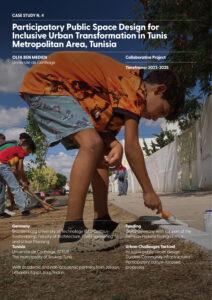
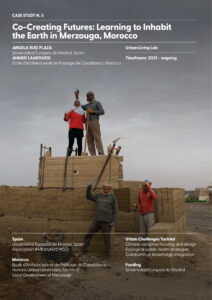
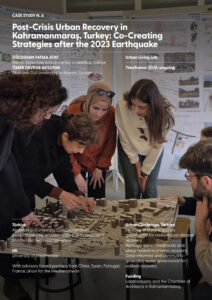
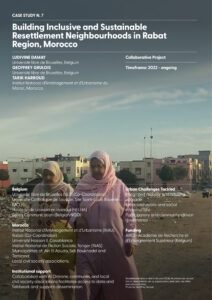
“The experiences presented in this publication demonstrate how knowledge exchange can generate tangible benefits: empowering students and researchers, strengthening local capacities and facilitating innovative solutions rooted in the specific contexts of Mediterranean territories. In this vein, this report contributes not only to improving educational practices but also to fostering a culture of dialogue and co-creation that is essential for addressing complex urban challenges.”
Roger Albinyana
Managing Director
European Institute of the Mediterranean (IEMed)
“This report is intended to serve as a periodic mapping of regional initiatives, to encourage cooperation and knowledge exchange, while also highlighting context-specific approaches that address the challenges faced by cities and regions across Mediterranean countries, in a manner that respects their diverse cultural contexts.”
Victoria Jiménez
Head of Sector for Urban Development
Union for the Mediterranean
“The dense network of international collaborations across Mediterranean countries, mapped and analysed for the first time in a coherent report, shows how universities can act as durable bridges between knowledge and society, fostering inclusive and resilient urban transformation in the region. This potential can be strengthened by supporting the long-term continuity of these initiatives, monitoring and evaluating their local social and economic impacts, and ensuring wider knowledge circulation and greater equity within collaborative platforms.”
Giulio Verdini
University of Westminster & ILAUD
Lead Author


Share this

