A shared roadmap for jobs, skills and inclusive growth across the Mediterranean
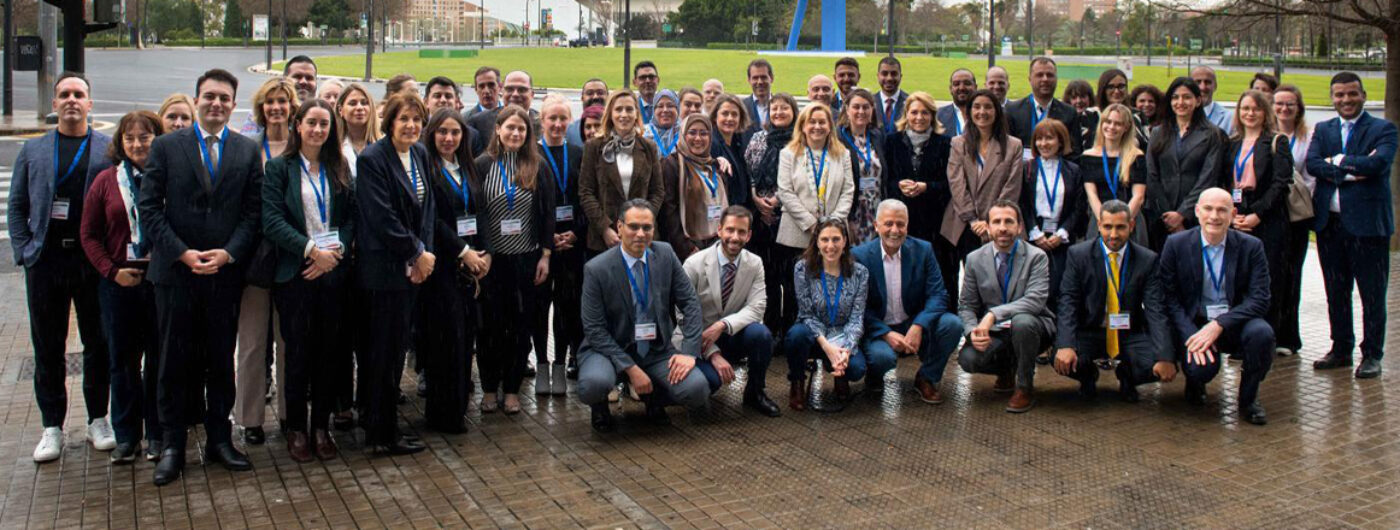
Valencia, 23-24 March 2026. The national focal points from 24 UfM Member States gathered over two successive days in Valencia, Spain, for the 20th UfM Regional Platform on Employment and Labour, co-chaired by the European Commission (Directorate General for Employment, Social Affairs and Inclusion – DG EMPL) and the Jordanian Ministry of Labour on behalf of the UfM Co-Presidency, to advance the implementation of the UfM Action Plan on Employment and Labour 2025–2028.
Discussions focused on operationalising regional priorities and strengthening coordination across stakeholders. Participants reviewed progress on the Work Programme implementing the 2025-2028 UfM Action Plan on Employment and Labour, including the upcoming UfM Employment Forum, whose 2026 edition will be dedicated to entrepreneurship as a key driver of job creation. The Forum will build on the outcomes of the Regional Platform and contribute to advancing a comprehensive approach combining policy dialogue with targeted capacity-building and ecosystem development.
Members were also debriefed on the Community of Practice on Monitoring and the UfM Community of Practice on Youth Employment (STEER), as well as the Social Partners Forum which will take place later this year.
The Platform also featured a dedicated session on Interreg programmes and beneficiary projects, showcasing concrete examples of cross-border cooperation supporting employment, skills development, and social inclusion. The exchanges highlighted the added value of territorial cooperation in fostering innovation, sharing good practices, and scaling up impactful initiatives across the Mediterranean.
A key highlight of the meeting was the third gathering of the UfM Community of Practice on Youth Employment (STEER), held back-to-back with the Regional Platform. Discussions marked a shift from knowledge exchange towards concrete implementation, with participants identifying scalable initiatives to strengthen the transition from education to employment. These initiatives aim to enhance the responsiveness of education systems to labour market needs and support pathways to employment for youth and women across the region.
The Platform also featured discussions on the state of play of the Pact for the Mediterranean, highlighting the importance of aligning regional employment and skills initiatives with broader EU frameworks and priorities.
In addition, participants took part in field visits to local initiatives in Valencia, including organisations working on youth inclusion and employability, such as Jovesolides and second-chance education programmes. These visits provided practical insights into innovative approaches to skills development and social integration at the local level, reinforcing the importance of linking policy dialogue with concrete implementation on the ground.