
• English
  • Français
  • العربية
Follow us
Union for the Mediterranean – UfMUnion for the Mediterranean – UfMUnion for the Mediterranean – UfMUnion for the Mediterranean – UfM
  • Who we are
    • The Union for the Mediterranean is an intergovernmental institution bringing together the European Union Member States and 16 countries from the Southern and Eastern shores of the Mediterranean to promote dialogue and cooperation.

      OVERVIEW   

    • Who we are

      • Member States
      • Meet the team
      • Partners
      • History

      Transparency and accountability

      • Transparency and access to information
      • Investigating fraud, corruption and misconduct
    • Key documents

      UfM Institutional Brochure UfM How we work

      More documents   

  • What we do
    • The UfM seeks to enhance regional cooperation, dialogue and the implementation of concrete projects and initiatives with tangible impact on our citizens to address three strategic objectives: human development, stability and integration.

      OVERVIEW   

    • Inclusive development

      • Economic Development and Employment
      • Higher Education & Research
      • Social & Civil Affairs

      Sustainable development

      • Water, Environment and Blue Economy
      • Transport & Urban Development
      • Energy & Climate Action

      Initiatives that build bridges

      • Day of the Mediterranean
      • Mediterranean Capitals of Culture and Dialogue
    • How we work

      • Policy Frameworks
      • Regional Platforms
      • Projects and Initiatives
  • Work with us
    • The UfM Secretariat is the operational platform of the Union for the Mediterranean. The staff of the UfM is made of more than 17 nationalities working in a multicultural environment that fosters cooperation and intercultural communication and exchange.

    • Work with us

      • Vacancies
      • Secondments
      • Internships
      • Procurement
  • Info centre
    • Find our latest press releases, press invitations, visual identity, key institutional documents, photos and other relevant information


      DOWNLOAD THE UfM VISUAL IDENTITY GUIDELINES AND LOGOS (ZIP FILE)   

    • Info centre

      • Media corner
      • News
      • Agenda
      • Publications and key documents
      • Stories of Euro-Mediterranean Cooperation
    • UfM in the Media

      9 May 2026 – Agence Europe (EN) – The fire season that never ends – by Joan Borrell Mayeur
      View article
      9 May 2026 – Agence Europe (FR) – Une saison des feux qui n’en finit pas – par Joan Borrell Mayeur
      View article
      7 May 2026 – Al-Dustour – حرائق غابات المتوسط على وشك أن تبدأ مجدداً… بلا حدود
      View article
  • Contact

Source: Google Earth Data SIO, NOAA, U.S. Navy, NGA, GEBCO Image Landsat / Copernicus

An inconvenient Mediterranean truth: Rising tides and sinking futures

Op-ed published in Annahar (LB), Youm7 (EG), Alrai (JO), Asssabah (TN), Renewable Matter (EU), and ABC (ES)

November 18, 2024, Baku, Azerbaijan. The word “Mediterranean” evokes images of idyllic sun-soaked beaches and waters of varying hues of blue and green. Stunning sunsets overlooking pine-laden hills speckled with whitewashed villages. Raucous laughter in seaside restaurants serving olive oil-infused foods, a staple of the Mediterranean Diet we all love. The sea is a source of immense pride for the 22 countries that border its shores, an inextricable part of their identity and heritage. But the latest scientific findings paint a sombre picture, reinforcing what perhaps many of us already intuited about climate change but so few of us seem to have fully reckoned with. How much more will it take us to come to grips with the fact that this Mediterranean image so dear to our hearts may not be around much longer?

The Mediterranean Experts on Climate and Environmental Change (MedECC), which the Union for the Mediterranean proudly helped create and has continued to support throughout the years, brought this reality to our attention in 2020 with their groundbreaking First Mediterranean Assessment Report (MAR1). In it, they informed us not only that average temperatures have already surpassed the Paris Agreement’s limit of 1.5ºC above pre-industrial times, but that the region is warming at a rate 20% faster than the global average; in other words, they told us loud and clear that the Mediterranean is one the world’s climate change hotspots. Four years later, this independent network of scientists is doing it again with their latest reports on the impact of climate change on coastal areas and on the Water-Energy-Food-Ecosystems Nexus, issuing a stark, unequivocal warning that can only be described as the Mediterranean’s very own inconvenient truth: “Countries’ efforts to adopt effective mitigation and adaptation measures are still insufficient to promote desirable and liveable futures.”

Insufficient to promote desirable and liveable futures. Take a moment to let that sink in. What does this actually mean? It means that the sea level is expected to rise by a metre by the end of the century, enough to salinize vast coastal plains and fertile river deltas such as the Nile, threatening the food security of millions. Rising temperatures, coupled with pollution and overexploitation of the sea’s natural resources, make for sicker ecosystems that fall prey to invasive species and lead to the mass mortality of native marine flora and fauna. It also means that because large bodies of water absorb excess heat, storms and therefore floods will become even more frequent and even more powerful. To take an awful, recent example that is still fresh on our minds, it means that the devastation we saw in Valencia will become an even more common occurrence in certain parts of the Mediterranean. And in a region where a third of the population already lives in close vicinity to the sea and depends on its nearby infrastructure and related economic activities, it means that more and more people in these increasingly densely populated areas will be exposed to coastal hazards lest we fail to do more.

I could go on and on, listing fact after worrying fact. And yet, there is no getting around it: although climate change may appear to be an abstract danger, an invisible entity hanging over us that is easy to ignore or forget, it is still very much an inescapable reality we will all be forced to contend with sooner or later. The wealth of knowledge we already have at our disposal, thanks in part to the invaluable work of MedECC, should be more than enough to jolt us all into action. We must all collectively push for comprehensive cross-border legal, policy and economic changes as these are the only way forward for us all. Solutions involving innovative technologies, such as renewable energies, as well as those that are ecosystem-based, like the restoration of the wetlands that protect us against erosion and flooding, should be promoted. Behavioural changes that make our consumption patterns less energy intensive, including the widespread readoption of the Mediterranean Diet and reducing food waste, are also both effective and necessary for our species’ long-term survival.

Failing to recognise the Mediterranean is a global climate change hotspot or pretending this very real existential threat does not exist helps no one. We know better than to succumb to despair or paralysis. The time to act is now; tomorrow, as UN Secretary General Antonio Guterres commented recently, there may very well not be a “lifeboat to take us back to safety.”
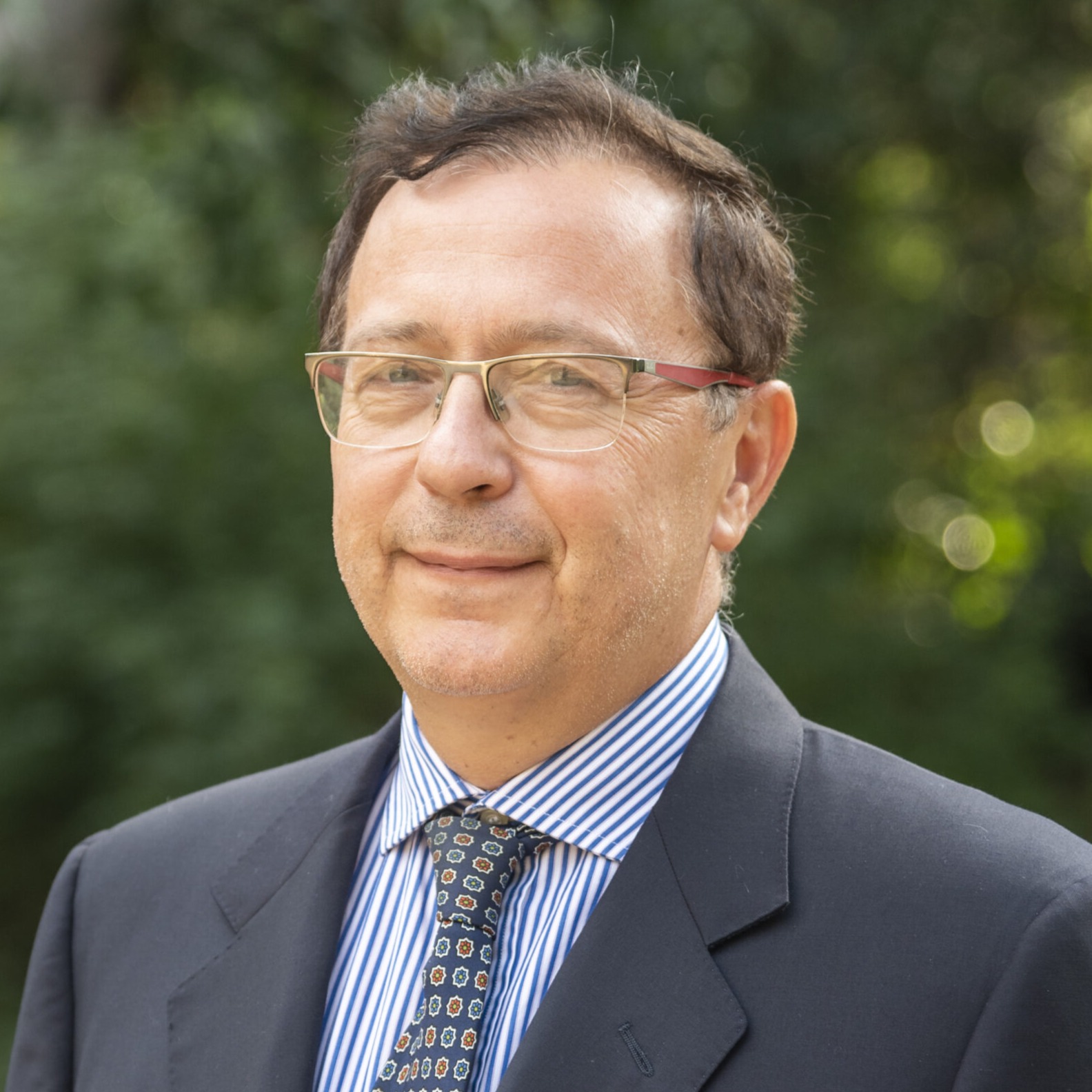
Grammenos Mastrojeni is an Italian diplomat, professor and writer who has focused for the past 25 years on the societal, geo-strategic and economic impacts of environmental degradation, as well as on topics related to environmental protection, human cohesion, peace and security. He has taught sustainability and conflict resolution in various universities in Italy and abroad, and in 2009, the Ottawa University in Canada entrusted him with the first class by a University on the issue of Environment, resources and geostrategy. Formerly, until August 2019, he was the Coordinator for the Environment and Head of the Science-Policy Interface at the Italian Development Cooperation, heading Italian delegations on lands, water and oceans and joining negotiations on climate and biodiversity. Chair of the UN Mountain Partnership, and Co Chair of the Global Islands Partnership, he is President of the largest Italian association for sustainable development education “Isola della Sostenibilità” and member of the Scientific Boards of numerous university courses and entities. Author of numerous articles and official reports on the environment, he published 8 books including “Greenhouse effect, war effect”, written together with the climatologist Antonello Pasini (Chiarelettere, 2017), and “The Ark of Noah – Saving together our Common Home” that ranked as best-selling essays. Among his publications there are also “The indissoluble cycle. Peace, environment, development and freedom in the global balance” (Vita e Pensiero, 2002); “The necessary eco-revolution” (Italian Scientific Editions, 2008); “Now or never. A decade, and not beyond, to save ourselves and the Earth” (Amazon, 2016).

Grammenos Mastrojeni
UfM Senior Deputy Secretary General for Energy and Climate Action

Who we are

  • Member States
  • Meet the team
  • Partners
  • History
  • Transparency and accountability
  • Transparency and access to information
  • Investigating fraud, corruption and misconduct

What we do

  • Economic Development & Employment
  • Higher Education & Research
  • Social & Civil Affairs
  • Water, Environment and Blue Economy
  • Transport & Urban Development
  • Energy & Climate Action
  • Day of the Mediterranean
  • Mediterranean Capitals of Culture and Dialogue

How we work

  • Policy Framework
  • Regional Platforms
  • Projects and Initiatives

Work with us

  • Vacancies
  • Secondments
  • Internships
  • Procurement

Info centre

  • Media corner
  • News
  • Agenda
  • Publications and key documents
  • Stories of Euro-Mediterranean Cooperation
  • Photo gallery
  • Video gallery
Co-financed by the European Union
  • Who we are
    • Member States
    • Meet the team
    • Partners
    • History
    • Transparency and accountability
      • Transparency and access to information
      • Investigating fraud, corruption and misconduct
  • What we do
    • Economic Development and Employment
    • Higher Education & Research
    • Social & Civil Affairs
    • Water, Environment and Blue Economy
    • Transport & Urban Development
    • Energy & Climate Action
  • Initiatives that build bridges
    • Day of the Mediterranean
    • Mediterranean Capitals of Culture and Dialogue
  • How we work
    • Policy Framework
    • UfM Regional Platforms
    • Projects and Initiatives
  • Work with us
    • Vacancies
    • Secondments
    • Internships
    • Procurement
    • Roster of experts
  • Info centre
    • Media center
    • News
    • Agenda
    • Publications and key documents
    • Human Stories of the Mediterranean
  • Contact
  • Social media
    • Facebook
    • Twitter
    • Youtube
    • Linkedin
    • Flickr
  • English
  • Français
  • العربية
  • English
  • Français
  • العربية
Union for the Mediterranean – UfM


We are using cookies to give you the best experience on our website.

You can find out more about which cookies we are using or switch them off in .

Powered by  GDPR Cookie Compliance
Cookies Overview

This website uses cookies so that we can provide you with the best user experience possible. Cookie information is stored in your browser and performs functions such as recognising you when you return to our website and helping our team to understand which sections of the website you find most interesting and useful.

Read more

Strictly Necessary Cookies

Strictly Necessary Cookie should be enabled at all times so that we can save your preferences for cookie settings.

3rd Party Cookies

This website uses Google Analytics to collect anonymous information such as the number of visitors to the site, and the most popular pages.

Keeping this cookie enabled helps us to improve our website.