UfM adopts Civil Protection Action Plan ahead of 3rd Euro-Mediterranean Workshop on Fire Risks in Cyprus
- The 2030 UfM Action Plan on Civil Protection and Disaster Risk Management has just been formally endorsed. The Plan provides the strategic framework underpinning Euro-Mediterranean cooperation on fire and disaster risk.
- The 3rd Euro-Mediterranean Workshop on Fire Risks takes place on 7-8 May 2026 in Nicosia, Cyprus, co-organised by the European Commission (DG ECHO) and the Union for the Mediterranean (UfM), under the auspices of the Cyprus Presidency of the Council of the EU. Discussions address wildfire and industrial fire risks as a systemic regional challenge, with a focus on satellite and AI-based early detection, integrated fire risk management and cross-border governance frameworks.
- The official launch of the Cyprus Regional Aerial Firefighting Station (CRAFS Fire Hub), a permanent regional hub for aerial firefighting preparedness and coordination, is planned for later in 2026 – a next concrete step in translating the Action Plan into lasting operational infrastructure.
Nicosia, 7 May 2026. Policymakers, civil protection experts and operational partners from across the Euro-Mediterranean region convene today in Cyprus for the 3rd Euro-Mediterranean Workshop on Fire Risks. Co-organised by DG ECHO and the Union for the Mediterranean, the two-day event is held under the auspices of the Cyprus EU Presidency and coincides with the formal endorsement of the 2030 UfM Action Plan on Civil Protection and Disaster Risk Management – translating political commitment into operational reality.
The 2030 UfM Action Plan on Civil Protection and Disaster Risk Management was formally endorsed in April 2026 following a round of member state consultations. First presented at the 10th UfM Regional Forum in Barcelona in November 2025 – convening all 43 UfM Member States on the 30th anniversary of the Barcelona Process – is the most comprehensive regional framework for civil protection cooperation the Euro-Mediterranean area has ever adopted. It provides a structured roadmap for strengthening prevention, preparedness, response and recovery systems, prioritising early warning systems, joint exercises, common risk assessment frameworks and the progressive development of a Mediterranean Framework on Civil Protection (MFCP), designed to complement the EU Civil Protection Mechanism.
Building on previous editions held in Tunis (2024) and Barcelona (2025), the 2026 workshop is the first major operational gathering convened under the auspices of the Action Plan. It addresses both wildfires and industrial fire risks – from forest fires to chemical plants, port facilities and energy infrastructure across the Mediterranean’s densely industrialised corridors. Industrial hazards cross borders in minutes, not hours — a lesson the Mediterranean has learned repeatedly from port incidents and chemical plant emergencies across the region. This dual focus reflects a growing consensus that fire emergencies are a systemic regional challenge requiring integrated, cross-sectoral strategies.
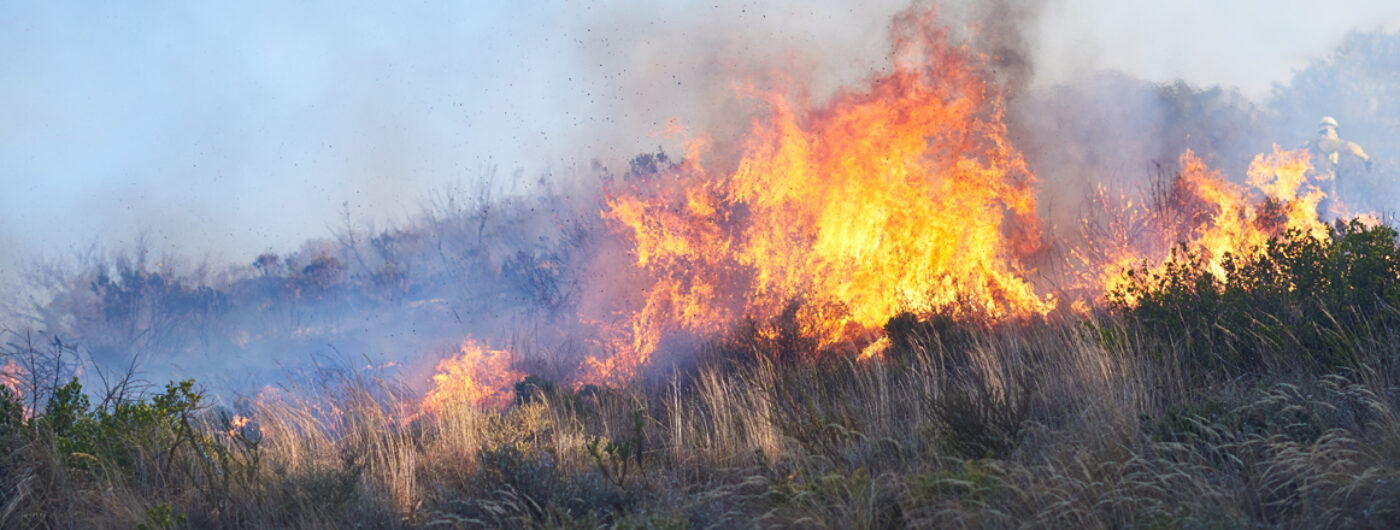
The urgency is underscored by the region’s accelerating exposure. The Mediterranean is warming 20% faster than the global average. In 2024, Portugal suffered its worst fire year since 2017 with over 143,000 hectares burned – including 110,000 hectares in a single week in September – while the Attica fires of August burned over 10,000 hectares on the outskirts of Athens, forcing thousands of evacuations and the activation of the EU Civil Protection Mechanism. 2025 was the worst wildfire season on record in the European Union, with over 1 million hectares burned across EU Member States – the highest total since systematic records began in 2006. A three-week heatwave in August triggered 22 near-simultaneous fires in Portugal and Spain, and Cyprus recorded its worst-ever fire season. Climate science is unambiguous: this is not a cycle; it is an escalation.
The workshop brings together Euro-Mediterranean partners to share lessons across the full disaster management cycle, from prevention and preparedness to response and recovery. Discussions centre on space-based and satellite services for early detection, AI-driven forecasting and decision-support tools, and governance frameworks for cross-border hazard management. Prevention – encompassing forest management, risk culture, community preparedness and cross-border planning – is elevated as a strategic priority, in direct alignment with the Action Plan.
The Workshop is part of a deliberate sequence. The official launch of the CRAFS Fire Hub, planned for later in 2026, will mark the next concrete step: from political commitment and technical cooperation to permanent, shared operational infrastructure. This is precisely the logic the Action Plan was designed to set in motion.
The operational significance of this cooperation is concrete: when a Moroccan civil protection aircraft operates alongside a French Canadair under a Greek command structure, interoperability is not an administrative convenience: it is a condition of effectiveness. The UfM creates the space in which public authorities, technical experts and operational partners build the shared understanding such cooperation demands.
“In a region where a forest fire can send smoke across borders before the first water-bomber has been scrambled, cooperation is not optional: it is the condition of effectiveness. The Cyprus Workshop, grounded in our 2030 Action Plan, and the forthcoming launch of CRAFS, are the kind of concrete steps our region needs to face shared risks together,” said Joan Borrell Mayeur, UfM Deputy Secretary General for Stability and Resilience.
Additional resources: