
• English
  • Français
  • العربية
Follow us
Union for the Mediterranean – UfMUnion for the Mediterranean – UfMUnion for the Mediterranean – UfMUnion for the Mediterranean – UfM
  • Who we are
    • The Union for the Mediterranean is an intergovernmental institution bringing together the European Union Member States and 16 countries from the Southern and Eastern shores of the Mediterranean to promote dialogue and cooperation.

      OVERVIEW   

    • Who we are

      • Member States
      • Meet the team
      • Partners
      • History

      Transparency and accountability

      • Transparency and access to information
      • Investigating fraud, corruption and misconduct
    • Key documents

      UfM Institutional Brochure UfM How we work

      More documents   

  • What we do
    • The UfM seeks to enhance regional cooperation, dialogue and the implementation of concrete projects and initiatives with tangible impact on our citizens to address three strategic objectives: human development, stability and integration.

      OVERVIEW   

    • Inclusive development

      • Economic Development and Employment
      • Higher Education & Research
      • Social & Civil Affairs

      Sustainable development

      • Water, Environment and Blue Economy
      • Transport & Urban Development
      • Energy & Climate Action

      Initiatives that build bridges

      • Day of the Mediterranean
      • Mediterranean Capitals of Culture and Dialogue
    • How we work

      • Policy Frameworks
      • Regional Platforms
      • Projects and Initiatives
  • Work with us
    • The UfM Secretariat is the operational platform of the Union for the Mediterranean. The staff of the UfM is made of more than 17 nationalities working in a multicultural environment that fosters cooperation and intercultural communication and exchange.

    • Work with us

      • Vacancies
      • Secondments
      • Internships
      • Procurement
  • Info centre
    • Find our latest press releases, press invitations, visual identity, key institutional documents, photos and other relevant information


      DOWNLOAD THE UfM VISUAL IDENTITY GUIDELINES AND LOGOS (ZIP FILE)   

    • Info centre

      • Media corner
      • News
      • Agenda
      • Publications and key documents
      • Stories of Euro-Mediterranean Cooperation
    • UfM in the Media

      9 May 2026 – Agence Europe (EN) – The fire season that never ends – by Joan Borrell Mayeur
      View article
      9 May 2026 – Agence Europe (FR) – Une saison des feux qui n’en finit pas – par Joan Borrell Mayeur
      View article
      7 May 2026 – Al-Dustour – حرائق غابات المتوسط على وشك أن تبدأ مجدداً… بلا حدود
      View article
  • Contact

The UfM Women Business Forum gathers women entrepreneurs to promote the role of women in the circular economy and in tech and innovation 

Social & Civil Affairs

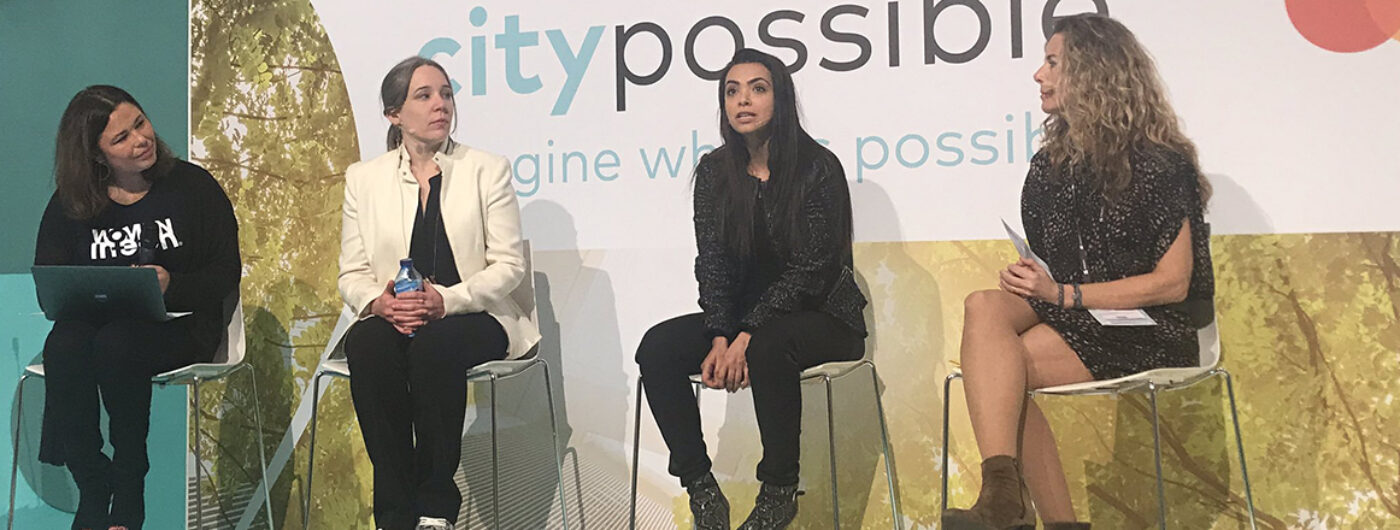
19-21 November  2019. The UfM Women Business Forum 2019 took place in Barcelona on 19-21 November within the margins of the Smart City Expo World Congress. It convened women entrepreneurs, national women business organizations, international leading organizations and business support schemes from the Euro-Mediterranean region to share knowledge and ideas on various business opportunities, good practices and innovative and successful business models. This year’s forum focused on promoting the role of women in the circular economy and in tech and innovation.   

During the roundtable on Women in the Circular Economy, challenges and opportunities for women in the Euro-Mediterranean region were discussed and different business models were presented. Circular economy models are complex and require the mobilization and participation of partners from different sectors such as public administration, academia, civil society and the private sector. Communication is also needed to raise awareness among different stakeholders about the importance of the circular economy, and labelling is very relevant in order to identify and give greater visibility to companies and organisations applying these circular models.  Panelists mentioned the importance of public regulation and incentives to facilitate the development of the circular economy and the promotion of dialogue between private companies and public organisations.  One of the main barriers for women is access to finance, namely lack of available finance and lack of loans. Political support is needed to help women access finance and grow their business. The speakers pointed out that advancements in technology can benefit women by making access to finance faster, more efficient, and reducing gender bias. 

The speakers highlighted the need for more coaching and capacity building to promote women-led businesses as they often struggle to sell their business ideas to investors. Acceleration programmes that help build capacity are important as well as platforms or networks which can help women build partnerships. Quotas for women can also be helpful as long as they go hand in hand with education.  

In the session tackling access to finance, speakers emphasized the need for economic incentives, not just cutting taxations, but providing incentives for large enterprises when they incorporate smaller businesses led by women. Efforts should be made by large private companies to increase the number of their women in their supply chain. Public procurement can also play a role by giving preferential treatment to women led SMEs for public contracts.  

 During the roundtables on Women in Tech & Innovation, speakers underlined the need to attract more women to the sector. The 4th industrial revolution and the automatisation of many processes could entail the loss of many jobs currently carried out by women therefore it is essential to attract more women to tech and innovation and prepare them for new jobs.  

The panelists explained that more needs to be done in order to make job descriptions more appealing to women. There is also a need for more women on the selection panels for jobs. Young girls (from the age of 7 or 8) should be encouraged to choose science and technology as a career path by showing them STEM can be a way to help society. Women role models and mentors are also an important to inspire young girls and to provide a support network for women who decide to enter the sector.   

At a political level, the speakers suggested that governments should partner with companies and organisations in the field of technology and use their communication skills to facilitate platforms that allow partnerships between them. The panelists also addressed the issue of access to finance for women in tech and innovation and highlighted that investors can be biased by the male style of pitching; it is necessary for investors to be trained to see beyond the style and look for value in the ideas.  

Participants also had the opportunity to participate in two site visits to local start-ups in Barcelona. The companies chosen for this edition were Eco Baula, a socially responsible company which makes eco-friendly cleaning products, and Back-to-Eco, a women-led fashion business with a circular economy model.  The attendees met the founders and had a guided tour of their premises to learn about their business models and products.  

The event took place in conjunction with the Smart City Expo World Congress, organised by La Fira de Barcelona, with the support of the Regional Activity centre for Sustainable Consumption and Production, the Interreg MED Green Growth network and Acció (Generalitat de Catalunya) and with the financial Support of the Swedish International Development Cooperation Agency (SIDA). 

Download the EVENT REPORT here.
Share this:

Latest news

Bridging the digital skills gap and boosting smart e-governance solutions: promoting digital transformation through a UfM Conference in Antalya
21 / 05 / 2026
Call for applications: Research to Business Programme
21 / 05 / 2026
See more

SUBSCRIBE TO OUR NEWSLETTER!


Agenda

11th UfM Regional Platform on Trade, Investment and Industry
03 / 06 / 2026
UfM Senior Officials Meeting (SOM) June 2026
10 / 06 / 2026
See more
Co-financed by the European Union
  • Who we are
    • Member States
    • Meet the team
    • Partners
    • History
    • Transparency and accountability
      • Transparency and access to information
      • Investigating fraud, corruption and misconduct
  • What we do
    • Economic Development and Employment
    • Higher Education & Research
    • Social & Civil Affairs
    • Water, Environment and Blue Economy
    • Transport & Urban Development
    • Energy & Climate Action
  • Initiatives that build bridges
    • Day of the Mediterranean
    • Mediterranean Capitals of Culture and Dialogue
  • How we work
    • Policy Framework
    • UfM Regional Platforms
    • Projects and Initiatives
  • Work with us
    • Vacancies
    • Secondments
    • Internships
    • Procurement
    • Roster of experts
  • Info centre
    • Media center
    • News
    • Agenda
    • Publications and key documents
    • Human Stories of the Mediterranean
  • Contact
  • Social media
    • Facebook
    • Twitter
    • Youtube
    • Linkedin
    • Flickr
  • English
  • Français
  • العربية
  • English
  • Français
  • العربية
Union for the Mediterranean – UfM


We are using cookies to give you the best experience on our website.

You can find out more about which cookies we are using or switch them off in .

Powered by  GDPR Cookie Compliance
Cookies Overview

This website uses cookies so that we can provide you with the best user experience possible. Cookie information is stored in your browser and performs functions such as recognising you when you return to our website and helping our team to understand which sections of the website you find most interesting and useful.

Read more

Strictly Necessary Cookies

Strictly Necessary Cookie should be enabled at all times so that we can save your preferences for cookie settings.

3rd Party Cookies

This website uses Google Analytics to collect anonymous information such as the number of visitors to the site, and the most popular pages.

Keeping this cookie enabled helps us to improve our website.