
Education and skills for employment: Building futures for the Mediterranean youth
2-3 December 2025, Alexandria, Egypt – The Union for the Mediterranean (UfM), in collaboration with the MedNC network and the HOMERe programme, and with the support of the Anna Lindh Foundation (ALF) and the European Commission (DG EMPL), convened a two-day event in Alexandria.
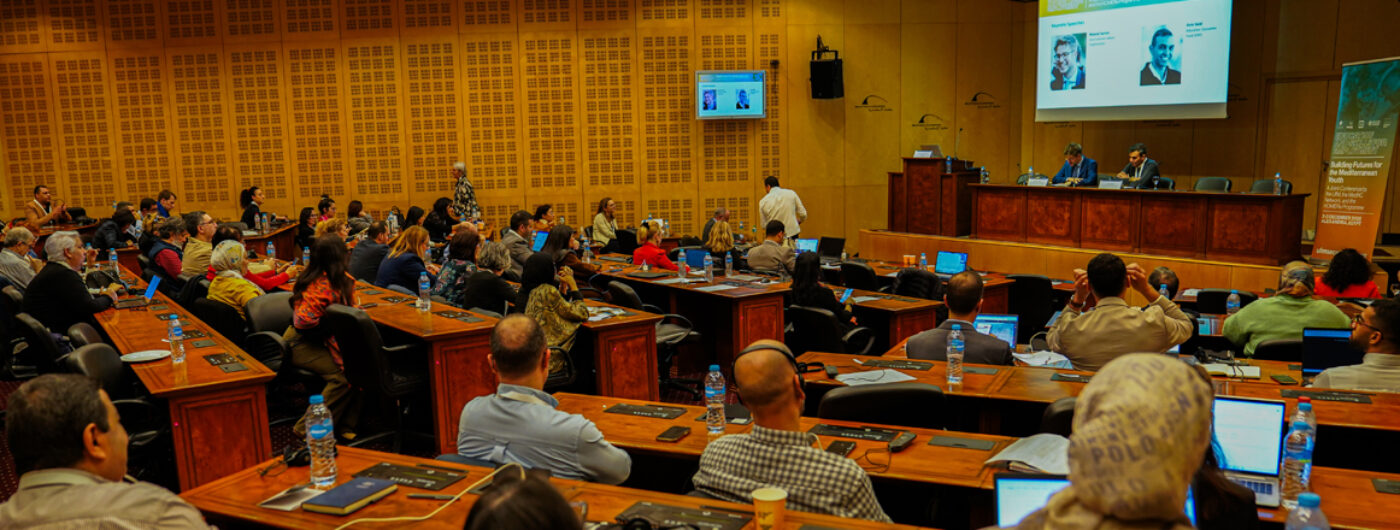
On 2 December, internal governance meetings for MedNC and HOMERe were held at the Von Gerber House, headquarters of the Anna Lindh Foundation. On 3 December, the conference entitled “Education and Skills for Employment” took place at the Bibliotheca Alexandrina, gathering 120 participants from NGOs, civil society organisations, academia, the private sector, and public administrations. Discussions centred on shared challenges faced by young people and the exchange of best practices to enhance employability.
Although MedNC and HOMERe – two UfM-labelled projects – serve different target groups (NEETs and graduates, respectively), their promoters encounter similar obstacles, notably the need to develop skills for future employment and to strengthen collaboration between educational institutions and employers, particularly within the private sector.
The opening session featured contributions from Joan Borrell (UfM), Josep Ferré (ALF), Helena Winiarska (DG MENA, European Commission), Astrid Desjobert (IECD/MedNC), and Lamia Ferguène (HOMERe France). Joan Borrell underscored that the conference aimed to foster the exchange of ideas and best practices to inform public policy, as the future of employment is intrinsically linked to the region’s prospects.

The First Roundtable, Enhancing Youth Mobility Opportunities Throughout the Mediterranean, highlighted the significant impact of international internship programmes on employability and stressed the importance of academia-private sector collaboration, not only to create opportunities but also to design curricula aligned with labour market needs. However, numerous administrative barriers continue to impede mobility.
Two keynote addresses introduced the second major theme: Enhancing Youth Employability through Skills Development. Speakers emphasized the critical importance of equipping young people with relevant competencies to meet evolving labour market demands, advocating for stronger partnerships among educational institutions, private sector actors, and policymakers. Roland Sarton (ILO) noted that while NEETs have increasingly drawn policy attention, the key challenge remains converting existing opportunities into sustainable local job creation. Anis Saïdi (Education Outcomes Fund) presented innovative financing models, particularly results-based financing (RBF), as a means to reinforce partnerships and prioritize measurable outcomes. The Outcomes-Based Financing (OBF) approach incentivizes NGOs and private actors by linking payments to achieved results, reducing government risk, fostering stakeholder trust, and granting implementing partners flexibility to innovate and adapt to changing market needs.
The Second Roundtable, Skills for the Jobs of the Future, stressed the necessity of anticipating future skills requirements and ensuring universal access to reliable data. The advent of AI introduces uncertainty: while entire job roles may not vanish, specific tasks will be automated, augmented, or diminished. To address these challenges, a continuous skills development framework is essential, enabling individuals to update competencies throughout their careers. Examples of employment promotion initiatives included EFE Egypt, Schneider Electric Foundation Egypt, and Semeurs d’Avenir in Lebanon.
The conference also featured contributions from youth representatives, including participants from MENA Hackathons, the MedNYouth Council, HOMERe Alumni, Safir Ambassadors, and the Mediterranean Student Summit.