
Despite significant progress in the Euro-Mediterranean region, a glass ceiling persists in both academic governance and scientific management. While the region has seen a rise in female graduates (exceeding 50% in STEM fields in Syria and Tunisia compared to a global share of 35%) and a slight progress in the global participation of women in the research profession (from 36% to 41%)1, this talent pool is not yet sufficiently reflected in decision-making positions.
The transition from the laboratories and lecture halls to the (di)rector office remains slow and marred by structural barriers. At EU level, women are underrepresented among heads of institutions, making up just 26% (She Figures 2024). Overcoming such structural inequalities to unlock full potential is also a central priority outlined in the European Commission’s Gender Equality Strategy 2026-2030.2 This gender gap brings a net loss in terms of scientific and innovation potential for the Euro-Mediterranean region.
Higher Education Institutions (HEIs) not only shape knowledge and the labor markets of tomorrow – they also influence social norms and perceptions. Gender-sensitive leadership in universities and research institutes has a ripple effect beyond academia: it shifts societal attitudes, opens space for women’s leadership in other sectors, and accelerates broader social change.
The Union for the Mediterranean, in partnership with the Catalan Development Cooperation Agency, sees this as a priority, and it is mobilizing a capacity building programme for university leadership.
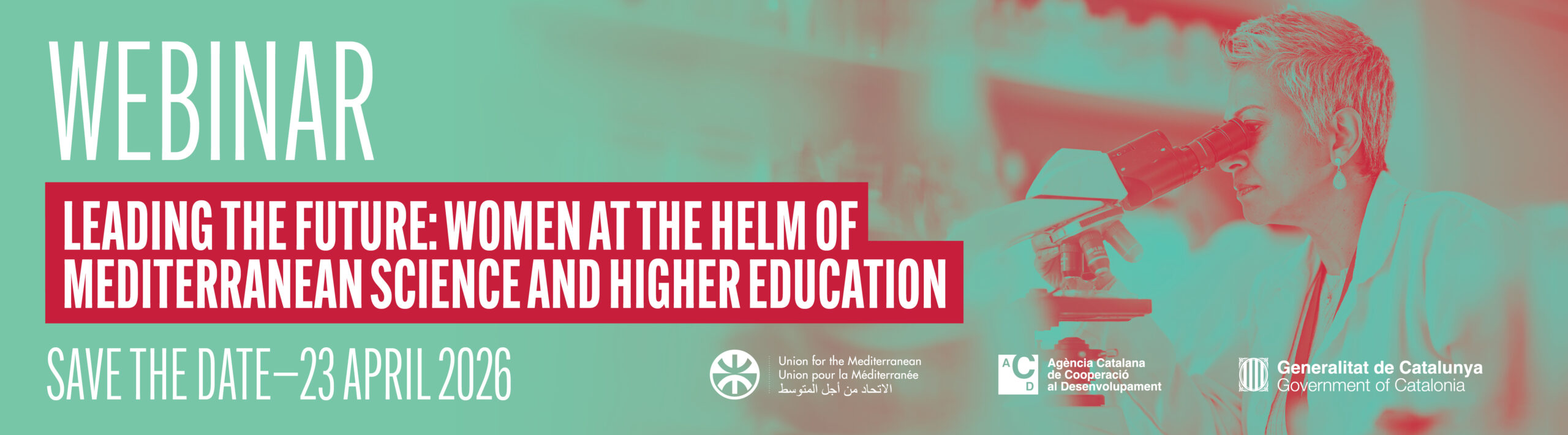
On the International Day of Women and Girls in Science (11 February), the Union for the Mediterranean announced a high-level webinar to be held on 23 April 2026. Building on the 2025 UfM Webinar on the international day of women and girls in science (available here), this upcoming session shifts the conversation from participation to leadership in academia.

