
Mediterranean partners step up operational preparedness on EU Carbon Border Adjustment Mechanism at second UfM training
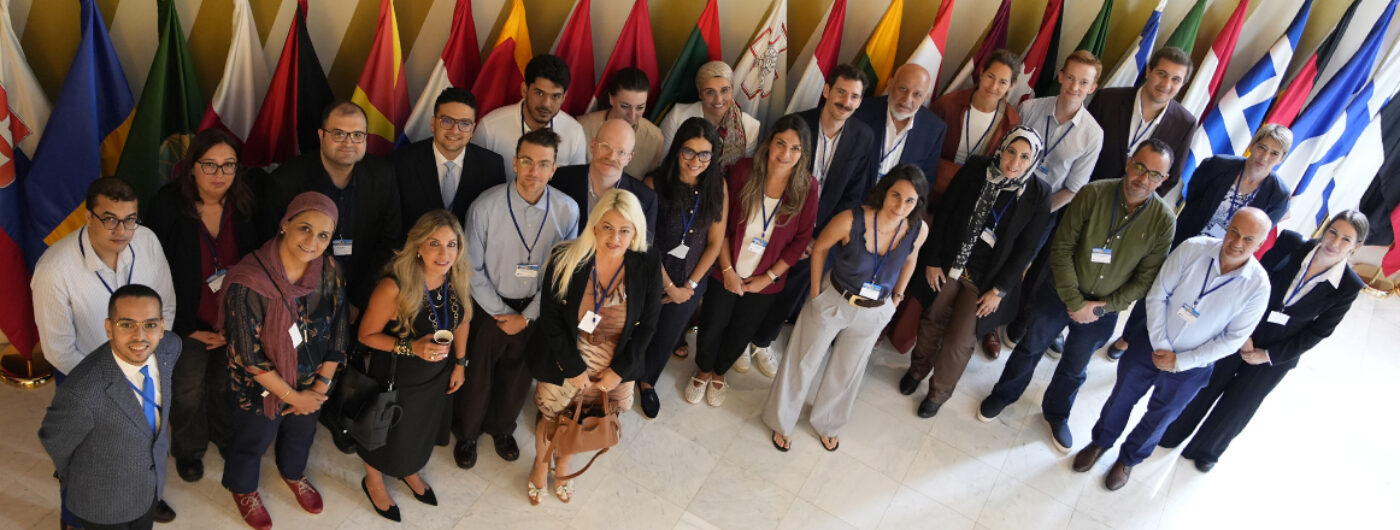
- The training gathered national authorities, industry from the cement, steel and fertilizer sectors, verification bodies and technical experts from 14 Southern and Eastern Mediterranean and Western Balkan partner countries, the economies whose exports to the EU market are directly concerned by the mechanism.
-
With the first EU Carbon Border Adjustment Mechanism (CBAM) compliance cycle approaching, importers will purchase certificates from February 2027 for goods imported in 2026, and discussions focused on verified emissions data, the choice between actual and default values, and the forthcoming EU rules on deducting carbon prices paid in third countries.
29 September 2026, Barcelona. The Union for the Mediterranean hosted on 28 and 29 September the second edition of its Regional Training on the EU Carbon Border Adjustment Mechanism (CBAM) at its headquarters in Barcelona.
Organised with the financial and technical support of the Deutsche Gesellschaft für Internationale Zusammenarbeit (GIZ) and in cooperation with the European Commission (DG TAXUD and DG CLIMA), the training moved from awareness-raising to operational preparedness as the EU’s carbon border rules enter their definitive phase, with verified emissions data now determining the obligations attached to the region’s exports.
 “The carbon transition in trade is, at its core, a development question: it will shape where the industries of tomorrow are built, where value is added, and where quality jobs are created. Our region enters this transition with real assets,” said UfM Deputy Secretary General for Sustainable Development Nisreen Tamimi, opening the training.
Klaus Röhrig, of the European Commission’s Directorate-General for Taxation and Customs Union, presented the state of play of the definitive regime, including the rules on emissions monitoring, reporting and verification and the forthcoming provisions on carbon prices effectively paid in third countries. In a dedicated keynote, Thomas Bernheim, of the Directorate-General for Climate Action, set out the merits of carbon pricing as a response to CBAM, noting that a domestic carbon price both reduces exposure at the EU border and keeps the revenue in the exporting economy.
Over one and a half days, participants worked through parallel technical tracks adapted to different levels of carbon-pricing maturity, and sectoral roundtables on cement, steel and fertilizers, the three CBAM-covered sectors of greatest relevance to Mediterranean trade. The discussions surfaced shared priorities across the region: reliable emissions data at installation level, verification and accreditation capacity, and the flow of information along supply chains.
The EU Carbon Border Adjustment Mechanism, established under Regulation (EU) 2023/956, places a charge on the emissions embedded in certain goods imported into the European Union, mirroring the carbon price applied to EU producers under the EU Emissions Trading System, with the stated aim of preventing carbon leakage. It covers six sectors: cement, iron and steel, aluminium, fertilizers, hydrogen and electricity. Following a transitional reporting phase from October 2023 to the end of 2025, the mechanism entered its definitive regime on 1 January 2026.
The training reflects the UfM’s role as a neutral regional platform on climate-trade issues and its commitment to accompanying its member states on the road to COP31.

