
The Barcelona Process at 30: From Ceasefire to Common Purpose
By the UfM Secretary General, Nasser Kamel.
Published in Almasry Alyoum (Egypt), Al Rai (Jordan), An Nahar (Lebanon), L’Opinion (Morocco), Publico (Portugal), El País (Spain) and Assabah (Tunisia).
Thirty years after the Barcelona Process began, our region is still bleeding from old wounds. But a fragile ceasefire in Gaza has cracked open a narrow door. We owe it to every citizen in the region to turn that opening into a just and lasting peace that all our nations can enjoy. After decades in diplomacy, I know a ceasefire is not peace; it is a chance to build it.
As foreign ministers from forty-three countries gather today in Barcelona for the 10th Regional Forum of the Union for the Mediterranean, alongside voices from civil society, regional and local leadership and key regional cooperation organisations, we choose to step this door together.
Why together? The past two years have shown that neither this conflict – nor the region’s other pressing challenges – stops at borders. Inequality, unemployment, increased cost of living, stalled opportunities, and disinformation are fuelling tensions, eroding trust in institutions. Supply chains are exposed and energy security is fragile. Layered on top of this, the Mediterranean is warming 20% faster than the global average, driving climate and water stress.
Isolationism and fragmentation are unaffordable gambles; only multilateralism and regional cooperation and integration provide the scale, resilience and leverage to secure a more peaceful and prosperous future.
This week I welcome two major developments converge for the future of cooperation in the Mediterranean. First, the UfM is turning the Barcelona Process 30th‑anniversary page with a renewed institutional structure and a forward-looking strategy focused on connecting the Mediterranean’s three essentials: its people, its economies, and its countries. This strategic vision strengthens the UfM’s mandate, methods and capacity for action, while standing on the ambitious partnership core principles agreed thirty years ago. It also reflects months of careful work across our capitals and within the Secretariat that I have been proud to steer.
Second, the European Union and its Southern partners are endorsing the Pact for the Mediterranean, a practical cooperation framework built on three pillars: improving lives and opportunities for people; fostering more sustainable and integrated economies; and enhancing security, preparedness and migration management. The EU’s decision to appoint its first Commissioner for the Mediterranean keeps this focus sharp. Together with the Member States, we worked closely with our colleagues at the EU to align the Pact’s priorities with the UfM’s vision and mandate.
These two milestones – the new vision and the Pact – go hand-in-hand. They do not replace the foundations of the Barcelona Process; they build on them, modernise them and turn them into coordinated regional action. In this renewed framework, the UfM stands as a platform where all Member States meet on equal footing, ensuring co-ownership and coordinated action to advance the region’s priorities and anchor the Pact’s ambitions within its shared vision and mandate.
From co-drafting the 2008 Paris Summit declaration that launched the UfM to serving as its Secretary General, I have seen what this institution can do when we align purpose with persistence. The UfM has convened actors from across the region, shaping priorities, public policies and capacity‑building where they are most needed. This convening power has forged initiatives that champion regional integration, climate action, gender equality and sustainable development.
The UfM has strengthened its role as a catalyst for investment, mobilising resources for the sustainable blue economy through the Blue Mediterranean Partnership and for inclusive, green employment through the UfM Grant Schemes. The increased scope and scale of the UfM-led alliances that have made this possible reflect not only the trust placed in it, but its demonstrated capacity to deliver.
As a diplomat, I have seen that data disarms harming ideology; that is why the UfM also backs evidence‑based policymaking. MedECC scientists have warned that the Mediterranean is warming faster than the global average and that, without action, millions could face permanent displacement from sea‑level rise by 2100, underscoring the gravity of the threat. A recent UfM-OECD report highlights how persistent constraints on the movement of goods, services, capital, people and ideas continue to limit economic integration. At the same time, the UfM has broadened engagement across all its members, enhancing its political standing and bringing Euro‑Mediterranean perspectives to high‑level fora from the UN Security Council and the UN Ocean Conference to COP climate summits.
We are working for a more connected Mediterranean where talent moves, ideas scale and opportunity is shared; where clean power and trusted data flows drive growth; and where joint preparedness turns crises from regional threats into managed risks.
This is the compass I will hand to my successor: connect people, connect economies, connect countries. After seven years in my mandate I leave the UfM stronger, more ambitious and more resilient, shaped by the hopes I have felt dealing with first-hand with our courageous youth, from women and men across the region, from brilliant entrepreneurs, and from emerging leaders.
The Euro‑Mediterranean partnership 30 later is not a commemoration. It remains a choice of working together to deliver so the Mediterranean moves from crisis management to decades of shared solutions.
Let us get today to work – together – for a stronger Euro-Mediterranean partnership.
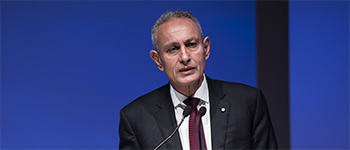
Nasser Kamel
Nasser Kamel is the Secretary General of the Union for the Mediterranean.

