• English
  • Français
  • العربية
Follow us
Union for the Mediterranean – UfMUnion for the Mediterranean – UfMUnion for the Mediterranean – UfMUnion for the Mediterranean – UfM
  • Who we are
    • The Union for the Mediterranean is an intergovernmental institution bringing together the European Union Member States and 16 countries from the Southern and Eastern shores of the Mediterranean to promote dialogue and cooperation.

      OVERVIEW   

    • Who we are

      • Member States
      • Meet the team
      • Partners
      • History

      Transparency and accountability

      • Transparency and access to information
      • Investigating fraud, corruption and misconduct
    • Key documents

      UfM Institutional Brochure UfM How we work

      More documents   

  • What we do
    • The UfM seeks to enhance regional cooperation, dialogue and the implementation of concrete projects and initiatives with tangible impact on our citizens to address three strategic objectives: human development, stability and integration.

      OVERVIEW   

    • Inclusive development

      • Economic Development and Employment
      • Higher Education & Research
      • Social & Civil Affairs

      Sustainable development

      • Water, Environment and Blue Economy
      • Transport & Urban Development
      • Energy & Climate Action

      Initiatives that build bridges

      • Day of the Mediterranean
      • Mediterranean Capitals of Culture and Dialogue
    • How we work

      • Policy Frameworks
      • Regional Platforms
      • Projects and Initiatives
  • Work with us
    • The UfM Secretariat is the operational platform of the Union for the Mediterranean. The staff of the UfM is made of more than 17 nationalities working in a multicultural environment that fosters cooperation and intercultural communication and exchange.

    • Work with us

      • Vacancies
      • Secondments
      • Internships
      • Procurement
  • Info centre
    • Find our latest press releases, press invitations, visual identity, key institutional documents, photos and other relevant information


      DOWNLOAD THE UfM VISUAL IDENTITY GUIDELINES AND LOGOS (ZIP FILE)   

    • Info centre

      • Media corner
      • News
      • Agenda
      • Publications and key documents
      • Stories of Euro-Mediterranean Cooperation
    • UfM in the Media

      9 May 2026 – Agence Europe (EN) – The fire season that never ends – by Joan Borrell Mayeur
      View article
      9 May 2026 – Agence Europe (FR) – Une saison des feux qui n’en finit pas – par Joan Borrell Mayeur
      View article
      7 May 2026 – Al-Dustour – حرائق غابات المتوسط على وشك أن تبدأ مجدداً… بلا حدود
      View article
  • Contact

Scientific reports on climate and environmental change in the Mediterranean

Special report on coastal risks

Special report on WEFE nexus

Full assessment report

Policy framework

Media corner

As a climate hotspot warming at a rate 20% faster than the global average, the Mediterranean faces unprecedented challenges that threaten its ecosystems, economies, and communities.

In November 2020, the Mediterranean Experts on Climate and Environmental Change (MedECC) and the Union for the Mediterranean (UfM) presented the First Mediterranean Assessment Report (MAR1), the first-ever region-wide scientific report on climate change and environmental degradation.

Four years later at COP29 (November 2024), MedECC, with support from the UfM, presented two follow-up special reports on the impacts of climate and environmental change on the region’s coastal zones as well as on the Water-Energy-Food-Ecosystems (WEFE) nexus.

On this page, you can find briefs on the reports in addition to a media corner for journalists interested in these findings.
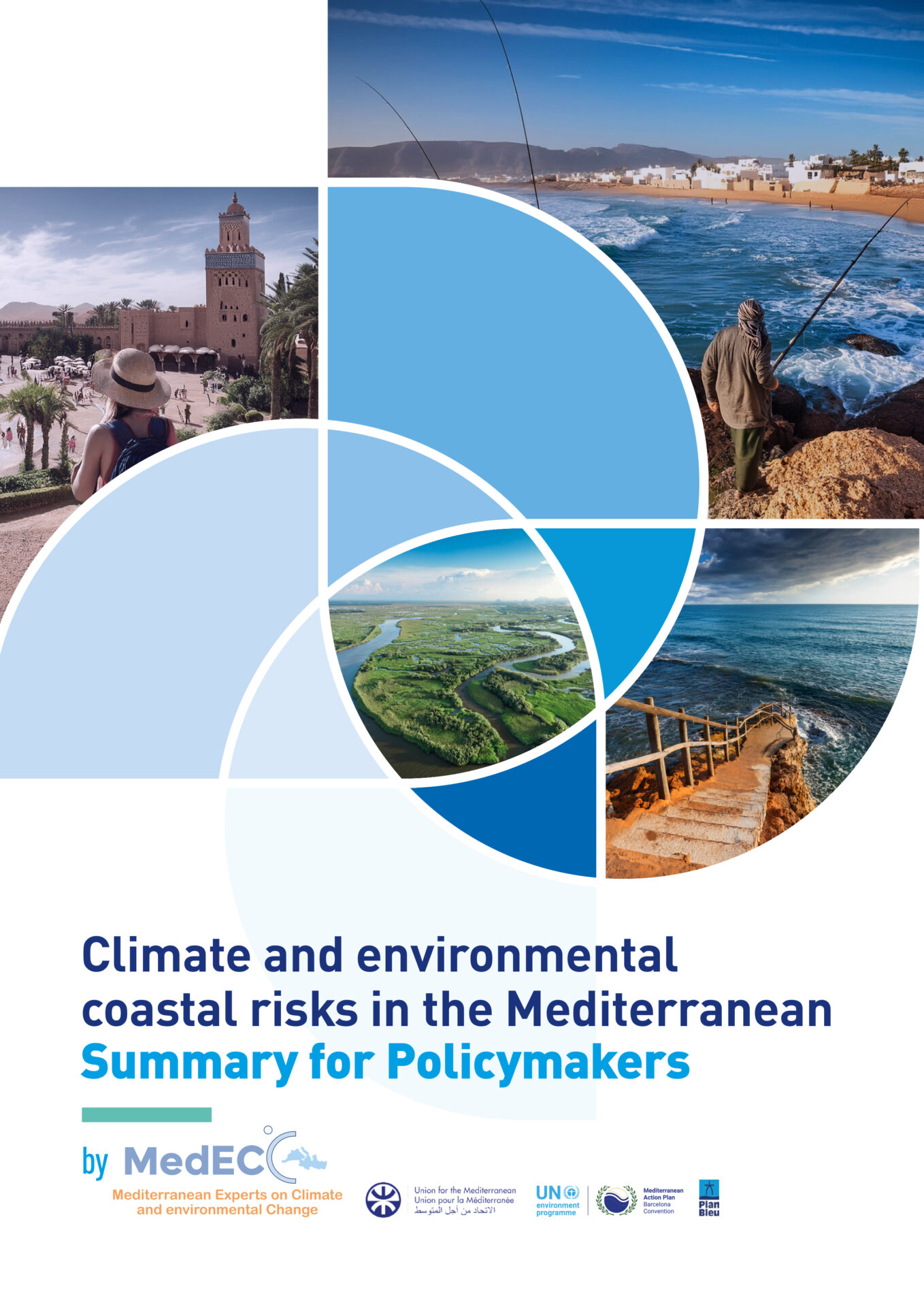
Special Report on Climate and Environmental Coastal Risks in the Mediterranean (November 2024)

The Mediterranean coastal zone is home to highly interconnected climate risks that impact ecosystems and societies due to a combination of hazards, including increasing temperatures, water scarcity, sea-level rise, and extreme weather events. Policies to manage coastal risks and adaptation strategies in the Mediterranean coastal zone are important to the whole region as a third of the Mediterranean’s population lives close to the sea and depends on infrastructure and economic activities in its immediate vicinity. Thus, region-specific scientific knowledge is essential for stakeholders, governments, and citizens to make informed climate and environmental decisions and policies.

The Special Report Climate and Environmental Coastal Risks in the Mediterranean provides a comprehensive assessment of the scientific, technical and socio-economic literature on environmental and climate change hazards in the Mediterranean Basin’s coastal zones.

The report builds on the MedECC MAR1 Assessment Report, previous reports by the Intergovernmental Panel on Climate Change (IPCC), and other relevant regional, national, and local assessments, and draws on evidence from over 1000 scientific publications. The Special Report was prepared by a team of leading experts in the various fields of research who volunteered their time and knowledge without any economic compensation.

The Special Report includes a Summary for Policymakers (SPM) – available now – with headline statements and key messages from the longer report (soon available). The final stakeholder review of the SPM was concluded in an online plenary consultation on November 6, 2023.  The revised SPM was endorsed by the Contracting Parties to the Barcelona Convention (COP23, 4-8 December 2023, Portoroz, Slovenia).

Summary for policymakers (EN)

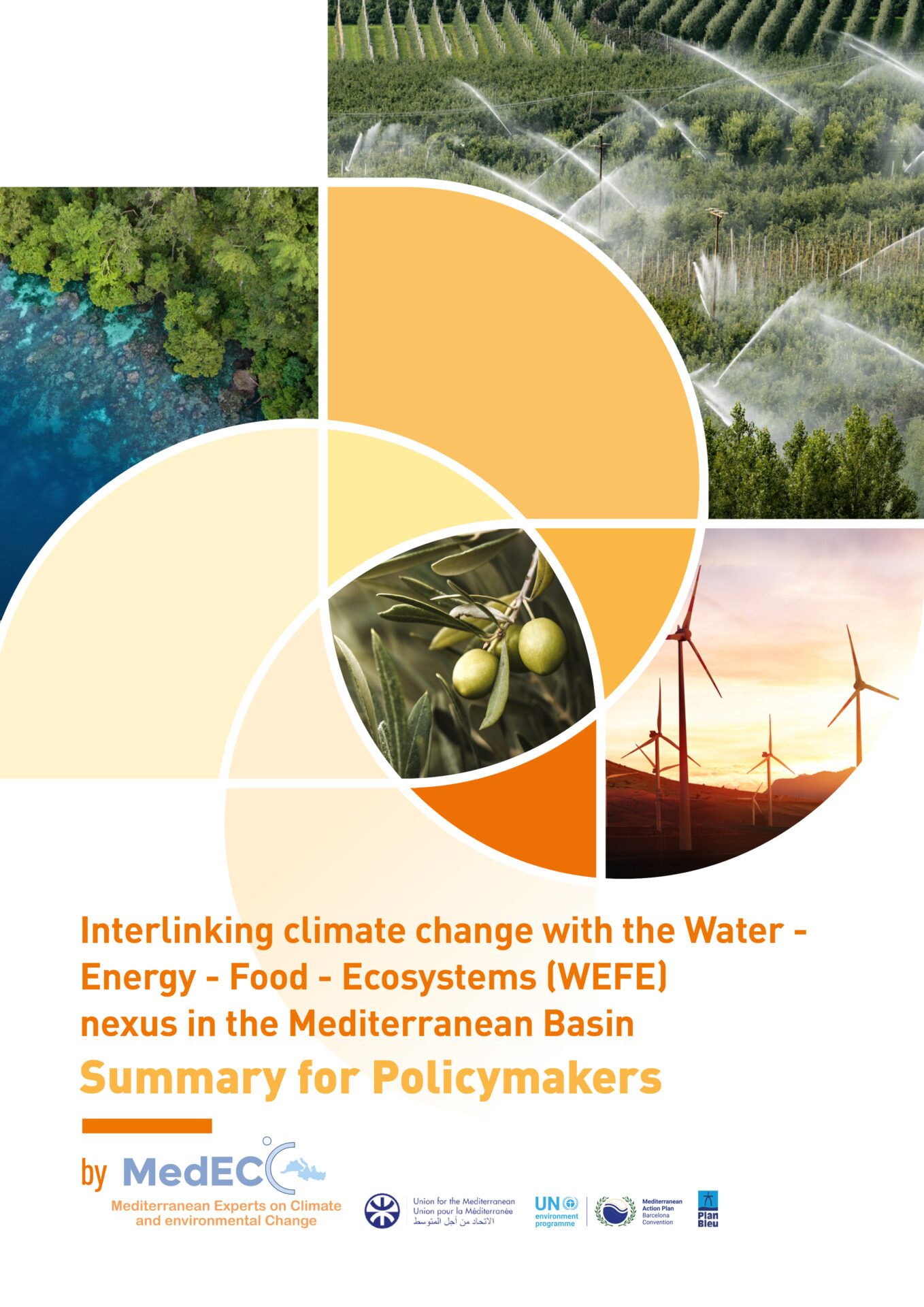
Special Report Interlinking climate change with the Water – Energy – Food – Ecosystems (WEFE) nexus in the Mediterranean Basin (November 2024)

The Mediterranean region is currently dealing with critical challenges including water scarcity, food and energy insecurity, and ecosystem degradation. These challenges are interconnected, as highlighted in the Water-Energy-Food-Ecosystems (WEFE) nexus approach. Climate change further exacerbates them, making it necessary to take a comprehensive and integrated approach to achieve sustainable development and resilience in the face of evolving environmental and socio-economic dynamics.

MedECC’s Special Report on the WEFE nexus represents a significant step in understanding the complex relationships between water, energy, food, and ecosystems in the Mediterranean. The report offers a comprehensive assessment of the available scientific knowledge on these issues, covering the drivers of change, their cascading impacts, and response options for addressing the region’s multiple climate and environmental challenges. It emphasises the need for cross-sectoral coordination, technological and social innovation, ecosystem-based solutions, and transformative governance to mitigate risks and maximise synergies across all WEFE components.

The findings in this report are the result of collaborative efforts by scientists, policymakers, and stakeholders across the Mediterranean. It builds on the First Mediterranean Assessment Report (MAR1) published in 2020 by MedECC and focuses on the interconnections and trade-offs between water, energy, food, and ecosystems. It provides decision-makers with data-driven insights as well as evaluations that are relevant to mitigating climate impacts and ensuring the sustainable management of natural resources.

Summary for policymakers (EN)

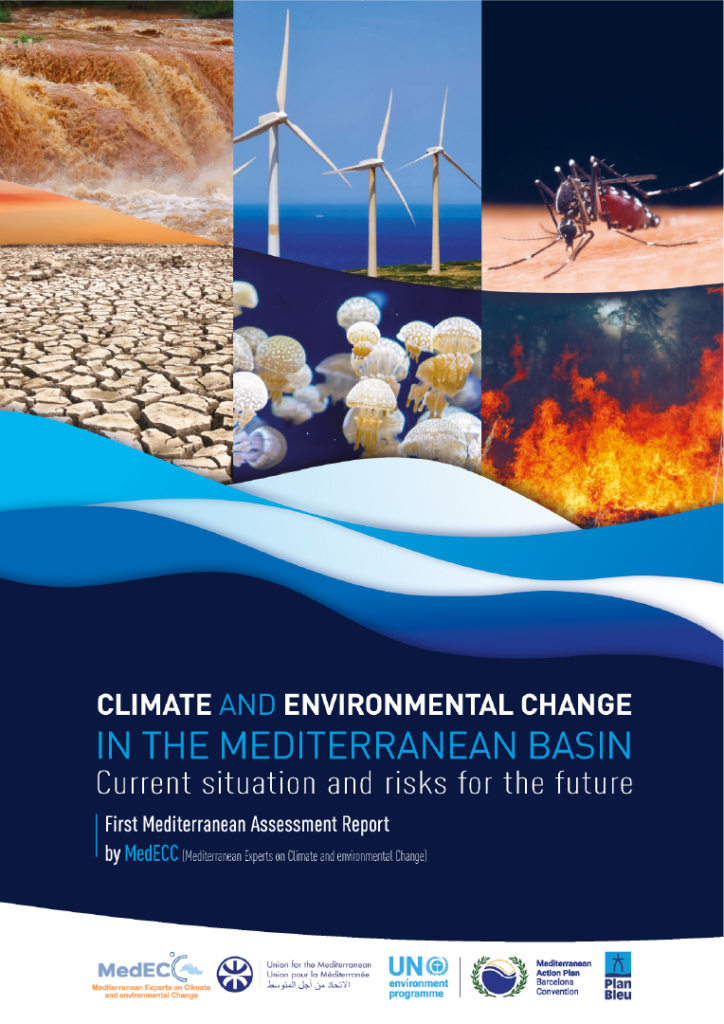
Climate and Environmental Change in the Mediterranean Basin: Current Situation and Risks for The Future (2020)

First Scientific Report on Climate and Environmental Change in the Mediterranean

Climate change has exacerbated existing environmental problems in the Mediterranean Basin that are caused by a combination factors including of changes in land use, increasing pollution or declining biodiversity. In domains such as water, ecosystems, food, health and security, current changes and future scenarios consistently point to significant and increasing risks during the coming decades.

Policies for the sustainable development of Mediterranean countries are urgently needed to mitigate these risks and consider adaptation options, but policy-makers often lack adequate information, particularly in southern Mediterranean societies where fewer systematic observations schemes and impact models are based.

As a result, the network of Mediterranean Experts on Climate and Environmental Change (MedECC) was created in 2015 as an open and independent regional scientific expert network with support from the UfM and the UN Environment. Since then, 190 scientists from 25 countries, all contributing on a voluntary basis and without financial compensation, have developed reports to facilitate more effective policy responses to climate change.

After preliminary conclusions published in 2019, the second phase of the assessment resulted in the publication of the complete Mediterranean Assessment Report on ‎Climate and Environmental ‎Changes (MAR1) and its Summary for ‎Policy-Makers. The main conclusions were presented during the 2nd UfM Ministerial on Environment and climate actions, which took place in Cairo in 2021.

Among its main conclusions, the report shows that the Mediterranean basin is warming at a rate 20% faster than the global average, making the region one of the main climate change hotspots in the world. 250 million people there could be considered “water poor” within 20 years, and with current policies, temperatures could increase by 2.2ºC compared to pre-industrial levels by 2040. 

In March 2022, the UfM and MedECC published 5 infographics to present and highlight specific risks associated with climate and environmental change in the Mediterranean basin based on data from MAR1.

Full report (EN)
Summary for policymakers (EN/FR/AR/ES/CA/EL/TR/DE/IT)

Policy framework

The Union for the Mediterranean (UfM) follows the mandate of the 43 UfM Member States, which gather in ministerial meetings to address the region’s strategic priorities. In 2014, UfM ministers in charge of environment and climate change met in Athens for the first UfM Ministerial Meeting on Environment and Climate Change. The network of Mediterranean Experts on Climate and Environmental Change (MedECC), with more than 600 scientists from 35 countries, was created a year later as an open and independent international scientific network to provide decision-makers and the general public with the latest scientific information and on-going research available. In addition to the UfM, the network is also supported by key regional institutions such as UN Environment/MAP through the Regional Framework for Climate Change Adaptation in the Mediterranean, while its secretariat is hosted by Plan Bleu in Marseille.

Taking stock of MAR1’s conclusions, the UfM Ministers of Foreign Affairs acknowledged the urgent need to address the impact of climate change in the Mediterranean region and shift towards sustainable consumption and production patterns for a green and low emission economy.

“No single nation, no single community, in our region has enough resources to cope with the pace of climate change on its own. Undeniably, in line with the Sustainable Development Goals, our common efforts in the next decade have to focus on facing this urgent issue that goes way beyond climate change and implies reconsidering our approach to the region’s limited resources”, UfM Secretary General Nasser Kamel underlined at the 4th UfM Regional Forum on 10 October 2019, when main conclusions of the report were presented.

In October 2021, UfM ministers gathered in Cairo for the 2nd UfM Ministerial Conference on Environment and Climate Action to discuss how to steer action towards a clean, competitive, resilient and inclusive Mediterranean for the health and well-being of all its citizens.

The SPM was recognised as “an important contribution of the scientific community to future climate and environmental actions in the Mediterranean region” in the declaration of the the 2nd UfM Ministerial Conference on Environment and Climate Action (4 October 2021, Cairo, Egypt) and was endorsed during the 22nd meeting of the Contracting Parties to the Barcelona Convention COP22 (December 2021, Antalya, Türkiye).

With the support of the UfM, the MedECC received on December 9, 2021 in Lisbon (Portugal) the 2020 North-South Prize of the Council of Europe for “its efforts to address climate change and biodiversity conservation in the Mediterranean and in particular by drafting the first-ever scientific assessment on climate and environmental changes impacts in the Maediterranean Basin.”

Media corner

Press releases and op-eds

  • November 2024 – MedECC and UfM: Mediterranean countries’ climate change mitigation and adaptation efforts still insufficient for liveable futures (EN/FR/AR)
  • November 2024 – Op-ed: An inconvenient Mediterranean truth: Rising tides and sinking futures, by Grammenos Mastrojeni, UfM Senior Deputy Secretary General
  • November 2020 – Op-ed: Landmark scientific report on Mediterranean climate is clear: urgent action is needed, by Nasser Kamel, UfM Secretary General

Summaries for press

  • November 2024 – The press summaries of the special reports on coastal risks and the WEFE nexus (EN/FR/AR/ES/IT)
  • November 2020 – The press summary of the Climate report (MAR1): key highlights (EN/FR/AR/ES)
  • November 2020 – The infographic summary of the Climate report (MAR1) (EN/FR/AR/ES/IT/GR)
  • November 2020 – Social Media Infographics [.zip] (EN/FR/AR)

Contact

If you need additional information, please contact UfM Press Officer Cristina Tomàs White:

+34 935 214 137
+34 691 519 634
media@ufmsecretariat.org

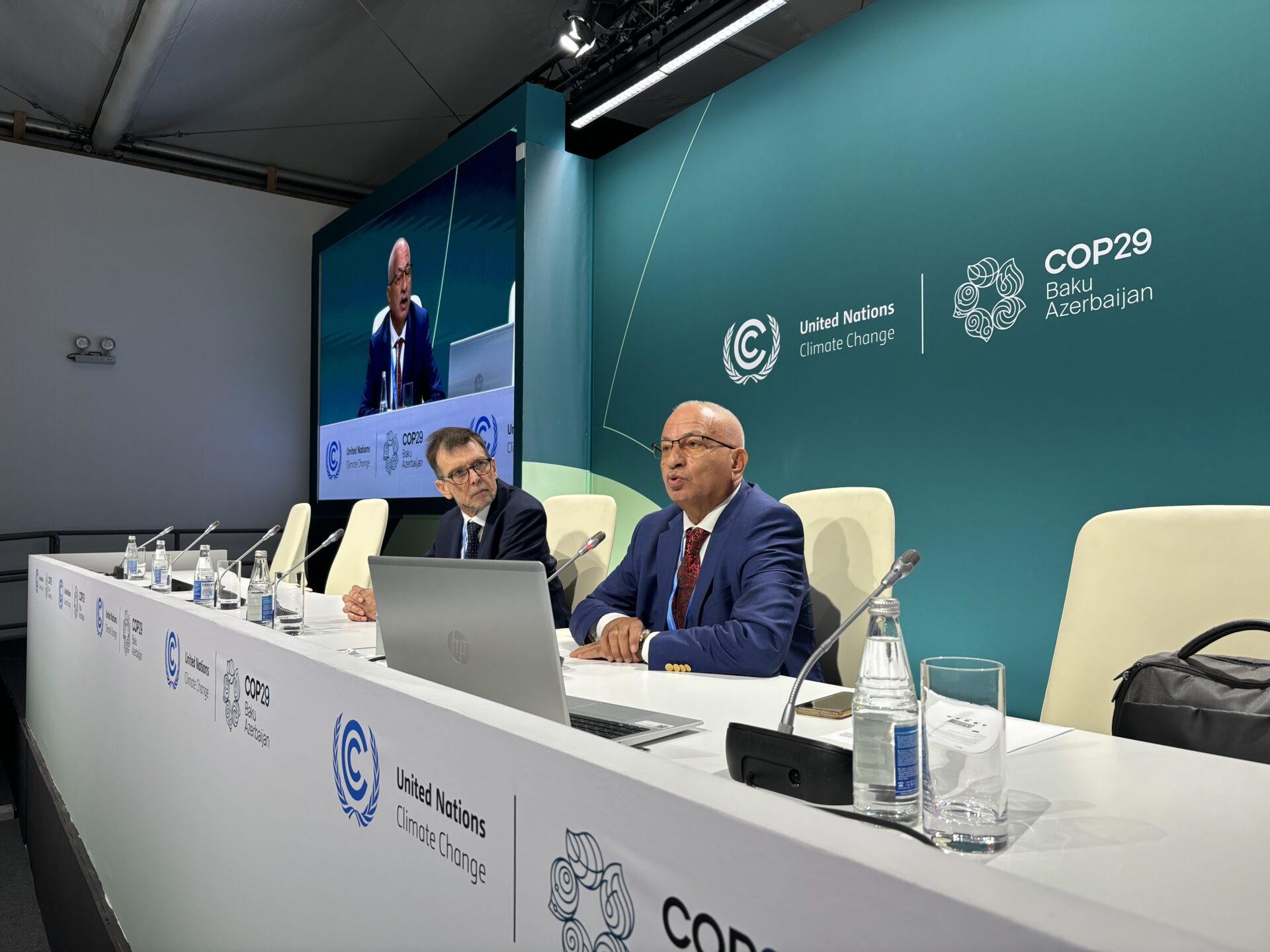
Press Conference COP29: MedECC presents latest findings on coastal risks and the WEFE in the Med (18 November 2024)

Share this

Co-financed by the European Union
  • Who we are
    • Member States
    • Meet the team
    • Partners
    • History
    • Transparency and accountability
      • Transparency and access to information
      • Investigating fraud, corruption and misconduct
  • What we do
    • Economic Development and Employment
    • Higher Education & Research
    • Social & Civil Affairs
    • Water, Environment and Blue Economy
    • Transport & Urban Development
    • Energy & Climate Action
  • Initiatives that build bridges
    • Day of the Mediterranean
    • Mediterranean Capitals of Culture and Dialogue
  • How we work
    • Policy Framework
    • UfM Regional Platforms
    • Projects and Initiatives
  • Work with us
    • Vacancies
    • Secondments
    • Internships
    • Procurement
    • Roster of experts
  • Info centre
    • Media center
    • News
    • Agenda
    • Publications and key documents
    • Human Stories of the Mediterranean
  • Contact
  • Social media
    • Facebook
    • Twitter
    • Youtube
    • Linkedin
    • Flickr
  • English
  • Français
  • العربية
  • English
  • Français
  • العربية
Union for the Mediterranean – UfM


We are using cookies to give you the best experience on our website.

You can find out more about which cookies we are using or switch them off in .

Powered by  GDPR Cookie Compliance
Cookies Overview

This website uses cookies so that we can provide you with the best user experience possible. Cookie information is stored in your browser and performs functions such as recognising you when you return to our website and helping our team to understand which sections of the website you find most interesting and useful.

Read more

Strictly Necessary Cookies

Strictly Necessary Cookie should be enabled at all times so that we can save your preferences for cookie settings.

3rd Party Cookies

This website uses Google Analytics to collect anonymous information such as the number of visitors to the site, and the most popular pages.

Keeping this cookie enabled helps us to improve our website.