• English
  • Français
  • العربية
Follow us
Union for the Mediterranean – UfMUnion for the Mediterranean – UfMUnion for the Mediterranean – UfMUnion for the Mediterranean – UfM
  • Who we are
    • The Union for the Mediterranean is an intergovernmental institution bringing together the European Union Member States and 16 countries from the Southern and Eastern shores of the Mediterranean to promote dialogue and cooperation.

      OVERVIEW   

    • Who we are

      • Member States
      • Meet the team
      • Partners
      • History

      Transparency and accountability

      • Transparency and access to information
      • Investigating fraud, corruption and misconduct
    • Key documents

      UfM Institutional Brochure UfM How we work

      More documents   

  • What we do
    • The UfM seeks to enhance regional cooperation, dialogue and the implementation of concrete projects and initiatives with tangible impact on our citizens to address three strategic objectives: human development, stability and integration.

      OVERVIEW   

    • Inclusive development

      • Economic Development and Employment
      • Higher Education & Research
      • Social & Civil Affairs

      Sustainable development

      • Water, Environment and Blue Economy
      • Transport & Urban Development
      • Energy & Climate Action

      Initiatives that build bridges

      • Day of the Mediterranean
      • Mediterranean Capitals of Culture and Dialogue
    • How we work

      • Policy Frameworks
      • Regional Platforms
      • Projects and Initiatives
  • Work with us
    • The UfM Secretariat is the operational platform of the Union for the Mediterranean. The staff of the UfM is made of more than 17 nationalities working in a multicultural environment that fosters cooperation and intercultural communication and exchange.

    • Work with us

      • Vacancies
      • Secondments
      • Internships
      • Procurement
  • Info centre
    • Find our latest press releases, press invitations, visual identity, key institutional documents, photos and other relevant information


      DOWNLOAD THE UfM VISUAL IDENTITY GUIDELINES AND LOGOS (ZIP FILE)   

    • Info centre

      • Media corner
      • News
      • Agenda
      • Publications and key documents
      • Stories of Euro-Mediterranean Cooperation
    • UfM in the Media

      9 May 2026 – Agence Europe (EN) – The fire season that never ends – by Joan Borrell Mayeur
      View article
      9 May 2026 – Agence Europe (FR) – Une saison des feux qui n’en finit pas – par Joan Borrell Mayeur
      View article
      7 May 2026 – Al-Dustour – حرائق غابات المتوسط على وشك أن تبدأ مجدداً… بلا حدود
      View article
  • Contact

Wetlands-Based Solutions

Water, Environment & Blue Economy

Photo credit: M. Thibault. 

Completed
Labelled projects

Context and objectives

The Mediterranean region has lost 50% of its natural wetlands since 1970 – and we continue to destroy them.

These wetlands are vital habitats for wildlife, as well as important tools for mitigating the effects of climate change. They help to manage extreme weather events like floods and storms, and can store 10-20 times more carbon than temperate or boreal forests on land. It is crucial that we work to preserve Mediterranean wetlands and help coastal communities withstand present and future impacts of climate change, which threaten more than 350 million people.

The project “Wetlands-Based Solutions” ran until 2022, thanks to the financial support of the MAVA Foundation. It brought together more than 30 partners in 10 countries, and had the following objectives:

• Restore coastal wetlands and make them work as nature-based solutions to mitigate climate impacts in the region.
• Encourage sustainable water use and reduce water abstraction.
• Reduce threats to coastal wetlands and related marine habitats.
• Create new socioeconomic opportunities based on coastal wetlands.

These objectives were achieved by:
• Building capacity for effective management and planning processes.
• Raising awareness of the importance and value of coastal wetlands.
• Implementing local solutions that can be replicated across the region.

Location
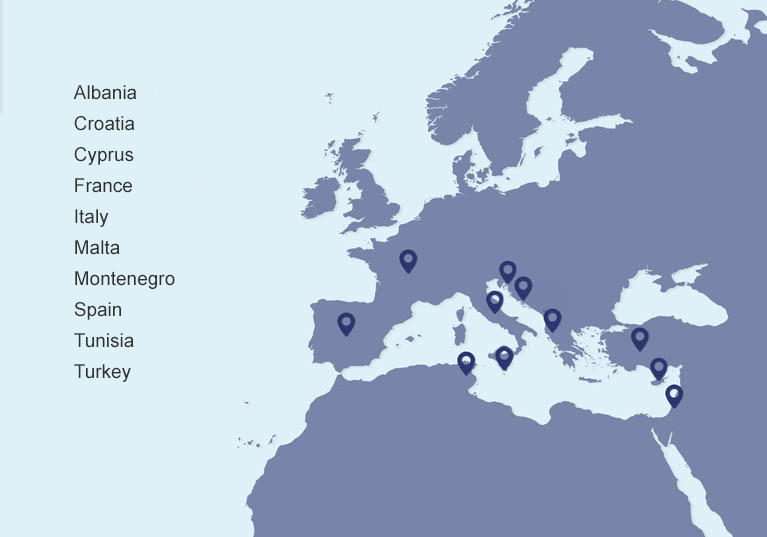
Key figures

Countries:

10

Duration:

27 months

Cost:

€14.5M

Budget

€ 14.5 M (fully funded – €10.7 M MAVA Foundation; €3.7 M others).

MAVA is a Swiss private philanthropic foundation whose mission is “to conserve biodiversity for the benefit of people and nature by funding, mobilising and strengthening its partners and the conservation community.” It has operated since 1994 and will be closing in 2022.

Promoter

MedWet is an original and innovative governance model formally recognised by the Ramsar Convention. It is based on the collaborative effort of the 27 Mediterranean countries and entities, the Ramsar Convention Secretariat, intergovernmental institutions, international NGOs and national institutions specialising in wetland issues. It is the only platform to share information and technical capacities between governmental institutions and civil society, serving wetlands in the Mediterranean through concerted actions within the framework of the Sustainable Development Goals.

Partners

  • BirdLife International
  • Euronatur
  • IUCN ECARO
  • IUCN Mediterranean Centre
  • MEDSEA Foundation
  • MedWet Initiative
  • Mediterranean Small Islands Initiative (PIM)
  • Tour du Valat
  • WWF Greece
  • WWF North Africa
  • WWF Spain
  • Vertigo Lab
  • Wetlands International

Beneficiaries

Local communities
Public authorities at the local, regional and national levels
Wetland and territorial managers
Private sector

Key actions

  • Build a strong Mediterranean Wetlands Partnership.
  • Improve and share the wetlands knowledge base and ensure it helps relevant authorities to make informed decisions. There will be a specific focus on wetlands’ importance to biodiversity, sustainable practices and management, and their role as nature-based solutions (NBS), in order to counteract water abstraction and coastal development threats.
  • Ensure that wetland economic sectors (salt production, tourism and agriculture) operate more sustainably and create socio-economic opportunities to reduce loss and degradation by restoring the relationship between humans and nature for future generations.
  • Develop a communication and awareness strategy to ensure engagement of relevant stakeholders at regional and site level.
  • Develop national and regional policy and advocacy strategies for wetlands, ensuring that wetlands are also at the top of the EU agenda.
  • Promote strong governance to support management, including by building capacity on the sustainable governance of wetlands.
  • Consolidate the network of Mediterranean wetlands managers, which is already operating in 120 sites over 1 million hectares in the region.
  • Support the restoration of wetlands in at least 10 countries across the Mediterranean region.

Results

  • A powerful and effective network of organisations constantly coordinating to preserve and restore Mediterranean wetlands.
  • A strong and sound database of studies, research and knowledge available to all.
  • Support to the sustainable socio-economic development of the region.
  • Civil society engagement to support wetlands as a nature-based solution against climate impacts and the water crisis.
  • Political commitments and actions to stop the degradation of. Mediterranean wetlands and ensure their restoration
  • Replicable management and governance models.
  • Support at the local, regional and international levels for the effective restoration of wetlands.
Related news

UfM Member States endorse two new projects to fight violence against women and to enhance the conservation of wetlands in the Mediterranean

Related content

Policy paper
Mediterranean wetland restoration: an urgent priority

Restoration_policy-paper_summary_final-1

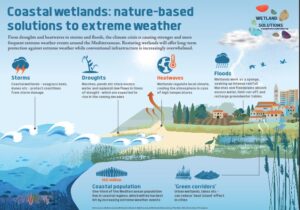
Wetlands infographic
(Source medwet.org)

Wetlands infographic: key figures
(source: World Wetlands Day)

Share this:

Printable version

Who we are

  • Member States
  • Meet the team
  • Partners
  • History
  • Transparency and accountability
  • Transparency and access to information
  • Investigating fraud, corruption and misconduct

What we do

  • Economic Development & Employment
  • Higher Education & Research
  • Social & Civil Affairs
  • Water, Environment and Blue Economy
  • Transport & Urban Development
  • Energy & Climate Action
  • Day of the Mediterranean
  • Mediterranean Capitals of Culture and Dialogue

How we work

  • Policy Framework
  • Regional Platforms
  • Projects and Initiatives

Work with us

  • Vacancies
  • Secondments
  • Internships
  • Procurement

Info centre

  • Media corner
  • News
  • Agenda
  • Publications and key documents
  • Stories of Euro-Mediterranean Cooperation
  • Photo gallery
  • Video gallery
Co-financed by the European Union
  • Who we are
    • Member States
    • Meet the team
    • Partners
    • History
    • Transparency and accountability
      • Transparency and access to information
      • Investigating fraud, corruption and misconduct
  • What we do
    • Economic Development and Employment
    • Higher Education & Research
    • Social & Civil Affairs
    • Water, Environment and Blue Economy
    • Transport & Urban Development
    • Energy & Climate Action
  • Initiatives that build bridges
    • Day of the Mediterranean
    • Mediterranean Capitals of Culture and Dialogue
  • How we work
    • Policy Framework
    • UfM Regional Platforms
    • Projects and Initiatives
  • Work with us
    • Vacancies
    • Secondments
    • Internships
    • Procurement
    • Roster of experts
  • Info centre
    • Media center
    • News
    • Agenda
    • Publications and key documents
    • Human Stories of the Mediterranean
  • Contact
  • Social media
    • Facebook
    • Twitter
    • Youtube
    • Linkedin
    • Flickr
  • English
  • Français
  • العربية
  • English
  • Français
  • العربية
Union for the Mediterranean – UfM


We are using cookies to give you the best experience on our website.

You can find out more about which cookies we are using or switch them off in .

Powered by  GDPR Cookie Compliance
Cookies Overview

This website uses cookies so that we can provide you with the best user experience possible. Cookie information is stored in your browser and performs functions such as recognising you when you return to our website and helping our team to understand which sections of the website you find most interesting and useful.

Read more

Strictly Necessary Cookies

Strictly Necessary Cookie should be enabled at all times so that we can save your preferences for cookie settings.

3rd Party Cookies

This website uses Google Analytics to collect anonymous information such as the number of visitors to the site, and the most popular pages.

Keeping this cookie enabled helps us to improve our website.