• English
  • Français
  • العربية
Follow us
Union for the Mediterranean – UfMUnion for the Mediterranean – UfMUnion for the Mediterranean – UfMUnion for the Mediterranean – UfM
  • Who we are
    • The Union for the Mediterranean is an intergovernmental institution bringing together the European Union Member States and 16 countries from the Southern and Eastern shores of the Mediterranean to promote dialogue and cooperation.

      OVERVIEW   

    • Who we are

      • Member States
      • Meet the team
      • Partners
      • History

      Transparency and accountability

      • Transparency and access to information
      • Investigating fraud, corruption and misconduct
    • Key documents

      UfM Institutional Brochure UfM How we work

      More documents   

  • What we do
    • The UfM seeks to enhance regional cooperation, dialogue and the implementation of concrete projects and initiatives with tangible impact on our citizens to address three strategic objectives: human development, stability and integration.

      OVERVIEW   

    • Inclusive development

      • Economic Development and Employment
      • Higher Education & Research
      • Social & Civil Affairs

      Sustainable development

      • Water, Environment and Blue Economy
      • Transport & Urban Development
      • Energy & Climate Action

      Initiatives that build bridges

      • Day of the Mediterranean
      • Mediterranean Capitals of Culture and Dialogue
    • How we work

      • Policy Frameworks
      • Regional Platforms
      • Projects and Initiatives
  • Work with us
    • The UfM Secretariat is the operational platform of the Union for the Mediterranean. The staff of the UfM is made of more than 17 nationalities working in a multicultural environment that fosters cooperation and intercultural communication and exchange.

    • Work with us

      • Vacancies
      • Secondments
      • Internships
      • Procurement
  • Info centre
    • Find our latest press releases, press invitations, visual identity, key institutional documents, photos and other relevant information


      DOWNLOAD THE UfM VISUAL IDENTITY GUIDELINES AND LOGOS (ZIP FILE)   

    • Info centre

      • Media corner
      • News
      • Agenda
      • Publications and key documents
      • Stories of Euro-Mediterranean Cooperation
    • UfM in the Media

      9 May 2026 – Agence Europe (EN) – The fire season that never ends – by Joan Borrell Mayeur
      View article
      9 May 2026 – Agence Europe (FR) – Une saison des feux qui n’en finit pas – par Joan Borrell Mayeur
      View article
      7 May 2026 – Al-Dustour – حرائق غابات المتوسط على وشك أن تبدأ مجدداً… بلا حدود
      View article
  • Contact

Interreg MED Green Growth community

Water, Environment & Blue Economy
Completed
Labelled projects

Context and objectives

The Interreg MED Green Growth community is a network of 14 projects which promote sustainable development in the Northern and Eastern Mediterranean area based on the sound management of the natural resources, taking into account the effects on the labour market by promoting social inclusion and green jobs.

The project aims to promote sustainable growth by fostering innovative concepts and practices and reasonable use of resources, and by supporting social integration through an integrated and territorially based cooperation approach. The Interreg MED Green Growth community started in 2019, and is a thematic community of projects in the framework of the Interreg MED programme, which is a transnational European Territorial Cooperation Programme for the Mediterranean area. It is designed to be an agile network that unifies project results, offers innovative solutions, supports Mediterranean stakeholders and creates a fruitful and collaborative environment. It encompasses 14 projects working on different topics related to green growth such as sustainable agri-food systems, eco-innovation, green manufacturing, green public procurement, waste management and smart cities, among others.

With a total budget of over €34 million and 14 partner countries, the programme aims to improve empowerment of the stakeholders with, within and between existing clusters, economic sectors and networks. More specifically, innovation clusters, value chains and networks throughout MED regions are targeted as direct and indirect beneficiaries of the involved projects. Key target groups are SMEs and structures accompanying them, public authorities, and research structures.

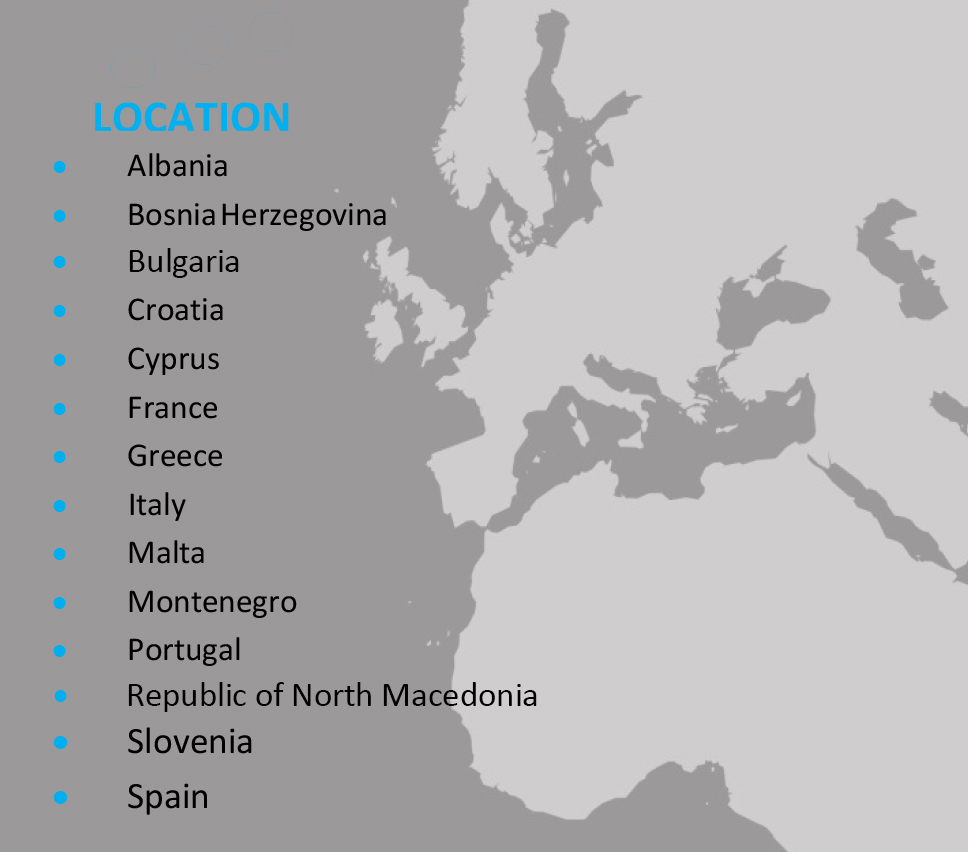
Location
Key figures

Duration:

40 Months

Projects:

14

Total cost:

€34.2m

Countries:

14

Financial contribution

85% co-financed by the European Regional Development Fund within the Interreg MED Programme

15% national co-financing by partner organisations

Promoter

The Interreg MED programme Managing Authority/Joint Secretariat is responsible for managing the programme. It is the entity that signs the subsidy contracts with the Lead partners, while the Joint Secretariat is a transnational team assisting the Managing Authority, the Monitoring Committee and the Audit Authority in implementing the programme. It receives the projects applications and instructs them, provides information to potential beneficiaries about funding under the MED programme and assists beneficiaries in the operations.

Key partners

The national co-financing includes private or public financing that is attributed to each organisation according to national rules of the participating in the Interreg MED Programme countries.

Beneficiaries

  • Public authorities: public institutions on national, regional and local level;
  • Businesses: key target groups are SMEs and structures accompanying them, public authorities, and research structures; business support organizations;
  • Research bodies: research organizations;
  • Civil society: NGOs, thematic networks, international organizations, EGTC.

Key actions

Structuring and disseminating a sound message based on the results of the projects for the entire MED community and beyond.

Reaching broader audiences exploiting various communication channels especially via social media tools.

Providing the framework to develop synergies and bring together stakeholders from the quadruple helix (public authorities, industry, academia and civil society) to reinforce dialogue and knowledge exchange on green growth.

Approaching business actors that can build and invest on the ideas emerging from the projects.

Collaborating with external stakeholders and EU projects working in the same field at national, Mediterranean and European level to ensure transnational dissemination and transferability.

Expected Results

Strengthening research, technological development and innovation.

Improved innovation capacities, competitiveness and internationalization of SMEs through thematic transnational events.

Improved cooperation between stakeholders of the quadruple helix (especially between research and businesses) by bridging with actors beyond MED communities and through thematic Working Groups.

Preparation of automated data flows for international reporting agreed in the Mediterranean region.

Strengthened green growth sectors representing important jobs potential through the following tools: transfer of results, integration of tools/results into local policies and/or regulatory framework, transfer of actions.

Share this:

Printable version

Who we are

  • Member States
  • Meet the team
  • Partners
  • History
  • Transparency and accountability
  • Transparency and access to information
  • Investigating fraud, corruption and misconduct

What we do

  • Economic Development & Employment
  • Higher Education & Research
  • Social & Civil Affairs
  • Water, Environment and Blue Economy
  • Transport & Urban Development
  • Energy & Climate Action
  • Day of the Mediterranean
  • Mediterranean Capitals of Culture and Dialogue

How we work

  • Policy Framework
  • Regional Platforms
  • Projects and Initiatives

Work with us

  • Vacancies
  • Secondments
  • Internships
  • Procurement

Info centre

  • Media corner
  • News
  • Agenda
  • Publications and key documents
  • Stories of Euro-Mediterranean Cooperation
  • Photo gallery
  • Video gallery
Co-financed by the European Union
  • Who we are
    • Member States
    • Meet the team
    • Partners
    • History
    • Transparency and accountability
      • Transparency and access to information
      • Investigating fraud, corruption and misconduct
  • What we do
    • Economic Development and Employment
    • Higher Education & Research
    • Social & Civil Affairs
    • Water, Environment and Blue Economy
    • Transport & Urban Development
    • Energy & Climate Action
  • Initiatives that build bridges
    • Day of the Mediterranean
    • Mediterranean Capitals of Culture and Dialogue
  • How we work
    • Policy Framework
    • UfM Regional Platforms
    • Projects and Initiatives
  • Work with us
    • Vacancies
    • Secondments
    • Internships
    • Procurement
    • Roster of experts
  • Info centre
    • Media center
    • News
    • Agenda
    • Publications and key documents
    • Human Stories of the Mediterranean
  • Contact
  • Social media
    • Facebook
    • Twitter
    • Youtube
    • Linkedin
    • Flickr
  • English
  • Français
  • العربية
  • English
  • Français
  • العربية
Union for the Mediterranean – UfM


We are using cookies to give you the best experience on our website.

You can find out more about which cookies we are using or switch them off in .

Powered by  GDPR Cookie Compliance
Cookies Overview

This website uses cookies so that we can provide you with the best user experience possible. Cookie information is stored in your browser and performs functions such as recognising you when you return to our website and helping our team to understand which sections of the website you find most interesting and useful.

Read more

Strictly Necessary Cookies

Strictly Necessary Cookie should be enabled at all times so that we can save your preferences for cookie settings.

3rd Party Cookies

This website uses Google Analytics to collect anonymous information such as the number of visitors to the site, and the most popular pages.

Keeping this cookie enabled helps us to improve our website.