
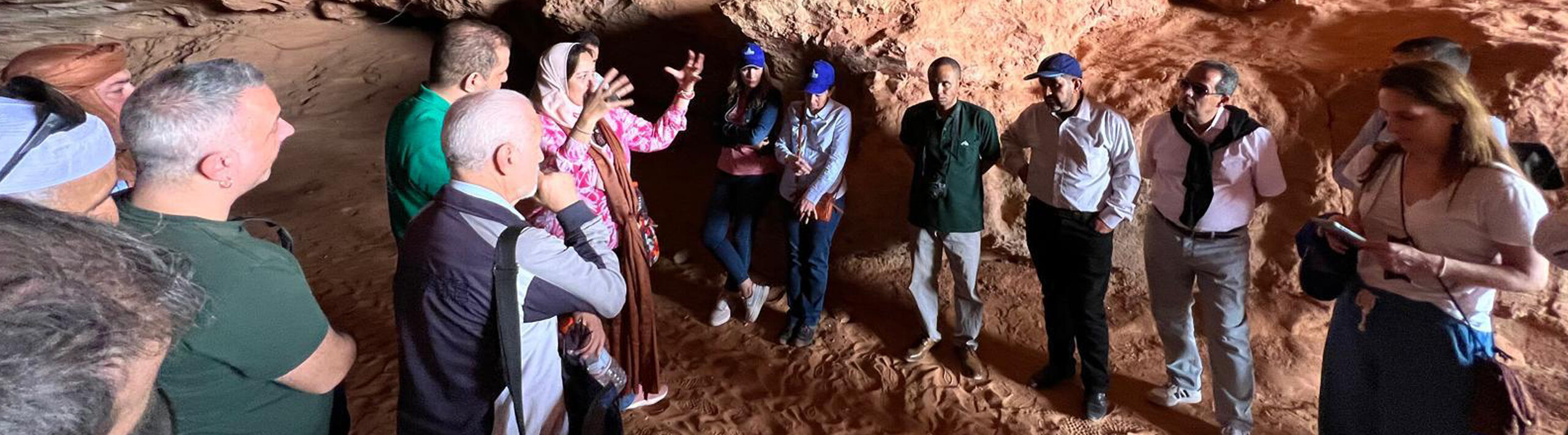
Capacity building program: Leveraging traditional building skills to build climate-resilient urban heritage
Context and objectives
Together with the UNESCO Regional Office for Maghreb countries, and with the support of the German Development Cooperation GIZ and the Spanish AECID, the UfM launched a series of workshops as part of the programme “Traditional Building Skills in the Southern Mediterranean Region: Know-How in the South Mediterranean.”
Urban heritage and traditional building skills play a crucial role in mitigating the impacts of climate change. By incorporating sustainable materials and climate-adaptive designs in buildings and cities, these practices enhance environmental resilience while fostering cultural identity and community cohesion.
The use of traditional techniques for renovation and retrofitting reduces carbon emissions, stimulates local economies, and encourages adaptive reuse and smart growth. By lowering energy consumption and promoting a circular economy, traditional building skills support more sustainable and resilient cities.
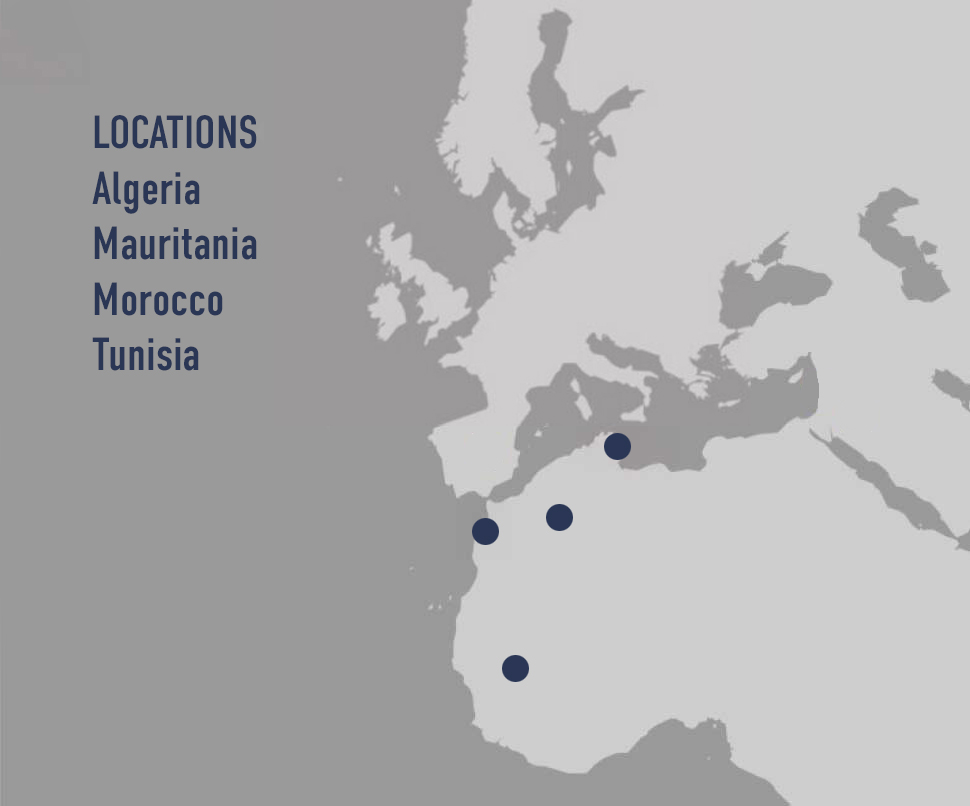
Held in Algeria, Mauritania, Morocco and Tunisia, among others.
Location
Key figures
Duration:
12 months
Countries:
4
Total cost:
Fully funded
Expected results
The need to establish nationally certified training programmes in traditional construction skills, integrating them into formal education systems. Countries such as France, Germany, and Switzerland provide successful models that could be adapted to national contexts in the Maghreb.


