Towards a new energy model in the Mediterranean
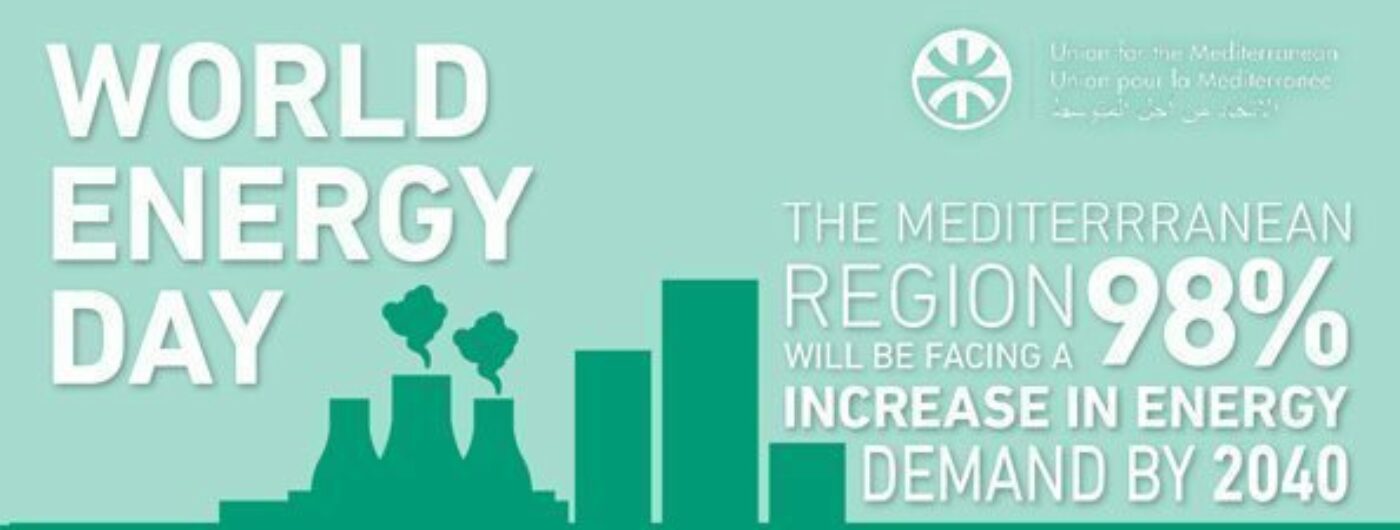
Barcelona, 11 October 2017. – The Mediterranean region is home to an increasing population of over 500 million people with growing energy demands. It is also one of the climate change hotspots and faces challenges including rising sea temperatures and water scarcity. It is estimated that there will be a 98% increase in energy demand in Southern Mediterranean countries by 2040.[1]
Yet there is also a positive agenda concerning energy and climate action in the Mediterranean. By the same year, zero-emission energy sources are projected to make up 60% of installed capacity.[2] In addition, renewable energy production will increase at a rate of 365% over the next three years.[3] Fostering investment in the energy sector is therefore the way forward to build up a sustainable and resilient economy in Mediterranean countries, which are expected to require an investment of approximately €25 billion per year for the next 30 years.[4]
On World Energy Day the Union for the Mediterranean is committed to enhancing cooperation and dialogue in the region. A good example is the first UfM Energy Business Forum, which took 18 October in Cairo, where more than 150 high-level government officials, representatives of large private companies and start-up teams working on renewable energies as well as international financial institutions and development banks will discuss new business and cooperation opportunities to reinforce a sustainable and climate-resilient energy transition.
Three regional dialogue energy platforms were set up during the last Ministerial Meeting with the agreement of the 43 UfM Energy Ministers. The objective is to promote and develop renewable energies and energy efficiency, including the gas market, reliable supply transportation, the progressive deployment of renewable energies and energy efficiency measures as well as the progressive integration of the electricity market.
To this end the UfM has labelled and supported three specific projects targeting renewable energy production and energy transition and aiming to mobilise €1 billion in six Mediterranean countries. The Tafila Wind Farm meets 3% of Jordan’s national electricity demand. Through SPREF (SEMed Private Renewable Energy Framework) the European Bank for Reconstruction and Development (EBRD) will provide financing and mobilise further investment from third parties of up to €834 million to prevent 780,000 tons of CO2 emissions annually. Finally, the UfM Energy University by Schneider Electric helps sustainability and energy transition professionals by offering more than 200 online training modules and a platform for global networking.
“Renewable energies and energy efficiency offer a unique opportunity for countries to reduce their vulnerability in terms of energy security and climate change and thus promote sustainable and human development in our societies,” said Jorge Borrego, UfM Deputy Secretary General for Energy and Climate Action. “The UfM conveys its commitment to strengthening regional cooperation and dialogue with a view to advance a new energy model in the Mediterranean, following the guidelines set by the Paris Agreement at COP21 and COP22.”
As part of the UN 2030 Agenda for Sustainable Development and the new UfM action-oriented Roadmap for enhanced regional cooperation, the UfM is stepping up its partnership with all global, regional and sub-regional initiatives and organisations to develop a comprehensive strategy on energy and climate action cooperation in the Mediterranean.
UfM-labelled Projects
The UfM Secretariat is actively working with all its partners across the region to foster sustainable development via concrete projects and initiatives:
UfM Regional Dialogue Energy Platforms. The UfM Regional Electricity Market Platform, UfM Renewable Energy and Energy Efficiency Platform and UfM Gas Platform recognise the importance of addressing energy challenges. The UfM Secretariat fulfils its role as a platform for UfM members, financial institutions, regional organisations, industrial enterprises and experts working towards the enhancement of synergies in the fields of renewable energies and energy efficiency, integration of electricity markets and gas in the Mediterranean region.
Tafila Wind Farm breaks new ground for renewable energy projects in the Mediterranean. The Jordanian project will cover 3% of national electricity demand and create substantial jobs for qualified workers.
SPREF (SEMed Private Renewable Energy Framework) aims to break down barriers preventing the development of private renewable energy markets in Morocco, Tunisia, Egypt and Jordan. Developed by the EBRD, the framework provides efficient financing mechanisms and targeted technical cooperation support for the implementation of renewable energy projects in the region. SPREF will support countries to meet renewable energy targets and prevent CO2 emissions.
UfM Energy University by Schneider Electric will provide free and specialised education programmes for energy professionals through an online platform. The project’s objectives are the development of expertise in energy efficiency and renewable energy through free online courses together with enhanced networking amongst regional experts in energy efficiency and renewable energy.
About World Energy Day 2017
World Energy Day was first proposed by Prof. Harold Oh, President and Chairman of the World Energy Forum, and was proclaimed by the World Energy Forum on 22 July 2012 in Dubai, United Arab Emirates. World Energy Day was first celebrated on 22 October 2012 on the Opening Day of the World Energy Forum 2012 (22-24 October) when a large number of Heads of State and Ministers and Country Delegations from 85 United Nations Member States gathered in Dubai, United Arab Emirates. The delegations adopted The Dubai Declaration of Energy for All which included unanimous support for the World Energy Day Proclamation.
[1]Mediterranean Energy Perspectives 2015, Observatoire Méditerranéen de l’Energie.
[2]New Energy Outlook 2016, Bloomberg.
[3]EIB FEMIP Study on the financing of Renewable Energy Investment in the Southern and Eastern Mediterranean Region. EIB, October 2010.