Growing environmental pressures have potential to fuel migration in Mediterranean region, UfM and MedECC warn
- The Mediterranean is one of the world’s most congested migration routes, with over 2.5 million people crossing the sea to Europe over the past four decades. The human cost of this is staggering: more than 30,000 recorded dead or missing between 2014 and 2024.
- Environmental change can adversely impact livelihoods, but its current influence on migration depends strongly on socioeconomic and geopolitical conditions. In a region that is widely recognised as a climate change hotspot, it could increasingly influence future migration patterns, particularly where vulnerability is high and adaptation capacity is limited.
- Resource scarcity and food insecurity are of particular concern, especially in water-stressed countries with heavily agriculture-dependent economies. By 2050, more than 20% of harvested marine species in the Mediterranean could become extinct, while crop yields could drop by 17%.
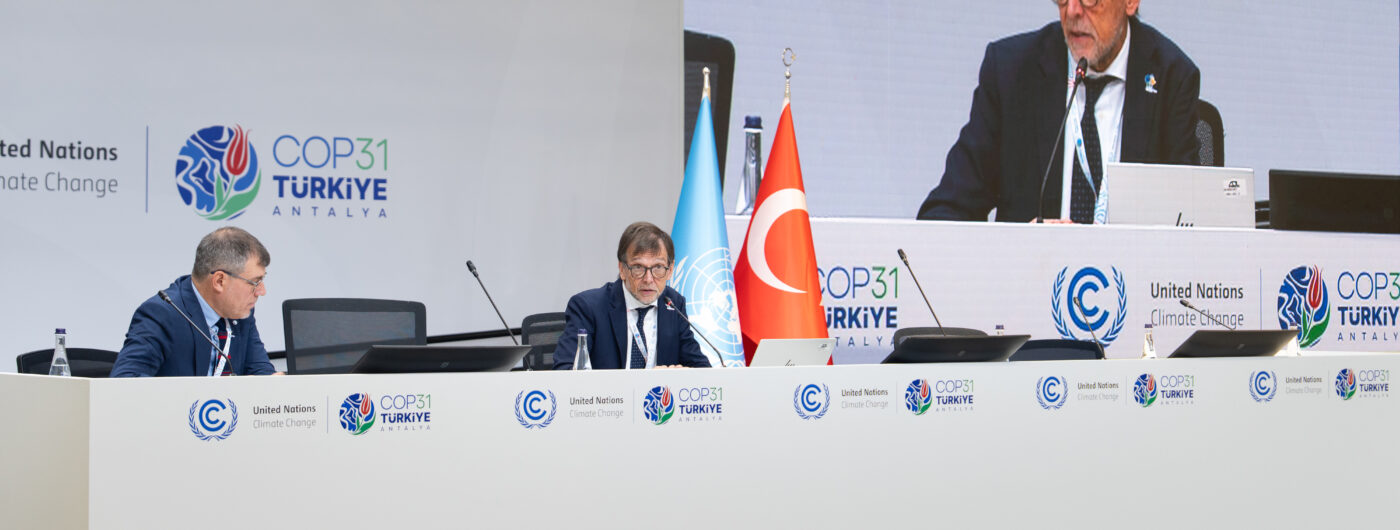
16 November 2026, COP31 Antalya. Migration patterns across the Mediterranean are likely to shift in the coming years due to growing environmental pressures, with more people expected to migrate in search of safety and better livelihoods in the absence of effective adaptation and mitigation policies. This is one of the findings from the Mediterranean Experts on Climate and Environmental Change’s new report on environmental change, conflict, and human migration presented today at COP31 by University of Salento climatologist Piero Lionello alongside Union for the Mediterranean Deputy Secretary General for Stability and Resilience Joan Borrell.
While environmental displacement currently tends to take place over shorter distances, with socioeconomic and geopolitical factors playing a more significant role in cross-border movement, rising sea levels, extreme weather events, and resource scarcity have the potential to become more prominent drivers of migration in years to come. At present, however, there is no single, direct link between environmental change and migration that applies across the region, and the complexity of the matter coupled with the lack of adequate data make it challenging to assess empirically.
Nonetheless, in the Mediterranean, where average temperatures in 2100 could be a full 6°C warmer than pre-industrial times, habitability will be severely impacted if sufficient measures are not put in place. Because global warming stresses vital sectors such as agriculture, tourism, and energy, it hinders development and contributes to instability in a region already marked by significant socioeconomic disparities. This is particularly true in the water-stressed countries along the southern and eastern shores of the sea, which are subject to the double threat of sea level rise and desertification.
“The Mediterranean faces the simultaneous pressures of climate change, geopolitical instability and migration, and what affects one shore will always, one way or another, affect the others,” said UfM Deputy Secretary General Joan Borrell. “But our region is not destined to be defined by a succession of crises. With stronger cooperation around climate action and sustainable development, we are more than capable of turning our shared vulnerabilities into shared solutions.”
“This assessment shows how environmental change, conflict and socioeconomic conditions interact differently across the Mediterranean, shaping both the decision to move and the ability to remain,” said MedECC’s Piero Lionello. “It highlights the need to go beyond oversimplified narratives: a deep understanding of these processes is essential for designing effective responses that reduce human suffering.”
As the new report highlights, policy frameworks that emphasise regional development and cooperation, in addition to investment in green infrastructure, resilient agriculture, and sustainable water management, can help prevent forced displacement. Strengthening interdisciplinary research and improving databases would also allow for a better understanding and anticipation of environmental migration dynamics in the region. MedECC is currently at work on the Second Mediterranean Assessment Report (MAR2), which will examine this and other climate-related issues further.
Given the impact of climate change on our region, the UfM is once again hosting the Mediterranean Pavilion at this year’s COP, the first of its kind to take place on the shores of our shared sea. The pavilion allows Mediterranean countries, scientific experts including MedECC, the private sector and civil society to showcase their commitments to climate action and sustainable development. The UfM, alongside the COP31 host country, was also behind the Antalya Mediterranean Climate Dialogue consultation process on regional climate priorities in the buildup to the UN conference. By joining forces with key regional players, the UfM ensures the Mediterranean’s unique challenges are present in global climate processes.