
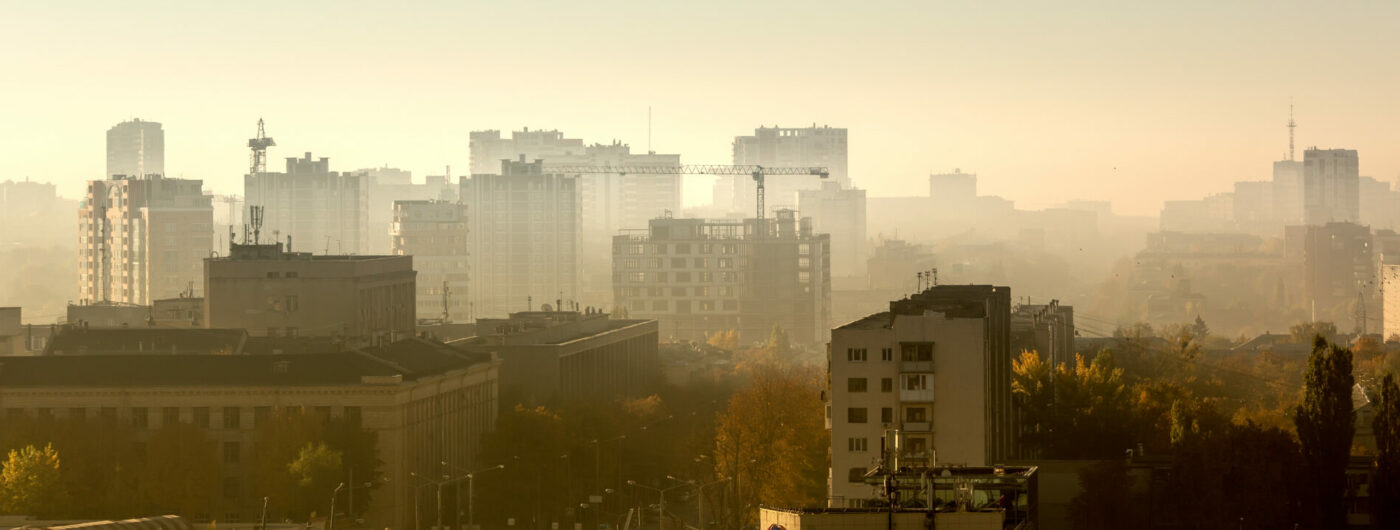
Euro-Mediterranean cities in the post-pandemic era: rethinking identity and furthering sustainability and resilience
15 July 2020. The coronavirus has challenged the core of what makes cities vibrant and successful: busy streets full of people. Will these cities ever come back to be the same? The webinar on Euro-Mediterranean cities in the post-pandemic era, organised by the Union for the Mediterranean (UfM) in cooperation with the UNESCO World Heritage Centre reflected on sustainable urban development in the Mediterranean region after COVID-19, climate change, cultural heritage, and on the approach of the 2011 UNESCO Recommendation on the Historic Urban Landscape.
 The event was opened by the UfM Secretary-General, Nasser Kamel, chaired by the Deputy Director of the UNESCO World Heritage Centre, Dr Jyoti Hosagrahar, and structured around a conversation with Prof. Richard Sennett, Senior Fellow at the Centre on Capitalism and Society at Columbia University and Visiting Professor of Urban Studies at MIT.
Professor Richard Sennett said: “Economic consequences of this pandemic will remain for a long time. The crisis is showing how fragile modern economies are”.
The UfM Secretary General, Nasser Kamel, said: “This webinar gives us the opportunity to draw upon the expertise and wisdom of Professor Sennett, as a preeminent thinker and renowned public intellectual, in indicating the way forward in science-led and heritage-based urban development at a time when we are faced with a global pandemic, climate emergency and other challenges of sustainable development, all at once.”
The Deputy Director of the UNESCO World Heritage Centre, Dr. Jyoti Hosagrahar, said: “As we move to recover cities, we must place heritage at the heart of urban solutions that engage people, recognize their cultural diversity, and draw on a storehouse of local place-based solutions rooted in traditional knowledge to make cities sustainable, resilient, safe, and inclusive.”
Dr. Hosagrahar introduced the importance of using this moment of crisis to rethink the significance of place and identity in furthering sustainability and resilience. She recalled that the Euro-Mediterranean region has a large number of World Heritage cities and numerous other cities with valuable urban heritage. She addressed the importance of integrating the protection of urban heritage in solutions for sustainable urban development from housing to public space in line with the UNESCO 2011 Recommendation on the Historic Urban Landscape.
Professor Sennett reflected on the importance of imagining cities that are high density, small scale, focused on local communities, mixed, and negotiated. He saw historic urban centres as offering models and lessons for cities of the future in the Euro-Mediterranean region in the coming decades. He said the pandemic also challenges urbanists to rethink the architecture of density and reimagine cities that are walkable, have open green spaces, and recognize the power of local communities.
The discussion dwelt upon the concepts of communities and their well-being in cities, urban compactness and density; historic cities and urban heritage as a resource for sustainable development; how the pandemic has exacerbated inequality within cities, especially impacting informal workers and people with low–skilled jobs; sustainable tourism; the role of public transport, currently seen as unhealthy, but basic to ensuring access to economic opportunities and responding to challenges of climate change; and ways to kick-start green recovery after the pandemic.
The webinar will contribute to the ongoing work on the “UfM Strategic Urban Development Action Plan 2040 for sustainable, resilient and inclusive cities and communities in the Mediterranean”, which is due to be finalised by the end of 2020.
The webinar was followed by 90 participants, including representatives of public authorities working on housing and urban development in the Euro-Mediterranean countries experts, academics, students, representatives of intergovernmental organizations and NGOs, international financial institutions, and donors. There have been more than 600 viewings in social media during and right after the event.
Full webinar
Jyoti Hosagrahar
Jyoti Hosagrahar is Deputy Director for the World Heritage Centre at UNESCO. Among other responsibilities, she leads the implementation of the Historic Urban Landscape Recommendation, the World Heritage Cities Programme, and Sustainable Development, the Earthen Architecture Programme, as well as the Culture 2030 Indicators for measuring Culture in the 2030 Agenda across all the Culture Conventions and Recommendations.
Links to background information
UNESCO World Heritage Cities Programme (whc.unesco.org/en/cities)
UNESCO 2011 Historic Urban Landscape Recommendation (whc.unesco.org/en/hul)
UNESCO Policy Document on the Impacts of Climate Change on World Heritage Properties (https://whc.unesco.org/en/climatechange/)
Cities in the Pandemic, Richard Sennett, May 5th 2020 https://www.publicspace.org/multimedia/-/post/cities-in-the-pandemic
Covid-19 might not change cities as much as previous pandemics, The Economist, April 25th 2020 https://www.economist.com/books-and-arts/2020/04/25/covid-19-might-not-change-cities-as-much-as-previous-pandemics
Great cities after the pandemic, The Economist, June 11th 2020 https://www.economist.com/leaders/2020/06/11/great-cities-after-the-pandemic
Interview with Richard Sennett and Saskia Sassen: “Rethinking tomorrow” https://www.youtube.com/watch?v=AkxKHXIVQNQ
Word Bank – Urban development Covid 19 https://www.worldbank.org/en/topic/urbandevelopment
UN-Habitat 2020 Integrating health in urban and territorial planning: a sourcebook for urban leaders, health and planning professionals https://unhabitat.org/integrating-health-in-urban-and-territorial-planning-a-sourcebook-for-urban-leaders-health-and
Spatial Planning for Health An evidence resource for planning and designing healthier places, Public Health England 2017 https://assets.publishing.service.gov.uk/government/uploads/system/uploads/attachment_data/file/729727/spatial_planning_for_health.pdf