
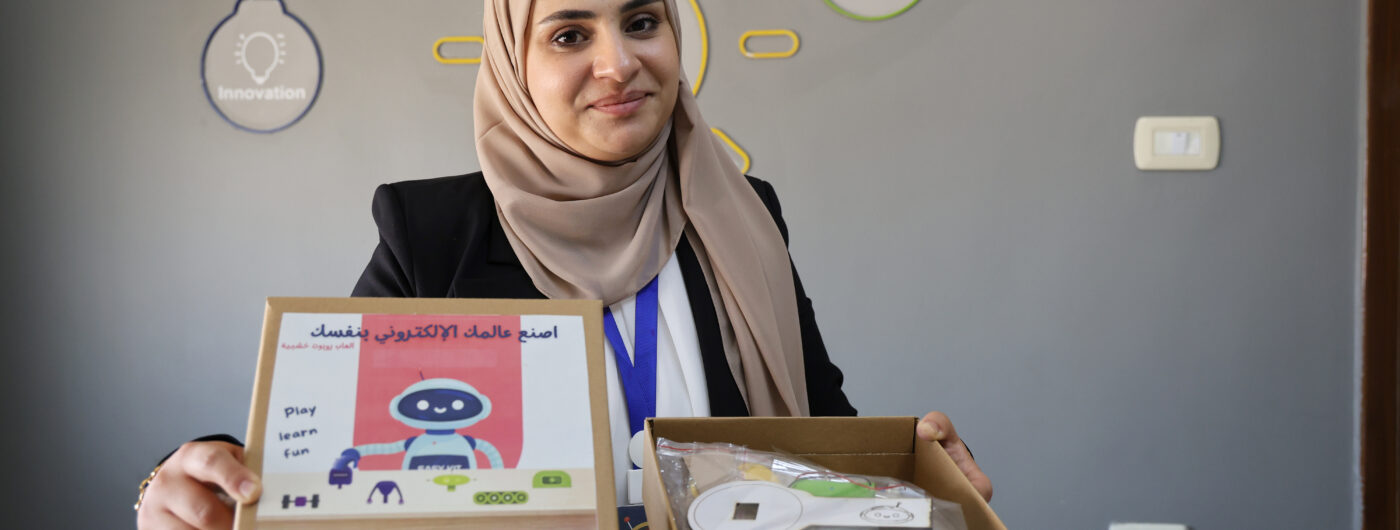
Bringing tech skills beyond major cities: a Jordanian answer
Barcelona, 6 March 2026. From the historic city of Karak, Thelal Al-Shamailah (34 years) has built a practical solution to a challenge many communities across the Euro-Mediterranean region are grappling with: how do you equip young people and women beyond major urban economic hubs with tech skills fast enough to keep pace?
In many parts of the region, the digital divide is not just about internet access, but also where skills, investment and opportunity cluster. Insufficient digital transformation has been a factor widening the digital gap, and wider evidence points to uneven access to skills and training in the Western Balkans and the MENA region.
The barriers are often even harder outside major cities. This is what Thelal chose to address after experiencing it first-hand.
She graduated in 2014 with a degree in electrical and electronic engineering. She expected challenge. She did not expect absence. In Karak, job opportunities were extremely limited. Few roles matched her training. Leaving would have been the obvious path. Instead, she stayed and began asking a different question: what if the opportunity did not exist because no one had built it yet?
In 2019, she founded Easy Kit Academy, which she describes as “a social enterprise for teaching technology skills and supporting the entrepreneurial and educational sectors”. The idea was straightforward. Make training practical and affordable and keep it close to home.
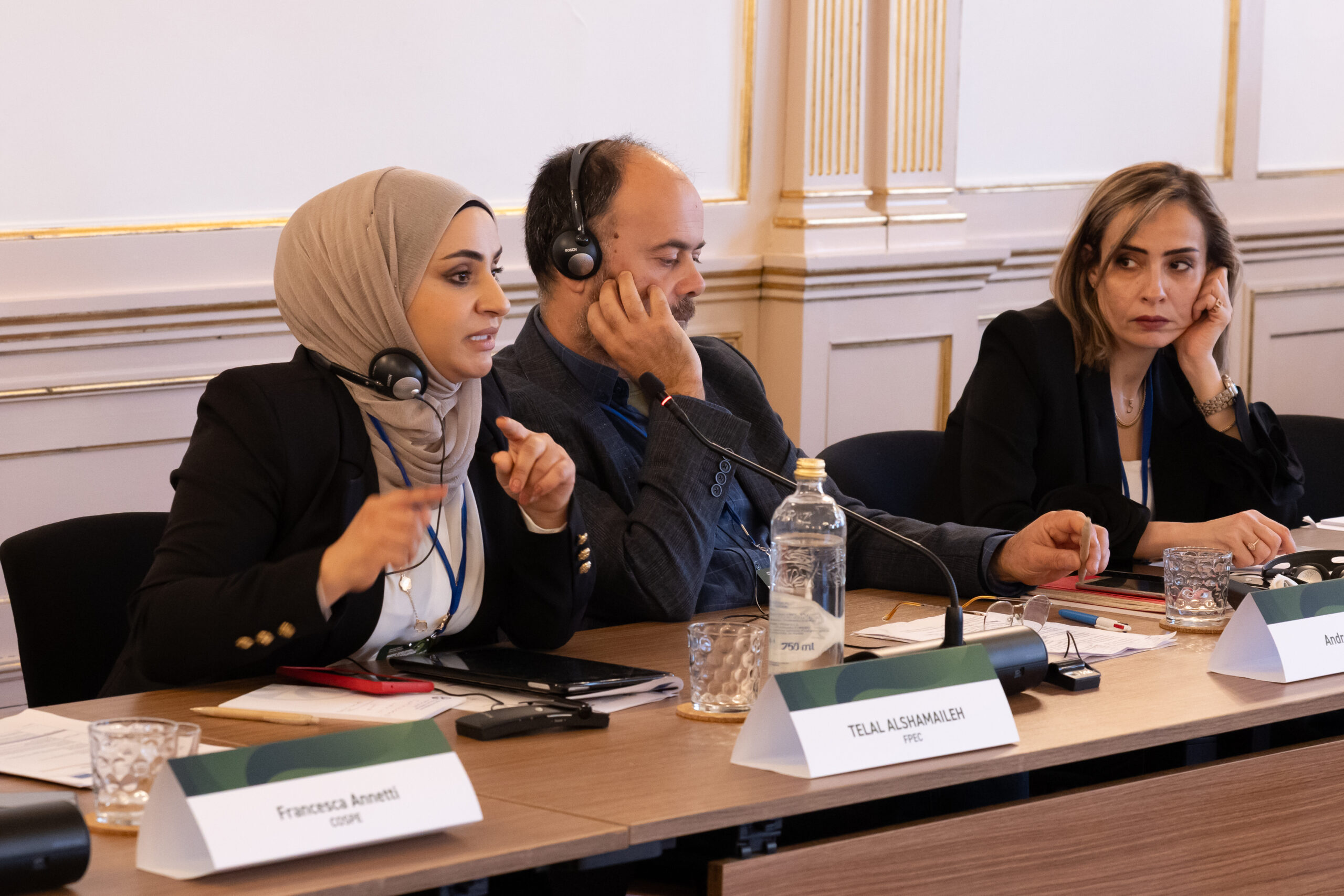
Thelal Al-Shamaileh (left) at the UfM Grant Schemes’ Stakeholders Dialogue: Making Development Work for Development (Barcelona, Spain – 11 April 2025).
The academy works with adolescents, young people, teachers and women. Students learn robotics, artificial intelligence, programming and design. Teachers are supported to bring technical skills into classrooms, even when resources are limited. Women and young entrepreneurs receive training in 3D printing, laser tools, e-commerce and digital marketing.
“There’s a fast global shift toward advanced technologies,” Thelal explains, “and at the same time these advances are missing here in many sectors resulting in limited economic opportunities.”
Her work has gained national recognition. She has been appointed as an Entrepreneurship Ambassador for Karak Governorate by the country’s Ministry of Digital Economy and Entrepreneurship. The ministry also leads Jordan’s national digital transformation agenda with social inclusion at its core.
In 2024, her initiative became a beneficiary of the Union for the Mediterranean’s Grant Scheme to Promote Employment and Entrepreneurship in the Green Economy. The scheme supports projects that help young people and women gain job-relevant green skills and develop green businesses across the Southern Mediterranean. For Thelal, this support has strengthened the academy’s capacity and visibility while connecting her work to a wider regional effort.
An unexpected shift also played a role. During the Covid period, the rapid move online allowed her to attend trainings and meetings that would once have required travel. She expanded her network beyond Karak. “It made geography into one place,” she says.
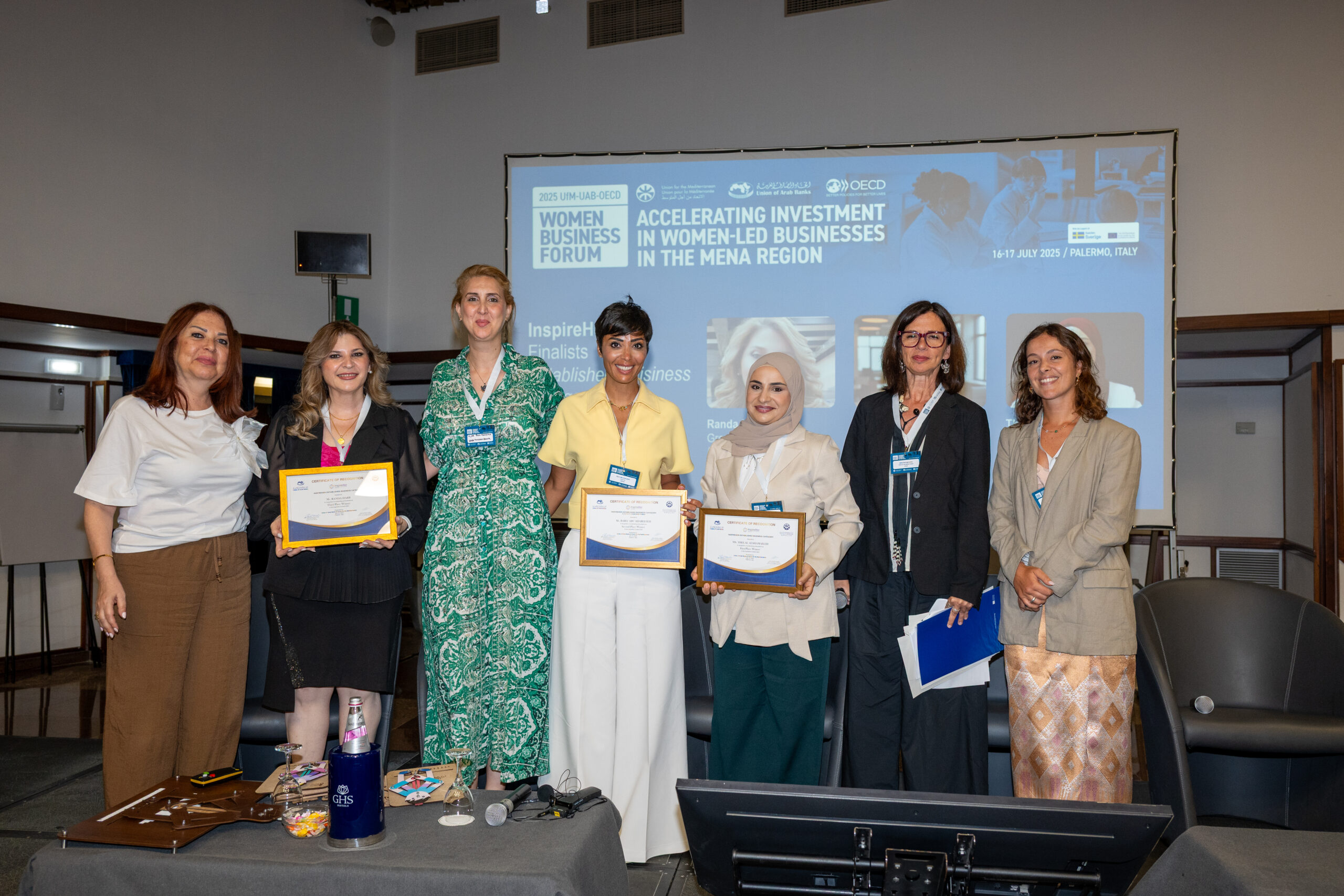
Thelal Al-Shamaileh (third from the right) at the InspireHer Award ceremony on the sidelines of the UfM-UAB-OECD Women Business Forum (Palermo, Italy – 17 July 2025).
Those online connections later became in-person engagement. Being hosted by the UfM in Barcelona and later in Palermo in 2025, she says, expanded her network, strengthened credibility, and supported access to institutions and funding sources that can help a project grow.
More recognition followed. In the InspireHER competition, she received Established Business Award, describing the result as “a crowning moment” after “all the challenges we managed to overcome”.
The challenges remain real. Women entrepreneurs outside major urban centres often struggle to access finance, knowledge and networks. Social expectations and overlapping responsibilities at home and at work add pressure. For Thelal, solutions must reflect geography and reality. “A woman living in a governorate or a remote area has different needs from a woman living in the capital,” she says. “Programmes should be designed accordingly.”
Her story offers a quiet reminder. Innovation does not begin only in capitals. It can start in places labelled remote, shaped by local purpose and sustained by skill, persistence and connection.

