• English
  • Français
  • العربية
Follow us
Union for the Mediterranean – UfMUnion for the Mediterranean – UfMUnion for the Mediterranean – UfMUnion for the Mediterranean – UfM
  • Who we are
    • The Union for the Mediterranean is an intergovernmental institution bringing together the European Union Member States and 16 countries from the Southern and Eastern shores of the Mediterranean to promote dialogue and cooperation.

      OVERVIEW   

    • Who we are

      • Member States
      • Meet the team
      • Partners
      • History

      Transparency and accountability

      • Transparency and access to information
      • Investigating fraud, corruption and misconduct
    • Key documents

      UfM Institutional Brochure UfM How we work

      More documents   

  • What we do
    • The UfM seeks to enhance regional cooperation, dialogue and the implementation of concrete projects and initiatives with tangible impact on our citizens to address three strategic objectives: human development, stability and integration.

      OVERVIEW   

    • Inclusive development

      • Economic Development and Employment
      • Higher Education & Research
      • Social & Civil Affairs

      Sustainable development

      • Water, Environment and Blue Economy
      • Transport & Urban Development
      • Energy & Climate Action

      Initiatives that build bridges

      • Day of the Mediterranean
      • Mediterranean Capitals of Culture and Dialogue
    • How we work

      • Policy Frameworks
      • Regional Platforms
      • Projects and Initiatives
  • Work with us
    • The UfM Secretariat is the operational platform of the Union for the Mediterranean. The staff of the UfM is made of more than 17 nationalities working in a multicultural environment that fosters cooperation and intercultural communication and exchange.

    • Work with us

      • Vacancies
      • Secondments
      • Internships
      • Procurement
  • Info centre
    • Find our latest press releases, press invitations, visual identity, key institutional documents, photos and other relevant information


      DOWNLOAD THE UfM VISUAL IDENTITY GUIDELINES AND LOGOS (ZIP FILE)   

    • Info centre

      • Media corner
      • News
      • Agenda
      • Publications and key documents
      • Stories of Euro-Mediterranean Cooperation
    • UfM in the Media

      9 May 2026 – Agence Europe (EN) – The fire season that never ends – by Joan Borrell Mayeur
      View article
      9 May 2026 – Agence Europe (FR) – Une saison des feux qui n’en finit pas – par Joan Borrell Mayeur
      View article
      7 May 2026 – Al-Dustour – حرائق غابات المتوسط على وشك أن تبدأ مجدداً… بلا حدود
      View article
  • Contact

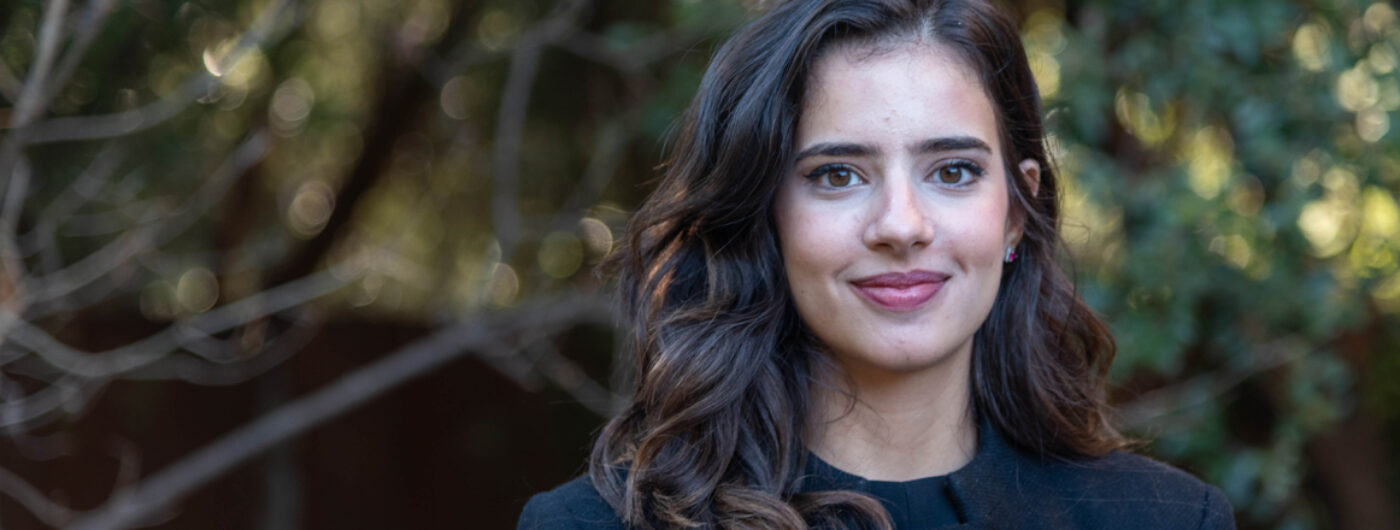
A Euro-Mediterranean generation in the making: Kamilia’s journey

Higher Education & Research

How Euro-Mediterranean universities labelled by the Union for the Mediterranean help shape young people with a shared vision for the region

Born and raised in Rabat, on the southern shore of the Mediterranean, Kamilia grew up in an environment where Mediterranean identity was not an abstract notion, but a lived reality. In her family, languages, cultures and openness to others were an integral part of education. Learning Spanish from an early age was a given. This familiarity with otherness, combined with a strong sense of belonging to a shared space, gradually shaped her worldview and guided her academic choices.

Her interest in international relations did not develop overnight. It was strengthened through concrete experiences, notably during an academic mobility period in France. There, she attended a training programme organised by a Mediterranean foundation for strategic studies in Toulon, Europe’s largest military port. “This place perfectly symbolised the security and strategic challenges of the Mediterranean,” she explains. This immersion, experienced during her final undergraduate year, marked a decisive turning point and confirmed her desire to specialise in Euro-Mediterranean dynamics.

Choosing the Euro-Mediterranean University of Fes naturally followed. Kamilia began her studies there at undergraduate level before enrolling in a master’s programme dedicated to Mediterranean and African policies, a unique offering in Morocco. Beyond academic excellence, it was the university’s identity that convinced her. “I found there the Mediterranean values my parents had passed on to me,” she notes. Multilingualism, cultural diversity and a strong Euro-Mediterranean focus are reflected in concrete ways, including the compulsory teaching of Spanish as a second foreign language.

Campus life played a central role in her personal and intellectual development. With more than forty nationalities represented among its students, UEMF offers a particularly rich intercultural environment. Kamilia founded a club dedicated to student integration and intercultural dialogue, offering language courses and organising multicultural events. One such event, initially conceived as a small end-of-year celebration, gradually became a university tradition. “It reflects the commitment of the teaching staff to ensuring that international students feel at home, even when far from their own country,” she explains.

Her openness to the world was further strengthened during a summer school at the Euro-Mediterranean University (EMUNI) in Slovenia, focusing on Mediterranean lifestyles and connections. For ten days, students from across the Mediterranean basin shared the same living space. What struck her most was the strength of South–South dialogue, the discovery of shared traditions and a culture of hospitality that gave rise to a genuine sense of fraternity among young people from Morocco, Egypt, Algeria and Jordan.

These experiences nurtured a deep sense of empathy and a nuanced understanding of Mediterranean realities. For Kamilia, living alongside others is essential to overcoming stereotypes. She recalls sharing accommodation with a student from Guinea-Bissau, an experience that allowed her to discover a new culture and learn some Portuguese. “These are memories that stay with you and shape your identity over time,” she reflects.

Encouraged by close and attentive academic supervision, she chose to pursue a PhD, further deepening her research on the Mediterranean. This journey later led her to join the Union for the Mediterranean as an intern, a step that represents both continuity and a new phase. The experience has enabled her to better understand regional cooperation mechanisms and to connect academic research with concrete action.

After completing her doctorate, Kamilia hopes to contribute to bringing the two shores of the Mediterranean closer together and to work towards a more resilient and inclusive region. Her message to younger generations is clear: the Mediterranean cannot be understood through books alone. It must be lived, experienced and questioned on a daily basis. Learning languages, opening up to different cultures and maintaining a critical mindset are, in her view, essential to shaping the future of a space that, rather than dividing, brings people together.

The Euro-Mediterranean University of Fes (UEMF) and the Euro-Mediterranean University (EMUNI) are among the higher education institutions labelled by the Union for the Mediterranean. Through this label, the UfM has contributed to the creation of academic institutions that actively promote intercultural dialogue, Euro-Mediterranean cooperation and the training of new generations with a distinctive Euro-Mediterranean vision, committed to the future of the region.

Publication date: January 2026
Back to Human Stories Page
Previous Story
Next Story

Who we are

  • Member States
  • Meet the team
  • Partners
  • History
  • Transparency and accountability
  • Transparency and access to information
  • Investigating fraud, corruption and misconduct

What we do

  • Economic Development & Employment
  • Higher Education & Research
  • Social & Civil Affairs
  • Water, Environment and Blue Economy
  • Transport & Urban Development
  • Energy & Climate Action
  • Day of the Mediterranean
  • Mediterranean Capitals of Culture and Dialogue

How we work

  • Policy Framework
  • Regional Platforms
  • Projects and Initiatives

Work with us

  • Vacancies
  • Secondments
  • Internships
  • Procurement

Info centre

  • Media corner
  • News
  • Agenda
  • Publications and key documents
  • Stories of Euro-Mediterranean Cooperation
  • Photo gallery
  • Video gallery
Co-financed by the European Union
  • Who we are
    • Member States
    • Meet the team
    • Partners
    • History
    • Transparency and accountability
      • Transparency and access to information
      • Investigating fraud, corruption and misconduct
  • What we do
    • Economic Development and Employment
    • Higher Education & Research
    • Social & Civil Affairs
    • Water, Environment and Blue Economy
    • Transport & Urban Development
    • Energy & Climate Action
  • Initiatives that build bridges
    • Day of the Mediterranean
    • Mediterranean Capitals of Culture and Dialogue
  • How we work
    • Policy Framework
    • UfM Regional Platforms
    • Projects and Initiatives
  • Work with us
    • Vacancies
    • Secondments
    • Internships
    • Procurement
    • Roster of experts
  • Info centre
    • Media center
    • News
    • Agenda
    • Publications and key documents
    • Human Stories of the Mediterranean
  • Contact
  • Social media
    • Facebook
    • Twitter
    • Youtube
    • Linkedin
    • Flickr
  • English
  • Français
  • العربية
  • English
  • Français
  • العربية
Union for the Mediterranean – UfM


We are using cookies to give you the best experience on our website.

You can find out more about which cookies we are using or switch them off in .

Powered by  GDPR Cookie Compliance
Cookies Overview

This website uses cookies so that we can provide you with the best user experience possible. Cookie information is stored in your browser and performs functions such as recognising you when you return to our website and helping our team to understand which sections of the website you find most interesting and useful.

Read more

Strictly Necessary Cookies

Strictly Necessary Cookie should be enabled at all times so that we can save your preferences for cookie settings.

3rd Party Cookies

This website uses Google Analytics to collect anonymous information such as the number of visitors to the site, and the most popular pages.

Keeping this cookie enabled helps us to improve our website.