

WE-TRAIN
Context and objectives
Across the Euro-Mediterranean region, women continue to face barriers that prevent them from fully participating in the labour market and entrepreneurial ecosystem. These barriers include skills gaps in fast-growing digital sectors, unequal access to training opportunities, and limited networks to support professional development. Women entrepreneurs often struggle to reach markets or obtain visibility for their businesses, which further limits their ability to benefit from the opportunities created by e-commerce and the digital economy.
The Covid-19 pandemic has accelerated digitalisation worldwide, but women in the Southern Mediterranean were disproportionately excluded from its benefits. This digital divide has exacerbated existing socio-economic inequalities, particularly affecting young women from rural or low-income backgrounds. At the same time, opportunities in the digital economy and online trade offer immense potential to boost women’s employment, entrepreneurship, and leadership in inclusive and sustainable economic growth.
WE-TRAIN (Women in E-commerce: A peer support project providing Training, Assistance, Innovation and Networking) directly responds to these challenges. By combining training in digital and entrepreneurial skills with mentoring, peer-support networks, and regional exchanges, the project seeks to equip women to seize opportunities in e-commerce and become drivers of innovation and growth in their communities. It promotes inclusive development while strengthening cross-border cooperation between women entrepreneurs across the Mediterranean.
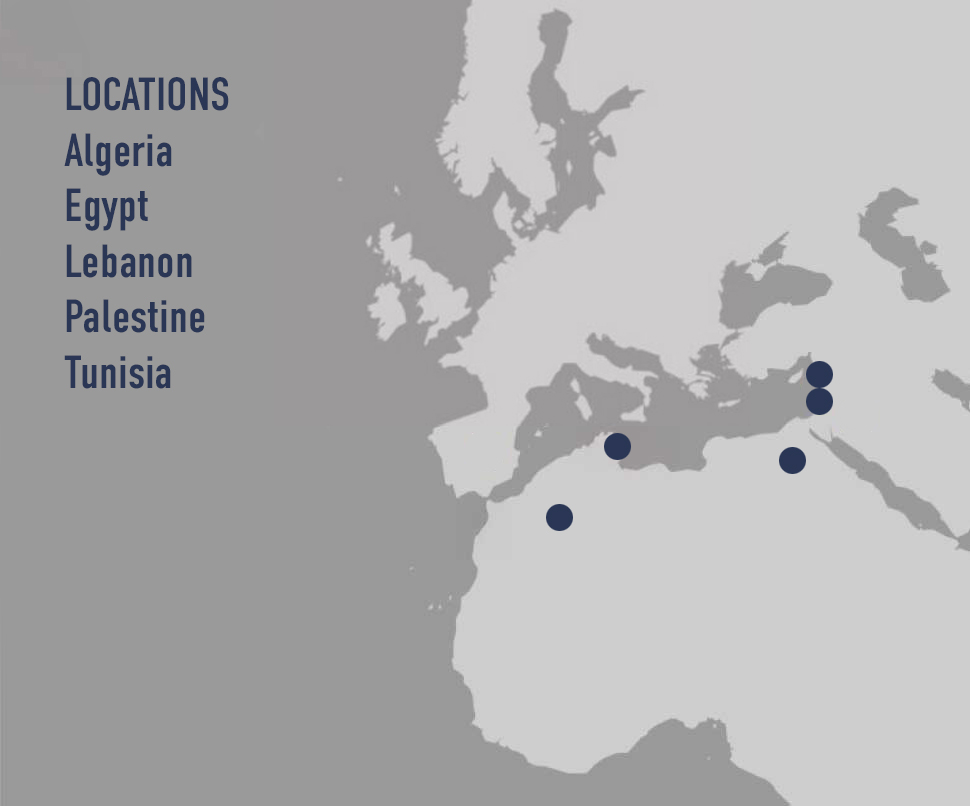
Location
Key figures
Duration:
12 months
Countries:
5
Budget for the action:
EUR 374,042.04
Grant awarded:
EUR 299,233.63
Promoter
The René Moawad Foundation is a Lebanese non-profit organisation founded in 1991 and registered with the Ministry of Interior and Municipalities. RMF has three decades of experience implementing programmes that promote social and economic development, good governance, and equal opportunities for all. The foundation works across Lebanon in fields such as education, health, rural development, agriculture, and women’s empowerment.
RMF has extensive experience in women’s economic empowerment and entrepreneurship. Its flagship programmes include:
- Empowerment and Employability of Women in North and Mount Lebanon, which trained and supported over 1,500 women and strengthened dozens of SMEs and cooperatives.
- Access2Markets Booster for Women SMEs in Lebanon, designed to support women-owned businesses in enhancing competitiveness and accessing new markets.
RMF’s mission is to empower communities through sustainable, inclusive development. Within WE-TRAIN, RMF serves as lead promoter, coordinating project activities, mobilising its expertise in women’s entrepreneurship, and ensuring coherence across partner countries.
Key partners
- Mediterranean Youth Foundation for Development (MYF) – Egypt
Established in 2019, MYF is an independent organisation that supports youth and women through capacity building, advocacy, and skills training. With a strong presence in Egypt, MYF promotes youth and women’s inclusion in economic, cultural, and civic life, and has a growing regional network. Within WE-TRAIN, MYF contributes to outreach, training delivery, and the mobilisation of young women entrepreneurs across Egypt. - Centre of Arab Women for Training and Research (CAWTAR) – Tunisia
Based in Tunis, CAWTAR is a regional centre of excellence established in 1993 to promote women’s rights, gender equality, and social development in the Arab region. It conducts research, training, advocacy, and capacity-building programmes, and has extensive experience in working with regional and international partners. In WE-TRAIN, CAWTAR brings its expertise in gender equality, women’s leadership, and regional knowledge-sharing to strengthen the project’s impact across partner countries.

Beneficiaries
- Young unemployed women (18–30) in Algeria, Egypt, Lebanon, Palestine, and Tunisia who will receive training in digital, business, and entrepreneurial skills.
- Women-led start-ups and SMEs seeking to expand into e-commerce and online trade, with tailored support in marketing, digital presence, and access to markets.
- Local training institutions and civil society organisations, which will benefit from strengthened capacity to reach women and deliver gender-sensitive programmes.
- Mentors and peer groups, who will engage in knowledge exchange and provide continued support to women participants.
Key actions
Capacity building and training: Delivery of tailored training modules in digital marketing, e-commerce management, financial literacy, and entrepreneurship.
Peer-to-peer learning: Creation of networks where women entrepreneurs can share experiences, challenges, and strategies, reinforcing solidarity and mutual support.
Mentorship programmes: Linking women with experienced mentors and professionals to provide guidance on business growth, access to markets, and innovation.
Institutional strengthening: Supporting local organisations and training centres to design and deliver programmes that respond to women’s needs in the digital economy.
Regional exchanges: Organising cross-border workshops and knowledge-sharing events to foster regional cooperation and disseminate good practices.
Visibility and advocacy: Enhancing the visibility of women-led enterprises and raising awareness on the importance of women’s role in inclusive digital trade.
Expected results
Empowered women entrepreneurs equipped with the digital, entrepreneurial, and leadership skills needed to thrive in the e-commerce sector.
Improved employability of young women, particularly those from marginalised or low-income backgrounds, through training and mentoring.
Stronger ecosystems for women-led enterprises, with improved institutional capacity and more supportive networks at local and regional levels.
Enhanced regional cooperation, with women entrepreneurs from five countries collaborating, sharing experiences, and building a cross-Mediterranean peer-support network.
Greater visibility of women’s contributions to sustainable economic growth, helping shift perceptions and reduce gender gaps in the labour market.

