
• English
  • العربية
Follow us
Union for the Mediterranean – UfMUnion for the Mediterranean – UfMUnion for the Mediterranean – UfMUnion for the Mediterranean – UfM
  • Who we are
    • The Union for the Mediterranean is an intergovernmental institution bringing together the European Union Member States and 16 countries from the Southern and Eastern shores of the Mediterranean to promote dialogue and cooperation.

      OVERVIEW   

    • Who we are

      • Member States
      • Meet the team
      • Partners
      • History

      Transparency and accountability

      • Transparency and access to information
      • Investigating fraud, corruption and misconduct
    • Key documents

      UfM Institutional Brochure UfM How we work

      More documents   

  • What we do
    • The UfM seeks to enhance regional cooperation, dialogue and the implementation of concrete projects and initiatives with tangible impact on our citizens to address three strategic objectives: human development, stability and integration.

      OVERVIEW   

    • Inclusive development

      • Economic Development and Employment
      • Higher Education & Research
      • Social & Civil Affairs

      Sustainable development

      • Water, Environment and Blue Economy
      • Transport & Urban Development
      • Energy & Climate Action

      Initiatives that build bridges

      • Day of the Mediterranean
      • Mediterranean Capitals of Culture and Dialogue
    • How we work

      • Policy Frameworks
      • Regional Platforms
      • Projects and Initiatives
  • Work with us
    • The UfM Secretariat is the operational platform of the Union for the Mediterranean. The staff of the UfM is made of more than 17 nationalities working in a multicultural environment that fosters cooperation and intercultural communication and exchange.

    • Work with us

      • Vacancies
      • Secondments
      • Internships
      • Procurement
  • Info centre
    • Find our latest press releases, press invitations, visual identity, key institutional documents, photos and other relevant information


      DOWNLOAD THE UfM VISUAL IDENTITY GUIDELINES AND LOGOS (ZIP FILE)   

    • Info centre

      • Media corner
      • News
      • Agenda
      • Publications and key documents
      • Stories of Euro-Mediterranean Cooperation
    • UfM in the Media

      9 May 2026 – Agence Europe (EN) – The fire season that never ends – by Joan Borrell Mayeur
      View article
      9 May 2026 – Agence Europe (FR) – Une saison des feux qui n’en finit pas – par Joan Borrell Mayeur
      View article
      7 May 2026 – Al-Dustour – حرائق غابات المتوسط على وشك أن تبدأ مجدداً… بلا حدود
      View article
  • Contact

UfM, UNDP and UN Women join efforts toward strengthening the role of women and young people in preventing violent extremism in the Mediterranean region

Social & Civil Affairs

 The event confirmed that women and youth can and do play a significant role in building secure lives and communities through addressing the root causes of violent extremism and working towards its eradication. However, in order to do so, they need to be supported and enabled.

The event also demonstrated that the drivers and factors of recruitment and radicalization vary drastically from one country/community to another – and include factors such as isolation, ideology, economics, equality and governance systems. As such, PVE strategies must be tailored to the local context, to specific drivers, in order to be effective, and the tools available to those combating violent extremism need to be diverse.

Furthermore, these strategies must be better-coordinated among practitioners, local authorities, regional and multilateral organizations, and civil society in order to achieve sustainable impact.

18-19 July 2017, Barcelona.– Violent extremism has become a serious threat across the world, including the Euro-Mediterranean region. It affects human security and economic stability, as well as the well-being, dignity, and rights of people.

Preventing violent extremism is a topic high on the policy agenda of many governments in the Euro-Mediterranean region. Until recently, the challenges presented by violent extremism have been evaluated primarily through security lenses. However, evidence and experience show that success against violent extremism will require responses that addresses political, social, and economic drivers with a human rights based approach. While traditional counterterrorism approaches are essential to detecting, averting, and addressing violent extremism and terrorist plots, prevention focused programs provide a way to reduce the threat in the long-term.

A growing body of evidence shows also that women and youth can and do play active and important roles in preventing extremism and radicalization. They have the ability to delegitimize extremist narratives in their communities and take an important role in designing and shaping effective programmes and strategies.

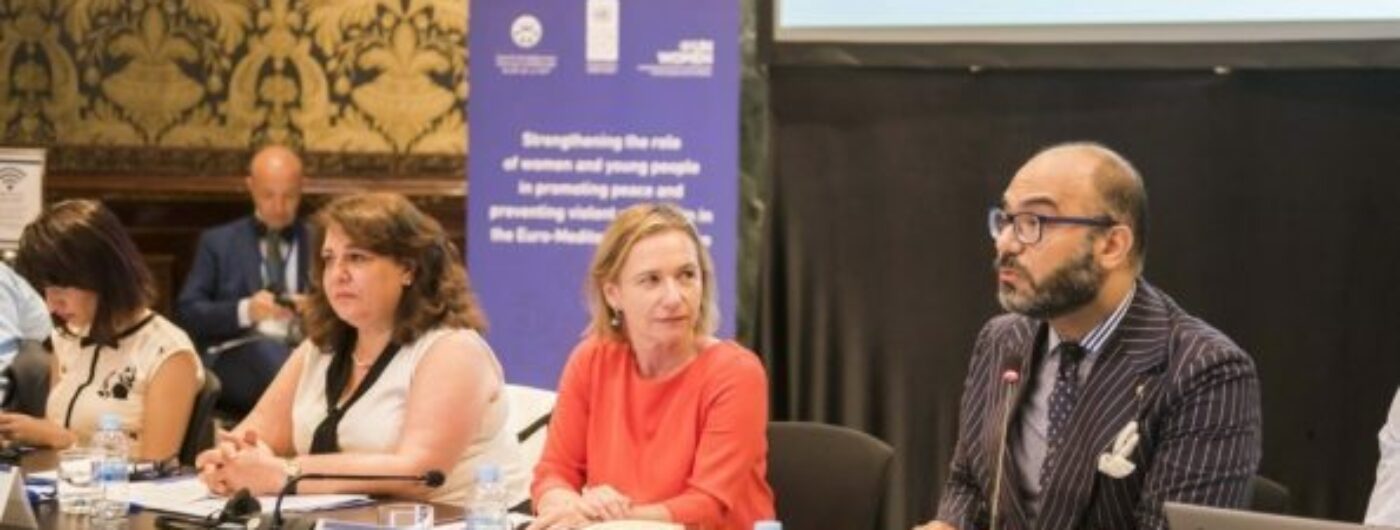
Within this context, a two-day meeting was jointly organized by the UfM Secretariat, UNDP, and UN Women on 18-19 July, 2017 in Barcelona, which brought together more than 40 experts, practitioners and advocates in peace and security and PVE. The objective was to take stock of current research and experience on preventing extremism and radicalization with a specific focus on the roles of women and youth, while also discussing approaches and lessons learned at the regional and national levels and identifying needs and key areas for future interventions in the Euro-Mediterranean region. The meeting provided a platform for participating experts with a broad range of expertise to interact and strategize the development of more nuanced, tailored and effective PVE strategies.

The experts, emphasized the impact of violent extremism on populations, and in particular spoke of the often overlooked impact on women and youth in particular.

To this end the meeting reaffirmed that while women and youth can play a significant role in PVE, they need to be supported and empowered to do so. It was noted that the drivers of recruitment and radicalization vary according to local context, and as such, prevention strategies must be tailored and nuanced in order to be effective. Furthermore, these strategies must be better-coordinated among practitioners, local authorities, regional and multilateral organizations, and civil society in order to achieve sustainable impact.

As a follow-up to the experts meeting, actionable recommendations will be presented to the governments in the Euro-Mediterranean region. In addition, a regional action plan will be drafted and discussed with key partners in the region, with the aim of supporting and empowering women and youth to prevent violent extremism in the Mediterranean region.

In the new UfM Roadmap for Action, endorsed by UfM Foreign Affairs Ministers at the UfM Regional Forum of last January in Barcelona, they agree that, “through its activities, the UfM joins regional and international efforts to address socio-economic root causes of terrorism and extremism, and it should be developing further projects and initiatives of high impact with a special focus on youth employability and women empowerment”.

Summary report of the meeting: https://ufmsecretariat.org/wp-content/uploads/2017/07/Summary_report_Barcelona_2017.pdf


More information

Documents
Summary report of the meeting.
Share this:

Latest news

UfM advances gender-sensitive leadership in higher education and local government through specialised training
15 / 06 / 2026
Spanish Foreign Minister Joins Senior Officials to Bid Farewell to UfM Secretary General Nasser Kamel
10 / 06 / 2026
See more

SUBSCRIBE TO OUR NEWSLETTER!


Agenda

3rd Mediterranean Green Week
30 / 06 / 2026
Regional Workshop on Digital Trade and E-Commerce in the MENA Region
19 / 10 / 2026
See more

Who we are

  • Member States
  • Meet the team
  • Partners
  • History
  • Transparency and accountability
  • Transparency and access to information
  • Investigating fraud, corruption and misconduct

What we do

  • Economic Development & Employment
  • Higher Education & Research
  • Social & Civil Affairs
  • Water, Environment and Blue Economy
  • Transport & Urban Development
  • Energy & Climate Action
  • Day of the Mediterranean
  • Mediterranean Capitals of Culture and Dialogue

How we work

  • Policy Framework
  • Regional Platforms
  • Projects and Initiatives

Work with us

  • Vacancies
  • Secondments
  • Internships
  • Procurement

Info centre

  • Media corner
  • News
  • Agenda
  • Publications and key documents
  • Stories of Euro-Mediterranean Cooperation
  • Photo gallery
  • Video gallery
Co-financed by the European Union
  • Who we are
    • Member States
    • Meet the team
    • Partners
    • History
    • Transparency and accountability
      • Transparency and access to information
      • Investigating fraud, corruption and misconduct
  • What we do
    • Economic Development and Employment
    • Higher Education & Research
    • Social & Civil Affairs
    • Water, Environment and Blue Economy
    • Transport & Urban Development
    • Energy & Climate Action
  • Initiatives that build bridges
    • Day of the Mediterranean
    • Mediterranean Capitals of Culture and Dialogue
  • How we work
    • Policy Framework
    • UfM Regional Platforms
    • Projects and Initiatives
  • Work with us
    • Vacancies
    • Secondments
    • Internships
    • Procurement
    • Roster of experts
  • Info centre
    • Media center
    • News
    • Agenda
    • Publications and key documents
    • Human Stories of the Mediterranean
  • Contact
  • Social media
    • Facebook
    • Twitter
    • Youtube
    • Linkedin
    • Flickr
  • English
  • العربية
  • English
  • العربية
Union for the Mediterranean – UfM


We are using cookies to give you the best experience on our website.

You can find out more about which cookies we are using or switch them off in .

Powered by  GDPR Cookie Compliance
Cookies Overview

This website uses cookies so that we can provide you with the best user experience possible. Cookie information is stored in your browser and performs functions such as recognising you when you return to our website and helping our team to understand which sections of the website you find most interesting and useful.

Read more

Strictly Necessary Cookies

Strictly Necessary Cookie should be enabled at all times so that we can save your preferences for cookie settings.

3rd Party Cookies

This website uses Google Analytics to collect anonymous information such as the number of visitors to the site, and the most popular pages.

Keeping this cookie enabled helps us to improve our website.