• English
  • Français
  • العربية
Follow us
Union for the Mediterranean – UfMUnion for the Mediterranean – UfMUnion for the Mediterranean – UfMUnion for the Mediterranean – UfM
  • Who we are
    • The Union for the Mediterranean is an intergovernmental institution bringing together the European Union Member States and 16 countries from the Southern and Eastern shores of the Mediterranean to promote dialogue and cooperation.

      OVERVIEW   

    • Who we are

      • Member States
      • Meet the team
      • Partners
      • History

      Transparency and accountability

      • Transparency and access to information
      • Investigating fraud, corruption and misconduct
    • Key documents

      UfM Institutional Brochure UfM How we work

      More documents   

  • What we do
    • The UfM seeks to enhance regional cooperation, dialogue and the implementation of concrete projects and initiatives with tangible impact on our citizens to address three strategic objectives: human development, stability and integration.

      OVERVIEW   

    • Inclusive development

      • Economic Development and Employment
      • Higher Education & Research
      • Social & Civil Affairs

      Sustainable development

      • Water, Environment and Blue Economy
      • Transport & Urban Development
      • Energy & Climate Action

      Initiatives that build bridges

      • Day of the Mediterranean
      • Mediterranean Capitals of Culture and Dialogue
    • How we work

      • Policy Frameworks
      • Regional Platforms
      • Projects and Initiatives
  • Work with us
    • The UfM Secretariat is the operational platform of the Union for the Mediterranean. The staff of the UfM is made of more than 17 nationalities working in a multicultural environment that fosters cooperation and intercultural communication and exchange.

    • Work with us

      • Vacancies
      • Secondments
      • Internships
      • Procurement
  • Info centre
    • Find our latest press releases, press invitations, visual identity, key institutional documents, photos and other relevant information


      DOWNLOAD THE UfM VISUAL IDENTITY GUIDELINES AND LOGOS (ZIP FILE)   

    • Info centre

      • Media corner
      • News
      • Agenda
      • Publications and key documents
      • Stories of Euro-Mediterranean Cooperation
    • UfM in the Media

      9 May 2026 – Agence Europe (EN) – The fire season that never ends – by Joan Borrell Mayeur
      View article
      9 May 2026 – Agence Europe (FR) – Une saison des feux qui n’en finit pas – par Joan Borrell Mayeur
      View article
      7 May 2026 – Al-Dustour – حرائق غابات المتوسط على وشك أن تبدأ مجدداً… بلا حدود
      View article
  • Contact

Mediterranean countries share water emergency and recovery plans to tackle the aftermath of COVID-19

Water Environment & Blue Economy
  • The Union for the Mediterranean (UfM) and the Mediterranean Water Institute (IME) met with experts from Algeria, Cyprus, Egypt, France, Jordan, Lebanon, Malta, Morocco, Palestine, Spain, Tunisia and Turkey to share their response to the water emergency and provide policy recommendations on how to move forward.
  • Participants agreed that providing sustainable water access is essential for many jobs and discussed their emergency and recovery plans to help water utility operators cope with the crisis.
  • Over 250 million people are expected to be “water poor” within the next 20 years in the Euro-Mediterranean region, with numbers potentially exacerbated by the COVID-19 pandemic. 

6 May 2020. The COVID-19 pandemic is prompting questions for the water supply and sanitation sector globally and especially in some areas of the Euro-Mediterranean region, already under stress due to the water scarcity caused by the climate crisis. Together with the Mediterranean Water Institute (IME), the UfM held a series of virtual working sessions on the effects of COVID-19 on water and sanitation. Experts from Algeria, Cyprus, Egypt, France, Jordan, Lebanon, Malta, Morocco, Palestine, Spain, Tunisia and Turkey participated in the meeting and exchanged best practices, lessons learned, and the emergency plans that water and utility operators have prepared in their respected countries in order to cope with the crisis.

First, the emergency response phase. COVID-19 is putting further pressure on water supply. Since the lockdown, Jordan and Turkey have been affected by water shortages, whilst other countries have rerouted irrigation water to household water. Access to water is crucial in fighting of this pandemic, so all participants exchanged on their solutions to effectively tackle the water shortage.

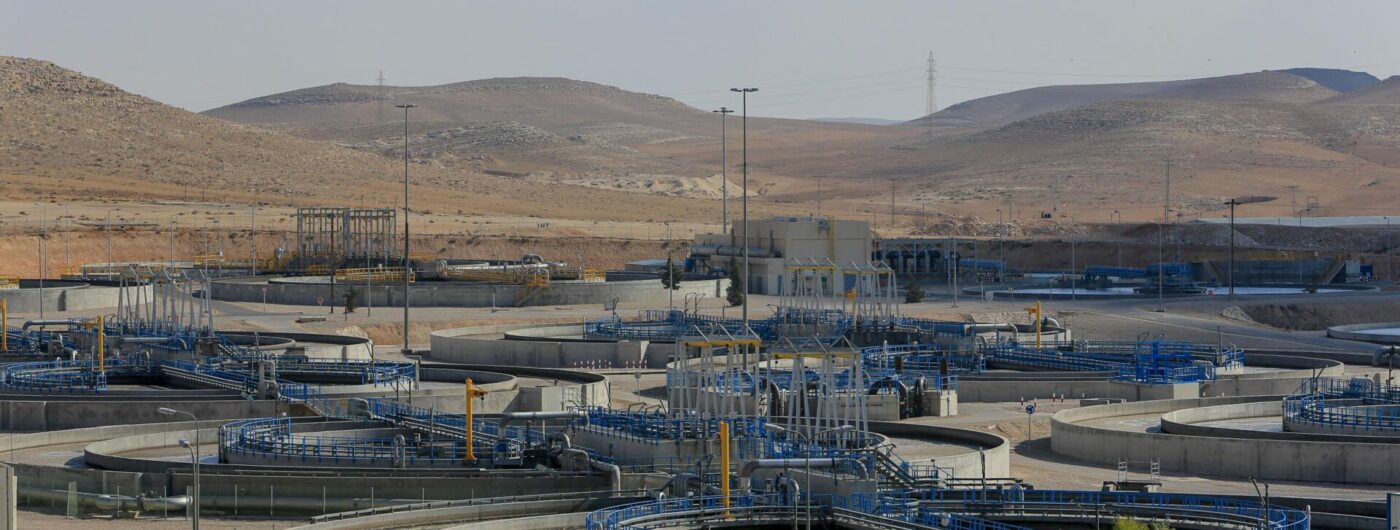
Following the alarming discovery that traces of COVID-19 were found in wastewater treatment plants and concerns raised by participants, the UfM is working with the Joint Research Centre (JRC), the European Commission’s science and knowledge service, to ensure a scientific response. Together, the UfM and JRC will host a webinar showcasing guidelines and tools for keeping such infrastructure and its services safe and secure, especially for countries using treated effluent for their agricultural activities.

Second, the recovery phase. Water -including coastal water- is a key component of the productive systems, from agriculture, energy production and industrial production to transport and tourism. Today, 3 out of 4 jobs are water-dependent. To face this, the UfM is launching a study on the impact of COVID-19 on the water sector, and will support the implementation of the recovery strategy by providing a platform for policy dialogue and up-scaling of exemplary projects. The UfM, along with its partners, will support national policies and action plans, starting with two or three pilot countries from the Maghreb, Mashrek and Balkans regions.

The UfM Secretary General, Nasser Kamel, highlighted that “Water shall be at the centre of any recovery and development plan tackling the consequences of the COVID-19 pandemic in the region, as the crisis is yet another reminder that this vital sector must always be kept financially sustainable and technically capable. At the same time, the aftermath of COVID-19 will require the Euro-Mediterranean region to shift in its approach towards more sustainable production and consumption patterns.”

The recovery response will be included in the UfM’s regional Water Agenda, developed and implemented since 2017 to help achieve the 2030 Sustainable Development Goal of “Ensure access to water and sanitation for all” in the Euro-Mediterranean area, highlighted Almotaz Abadi, UfM Water Managing Director. The UfM Water Agenda aims to ensure that each and every Euro-Mediterranean country receives the necessary technical, administrative, and financial recommendations to help achieve water security for its population and their economic activities, taking into account its impact on agriculture, employment, hygiene and climate change.

More information:
  • UfM response on COVID-19
  • The UfM Ministerial Declaration on Water (2017)
Share this:

Latest news

Bridging the digital skills gap and boosting smart e-governance solutions: promoting digital transformation through a UfM Conference in Antalya
21 / 05 / 2026
Call for applications: Research to Business Programme
21 / 05 / 2026
See more

SUBSCRIBE TO OUR NEWSLETTER!


Agenda

UfM Senior Officials Meeting (SOM) June 2026
10 / 06 / 2026
Women Leading Change – Training for Universities and their Municipalities
11 / 06 / 2026
See more

Who we are

  • Member States
  • Meet the team
  • Partners
  • History
  • Transparency and accountability
  • Transparency and access to information
  • Investigating fraud, corruption and misconduct

What we do

  • Economic Development & Employment
  • Higher Education & Research
  • Social & Civil Affairs
  • Water, Environment and Blue Economy
  • Transport & Urban Development
  • Energy & Climate Action
  • Day of the Mediterranean
  • Mediterranean Capitals of Culture and Dialogue

How we work

  • Policy Framework
  • Regional Platforms
  • Projects and Initiatives

Work with us

  • Vacancies
  • Secondments
  • Internships
  • Procurement

Info centre

  • Media corner
  • News
  • Agenda
  • Publications and key documents
  • Stories of Euro-Mediterranean Cooperation
  • Photo gallery
  • Video gallery
Co-financed by the European Union
  • Who we are
    • Member States
    • Meet the team
    • Partners
    • History
    • Transparency and accountability
      • Transparency and access to information
      • Investigating fraud, corruption and misconduct
  • What we do
    • Economic Development and Employment
    • Higher Education & Research
    • Social & Civil Affairs
    • Water, Environment and Blue Economy
    • Transport & Urban Development
    • Energy & Climate Action
  • Initiatives that build bridges
    • Day of the Mediterranean
    • Mediterranean Capitals of Culture and Dialogue
  • How we work
    • Policy Framework
    • UfM Regional Platforms
    • Projects and Initiatives
  • Work with us
    • Vacancies
    • Secondments
    • Internships
    • Procurement
    • Roster of experts
  • Info centre
    • Media center
    • News
    • Agenda
    • Publications and key documents
    • Human Stories of the Mediterranean
  • Contact
  • Social media
    • Facebook
    • Twitter
    • Youtube
    • Linkedin
    • Flickr
  • English
  • Français
  • العربية
  • English
  • Français
  • العربية
Union for the Mediterranean – UfM


We are using cookies to give you the best experience on our website.

You can find out more about which cookies we are using or switch them off in .

Powered by  GDPR Cookie Compliance
Cookies Overview

This website uses cookies so that we can provide you with the best user experience possible. Cookie information is stored in your browser and performs functions such as recognising you when you return to our website and helping our team to understand which sections of the website you find most interesting and useful.

Read more

Strictly Necessary Cookies

Strictly Necessary Cookie should be enabled at all times so that we can save your preferences for cookie settings.

3rd Party Cookies

This website uses Google Analytics to collect anonymous information such as the number of visitors to the site, and the most popular pages.

Keeping this cookie enabled helps us to improve our website.