UfM and Turkish COP31 presidency hold Antalya Mediterranean Climate Dialogue consultation in Paris
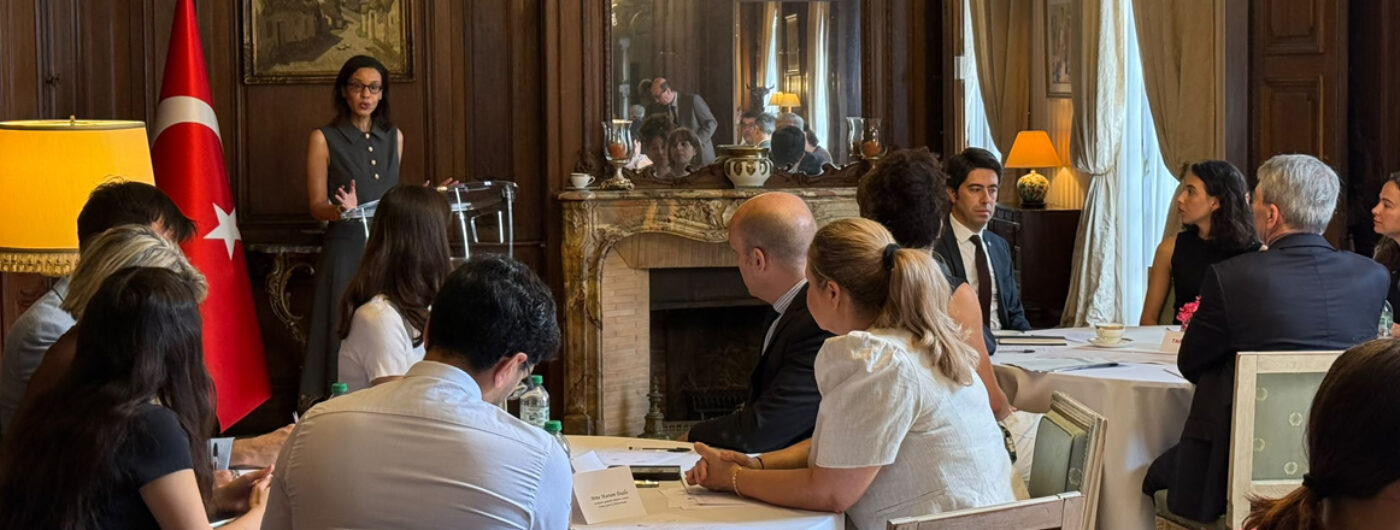
17 July 2026, Paris. The third of seven Antalya Mediterranean Climate Dialogue consultations took place today at the Embassy of the Republic of Türkiye in Paris. Organised by the UfM together with the COP31 president and host country, the initiative aims to help identify shared Mediterranean priorities ahead of the conference, with conclusions from these talks consolidated into a Mediterranean Synthesis Note that will be presented in Antalya this November. The consultation process is designed not to negotiate common positions, but to identify shared priorities, exchange national perspectives and help build greater regional convergence ahead of COP31. As a hotspot warming 20% faster than the global average, the Mediterranean faces growing climate and environmental pressures that underscore the urgent need for enhanced regional cooperation on the matter. Following discussions in Rabat, Cairo and Paris, consultations will be taking place in Madrid, Rome, Amman and Algiers in the coming weeks.
Today’s consultations, organised in cooperation with the French government and hosted by Turkish Ambassador Yunus Demirer and UfM Senior Deputy Secretary General Mariam Diallo, brought together France’s main climate actors around three thematic round tables aligned with the COP31 Action Agenda: electrification and the energy transition; oceans and seas; and synergies between the Rio Conventions and adaptation. Participants emphasised the need to foster regional climate resilience with adaptation and mitigation measures that champion sustainability alongside human and economic development.
 “We believe that COP31 provides a unique opportunity to elevate the Mediterranean dimension of global climate action. Our ambition is for COP31 to leave a lasting legacy for the Mediterranean by strengthening regional cooperation and advancing practical implementation across the region,” said Türkiye’s Ambassador to France, Yunus Demirer.
“The Mediterranean is a region that bears the full brunt of climate change, but it also has the capacity to build bridges between the countries of the basin to progress around several major issues: the energy transition and electrification, adaptation to climate disruption, for example in relation to water, as well as the fight against pollution, including the zero-waste objective and efforts to combat plastic pollution,” said Benoît Faraco, France’s ambassador for climate change negotiations.
“Through the Antalya Mediterranean Climate Dialogue, the Turkish Presidency is putting a real spotlight on two key elements: the need to develop a coordinated regional approach to climate issues in the Mediterranean, and the central role of the UfM as a tool for coordinating this approach,” said Nadia Hai, Ambassador and Interministerial Delegate for the Mediterranean.
“The Mediterranean is at a crossroads,” said UfM Senior Deputy Secretary General Mariam Diallo. “The Mediterranean does not need to be convinced of the urgency of climate change. What it needs is stronger, more structured and more implementation-oriented regional cooperation. That is precisely the ambition of the Antalya Mediterranean Climate Dialogue. We are not here to define priorities. They belong to our Member States. Our role is to create the conditions for meaningful dialogue, identify areas of convergence and ensure that this diversity of perspectives can be translated into a strong Mediterranean contribution to COP31.”
Given the impact of climate change on our region, the UfM is once again working to organise a Mediterranean Pavilion at this year’s COP, the first of its kind on the shores of our shared sea. The pavilion will allow Mediterranean countries, scientific experts, the private sector and civil society to showcase their commitments to climate action and sustainable development. It will also serve as a platform to present the Mediterranean Climate Action Plan following the consultation process the UfM launched earlier this month at the 3rd Mediterranean Green Week. By joining forces with key regional players, the UfM aims to ensure that the Mediterranean priorities are better reflected in global climate processes.